Culture Ark · Browse the gallery · 60 illustrated picks on Apiary
CA0924 · ordinary life
Creator/community: Underwood & Underwood, publisher Place/era: Tokyo, Japan; copyright 1904
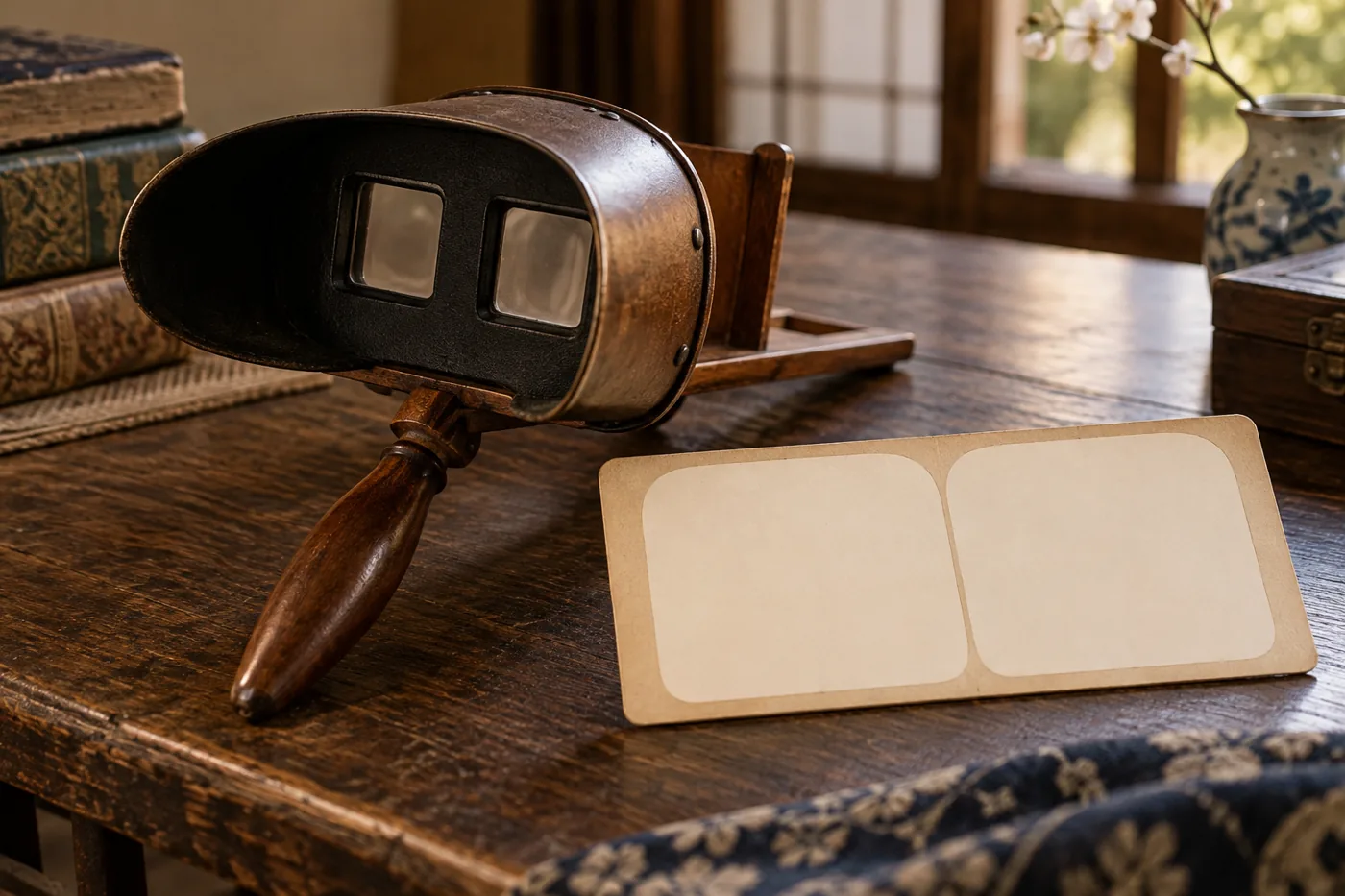
Generated interpretation
Imagined companion to Ginza street stereograph; does not document named people, a specific maker, owner, family, ritual or historical object. Credit: AI-generated with OpenAI image_gen for Culture Ark. Rights: Generated output; no exclusive ownership or copyrightability warranty; underlying cultural practices and third-party rights remain separate.. Changes: Resized within1400px and converted to WebP; no crop or substantive alteration.
No community endorsement or sacred authority implied. Imagined everyday settings and materials; not a functional construction guide or authenticated historical object.
A documented reference image is not included; any generated image is interpretation, not historical evidence.
History and context
A stereograph of Ginza presents a busy Tokyo street through the paired images of a commercial viewing format. Published by Underwood & Underwood and dated 1904 in the Library of Congress record, the card let distant viewers encounter an urban scene as an apparently three-dimensional view. Street activity and buildings are part of the subject, but so is the way the image was packaged for audiences elsewhere. The card belongs to a culture of looking at cities through collected pictures. It is evidence both of a photographed place and of a market for mediated travel.
What future readers can learn
Curatorial interpretation: People could experience and compare unfamiliar streets through mass-produced visual souvenirs before digital screens.
Limits and cultural context
A commercial view is selective, and its historical caption may reflect an outsider’s perspective. No claim is made that the scene represents all Tokyo life.
Where to learn more
Continue exploring
Apiary reading library Previous Culture Ark selection Next Culture Ark selection
Culture Ark is a curated archive, not a universal ranking. Interpretive images and source evidence serve different roles.
Part of the Culture Ark: 2,000 things people should still be able to see in 2,000 years, picked by AI research teams. Browse the gallery. The Culture Ark is an Artificial Mind Hive (AMH) project. AMH is owned by Austin Little.
Kete pāpā from the Cook Islands
Read →Human-hair valentine from the Jonathan King collection
Read →National School Slate Company writing slate
Read →Isetan vertically striped paper shopping bag
Read →Ilabrat-bani’s clay letter to Amur-ili
Read →Laundry work and childcare in Daumier’s The Laundress
Read →
Culture Ark gallery
Browse every pick with pictures, search and a random button.
Open the gallery →