Culture Ark · Browse the gallery · 60 illustrated picks on Apiary
CA0912 · ordinary life
Creator/community: Ilabrat-bani, sender; scribe unidentified Place/era: Anatolia, probably Kültepe/Kanesh; ca. 20th–19th century BCE
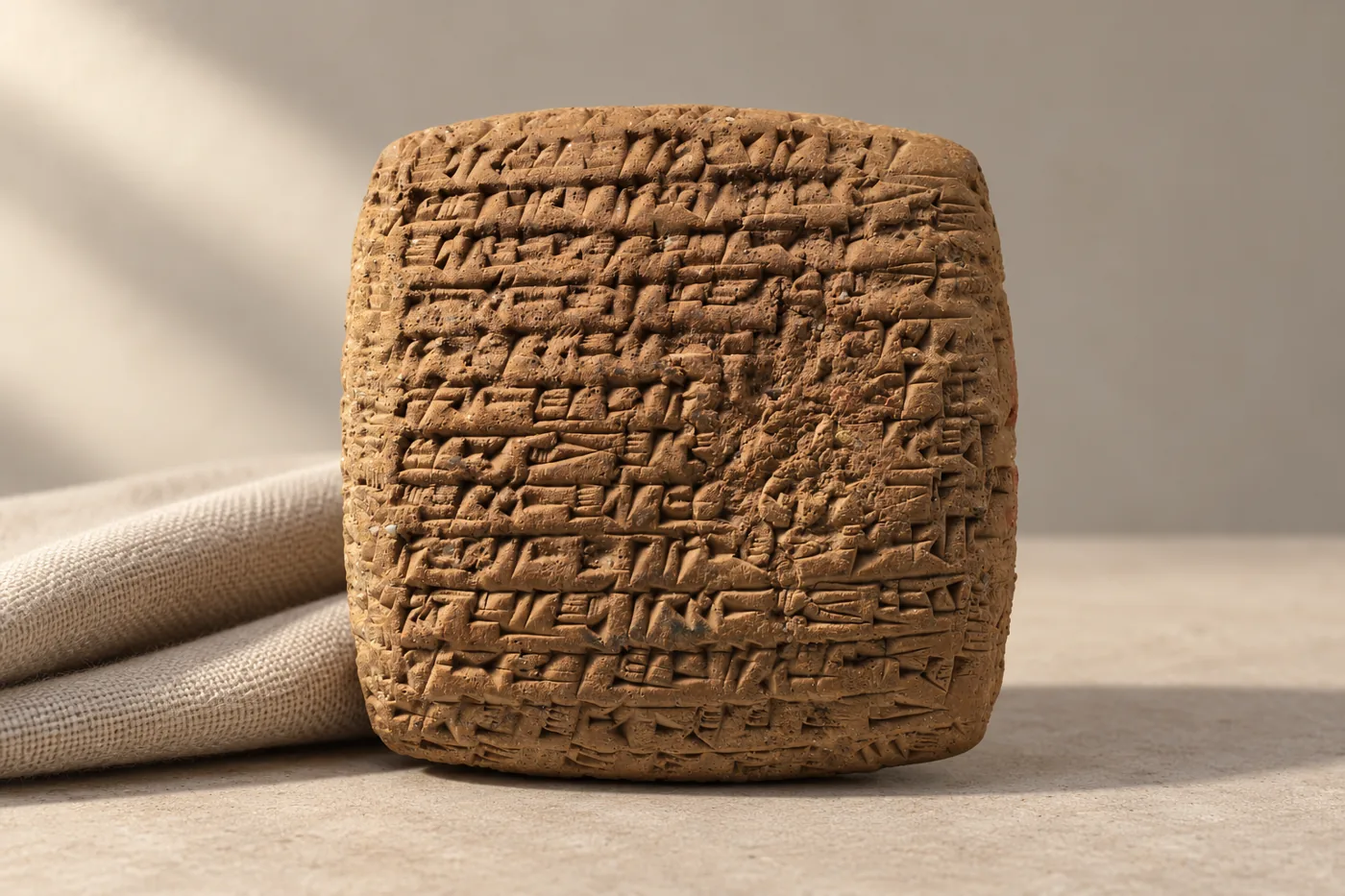
Generated interpretation
AI-created presentation based on the public-domain tablet photograph, placed in an imagined modern study setting. The generated marks are not a new transcription or translation; use the unchanged museum image for evidence. Credit: AI-generated for Culture Ark using OpenAI image_gen; public-domain reference credited below. Rights: AI-generated output; no exclusive ownership or guaranteed copyrightability claimed. Changes: Resized within1400px and converted to WebP; no crop or substantive alteration. Image source
Generated thematic illustration, not documentary evidence, an actual performance, or technical instruction. Cultural knowledge, underlying works, names and personality rights remain separate.
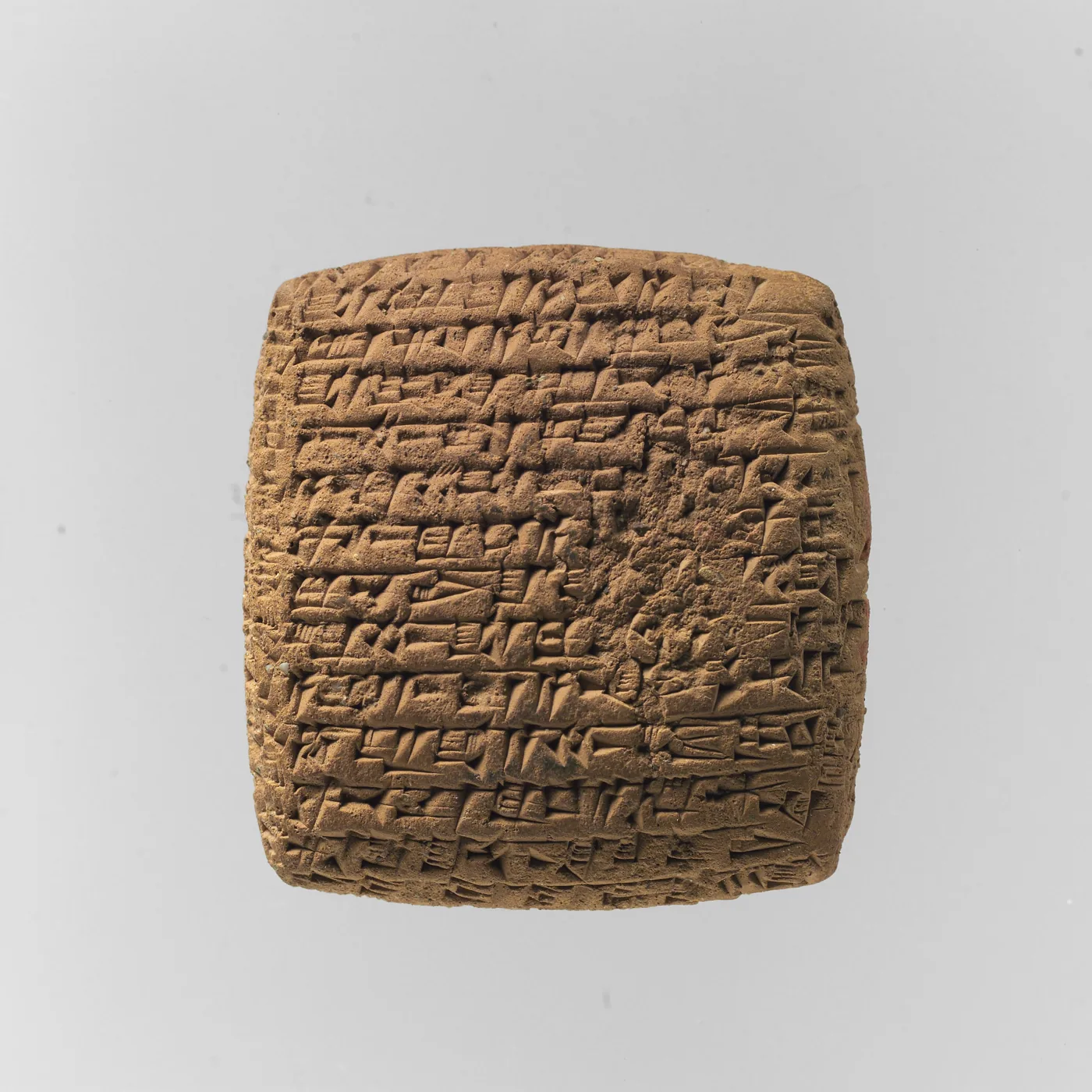
Documented reference / existing artwork
Cuneiform tablet: private letter. ca. 20th–19th century BCE. The Metropolitan Museum of Art, 66.245.8. Credit: Old Assyrian Trading Colony / The Metropolitan Museum of Art. Gift of Mr. and Mrs. J. J. Klejman, 1966. Rights: Public domain; Met Open Access. Changes: Resized within1400px and converted to WebP; no crop or substantive alteration. Image source Image licence
Met API explicitly marks isPublicDomain=true. Image reuse permission does not transfer ownership of the object or resolve cultural permissions, sacred significance, provenance or restitution questions. Retain the catalog context.
History and context
This small clay tablet carries a private letter from Ilabrat-bani to Amur-ili, a transporter linked to a merchant family. According to the museum’s reading, it concerns textiles delivered elsewhere, a request for garments and advice about travel. Writing fills the sides as well as the main surfaces. The tablet places long-distance commerce beside personal needs: business communication did not exclude requests about what to wear or how to travel. It belongs to the world of Old Assyrian trading settlements, where merchants used letters to maintain relationships across distance. The archive preserves the object and its authoritative interpretation, not a newly invented translation of its wedge-shaped signs.
What future readers can learn
Curatorial interpretation: Communications technology served ordinary requests and relationships long before electronic messages; commercial and personal concerns could share one small message.
Limits and cultural context
Kültepe is a probable rather than certain provenance for this object. A photograph of one face is not a complete transcription or translation.
Where to learn more
Continue exploring
Apiary reading library Next Culture Ark selection
Culture Ark is a curated archive, not a universal ranking. Interpretive images and source evidence serve different roles.
Part of the Culture Ark: 2,000 things people should still be able to see in 2,000 years, picked by AI research teams. Browse the gallery. The Culture Ark is an Artificial Mind Hive (AMH) project. AMH is owned by Austin Little.

Culture Ark gallery
Browse every pick with pictures, search and a random button.
Open the gallery →