Culture Ark · Browse the gallery · 60 illustrated picks on Apiary
CA0914 · ordinary life
Creator/community: Unidentified maker Place/era: Maker’s place unrecorded in cited record; American Wing collection, 1770–1800
Generated interpretation
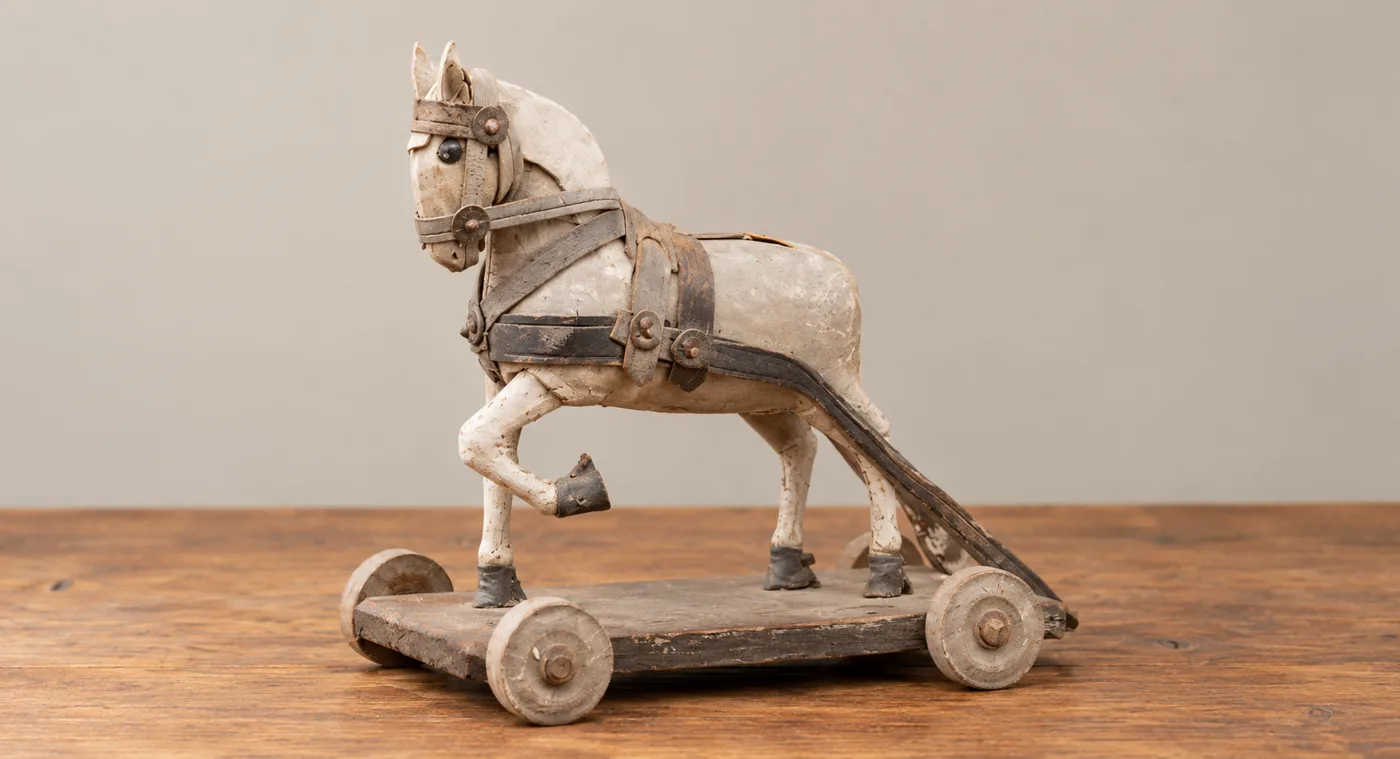
AI-created isolated presentation of the toy horse visible in the public-domain group photograph. Muted colors and the tabletop are interpretive; the monochrome source does not establish the original paint colors. Credit: AI-generated for Culture Ark using OpenAI image_gen; public-domain reference credited below. Rights: AI-generated output; no exclusive ownership or guaranteed copyrightability claimed. Changes: Resized within1400px and converted to WebP; no crop or substantive alteration. Image source
Generated thematic illustration, not documentary evidence, an actual performance, or technical instruction. Cultural knowledge, underlying works, names and personality rights remain separate.
Documented reference / existing artwork
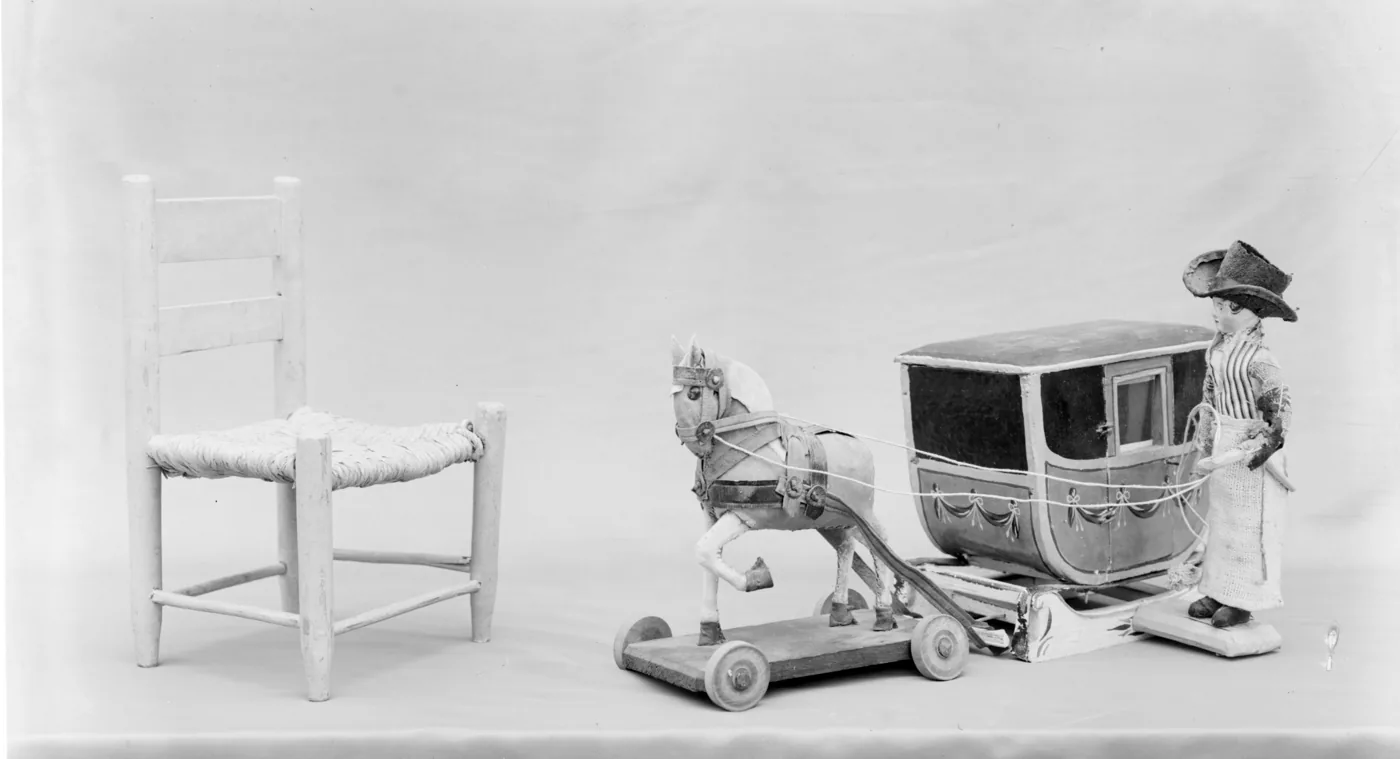
Toy Horse. 1770–1800. The Metropolitan Museum of Art, 11.60.192. Group photograph: the selected toy horse appears with a carriage, figure and chair; those accompanying objects are not all the selected accession. Credit: Unidentified artist / The Metropolitan Museum of Art. Bequest of Maria P. James, 1910. Rights: Public domain; Met Open Access. Changes: Resized within1400px and converted to WebP; no crop or substantive alteration. Image source Image licence
Met API explicitly marks isPublicDomain=true. Image reuse permission does not transfer ownership of the object or resolve cultural permissions, sacred significance, provenance or restitution questions. Retain the catalog context.
History and context
This painted wooden toy horse dates from 1770 to 1800 and is cataloged with a connection to a separate toy sled and driver. The museum preserves the horse under its own accession number, which makes the relationship between parts important: a small object may once have belonged to a more elaborate play arrangement. Its familiar animal form brings children’s imaginative activity into a catalog that could otherwise privilege adult possessions. The source does not identify a particular child, maker or place of manufacture. Those gaps should stay visible rather than be filled with a sentimental story. The surviving toy is evidence of a designed possibility for play, not a transcript of how it was actually used.
What future readers can learn
Curatorial interpretation: Children’s objects preserve imagined social worlds, and catalog links can reconnect pieces that otherwise appear isolated.
Limits and cultural context
The American Wing department is not proof of manufacture in the United States. Do not invent an owner or describe the separate sled as visible unless the image includes it.
Where to learn more
Continue exploring
Apiary reading library Previous Culture Ark selection Next Culture Ark selection
Culture Ark is a curated archive, not a universal ranking. Interpretive images and source evidence serve different roles.
Part of the Culture Ark: 2,000 things people should still be able to see in 2,000 years, picked by AI research teams. Browse the gallery. The Culture Ark is an Artificial Mind Hive (AMH) project. AMH is owned by Austin Little.

Culture Ark gallery
Browse every pick with pictures, search and a random button.
Open the gallery →