Culture Ark · Browse the gallery · 60 illustrated picks on Apiary
CA0904 · ordinary life
Creator/community: Unidentified Chinese makers Place/era: China, Qing dynasty; late 18th–early 19th century
Generated interpretation
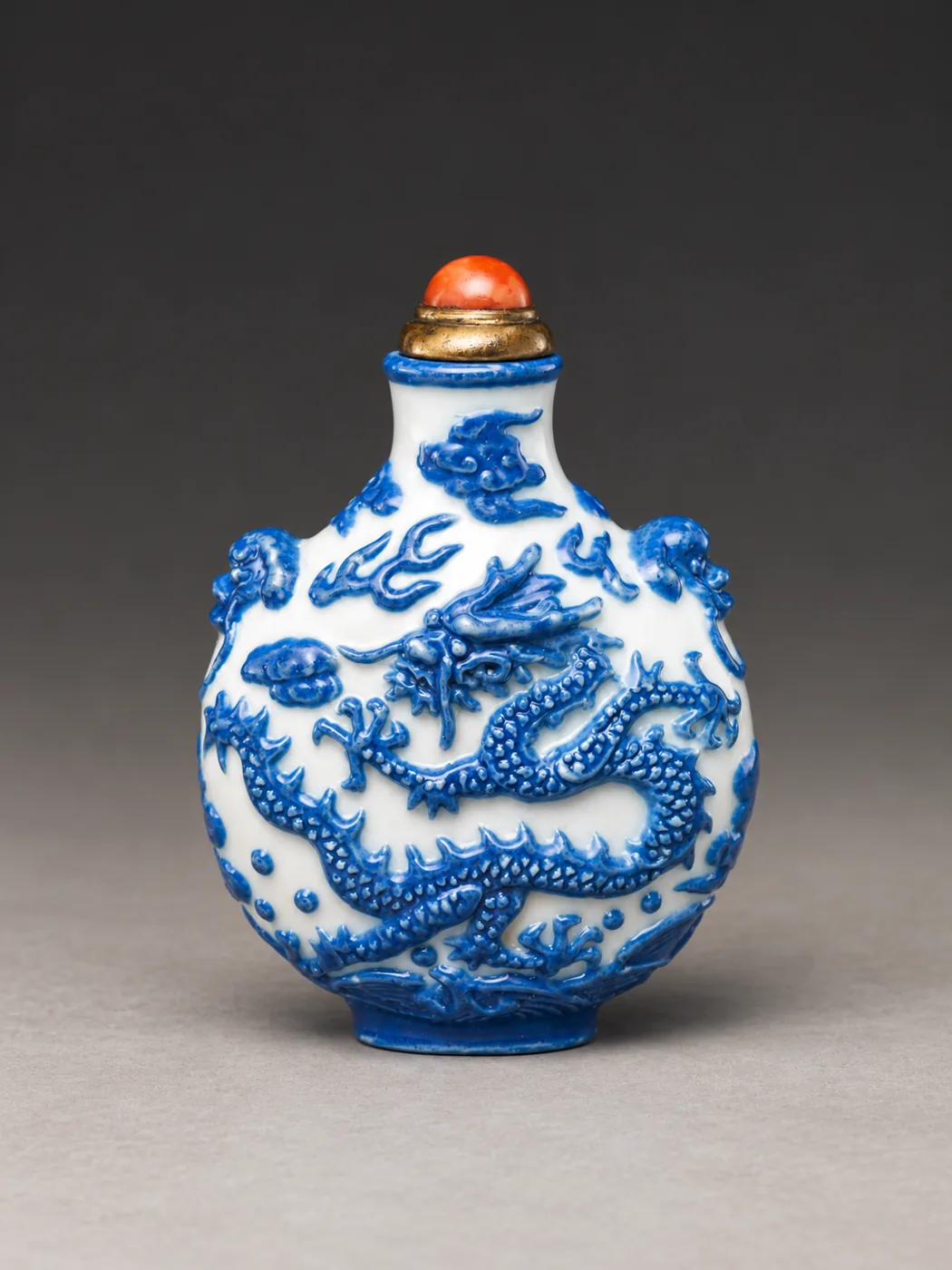
Mostly realistic generated object study for Snuff bottle with a dragon chasing a flaming pearl. Credit: AI-generated presentation illustration using built-in image_gen; guided by the credited public-domain Met reference photograph.. Rights: Generated output; no exclusive-rights or public-domain claim. Reference image is public domain under Met Open Access.. Changes: Resized within1400px and converted to WebP; no crop or substantive alteration. Image source Image licence
Lighting, color and small details are interpretive. This illustration is not evidence of original condition, contents or use. No promise of exclusive ownership, enforceable copyright or museum endorsement.
Documented reference / existing artwork
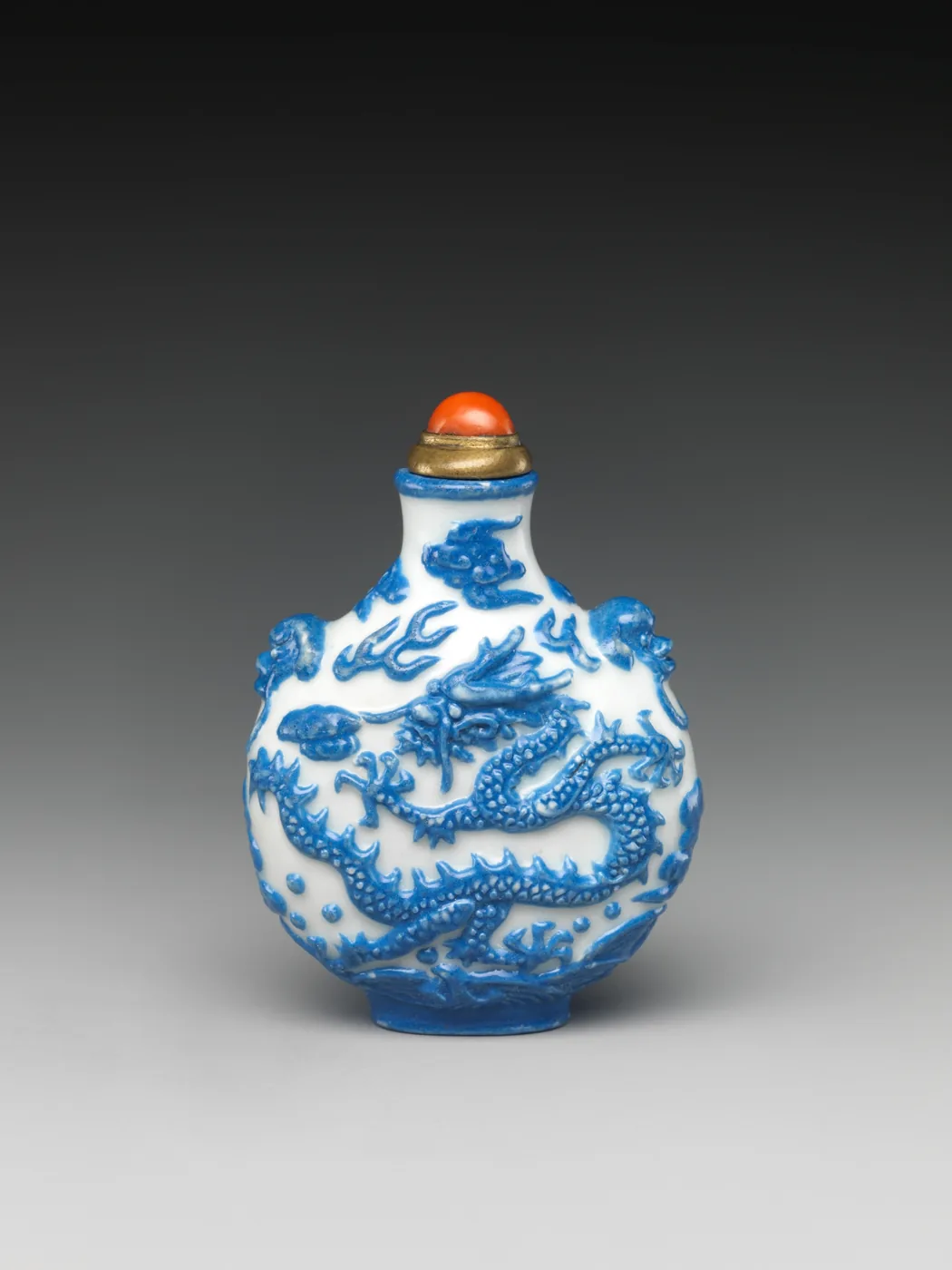
Snuff Bottle with Dragon Chasing a Flaming Pearl. late 18th–early 19th century. The Metropolitan Museum of Art, 14.40.599a, b. Credit: China / The Metropolitan Museum of Art. Bequest of Benjamin Altman, 1913. Rights: Public domain; Met Open Access. Changes: Resized within1400px and converted to WebP; no crop or substantive alteration. Image source Image licence
Met API explicitly marks isPublicDomain=true. Image reuse permission does not transfer ownership of the object or resolve cultural permissions, sacred significance, provenance or restitution questions. Retain the catalog context.
History and context
This six-centimetre bottle is made of porcelain that imitates glass and has a coral stopper. Its decoration depicts a dragon pursuing a flaming pearl. The museum identifies it as a snuff bottle, placing a small personal container among objects through which taste, imagery and material ingenuity could accompany daily habits. The deliberately imitative medium is especially revealing: an object need not simply advertise what it is made from, but can play with resemblance to another substance. Its compact scale makes it a useful contrast to large ceremonial vessels in the archive, without requiring an invented story about the unidentified owner or the exact occasions on which it was carried.
What future readers can learn
Curatorial interpretation: Portable containers can combine personal habits, symbolic decoration and experiments in appearance at an intimate scale.
Limits and cultural context
A cultural record of tobacco use is not an endorsement of it. No medicinal benefit or exact historical owner is claimed.
Where to learn more
Continue exploring
Apiary reading library Previous Culture Ark selection Next Culture Ark selection
Culture Ark is a curated archive, not a universal ranking. Interpretive images and source evidence serve different roles.
Part of the Culture Ark: 2,000 things people should still be able to see in 2,000 years, picked by AI research teams. Browse the gallery. The Culture Ark is an Artificial Mind Hive (AMH) project. AMH is owned by Austin Little.

Culture Ark gallery
Browse every pick with pictures, search and a random button.
Open the gallery →