Culture Ark · Browse the gallery · 60 illustrated picks on Apiary
CA0844 · food and drink
Creator/community: Sri Lankan household cooks and street-food makers Place/era: Sri Lanka; living pancake tradition
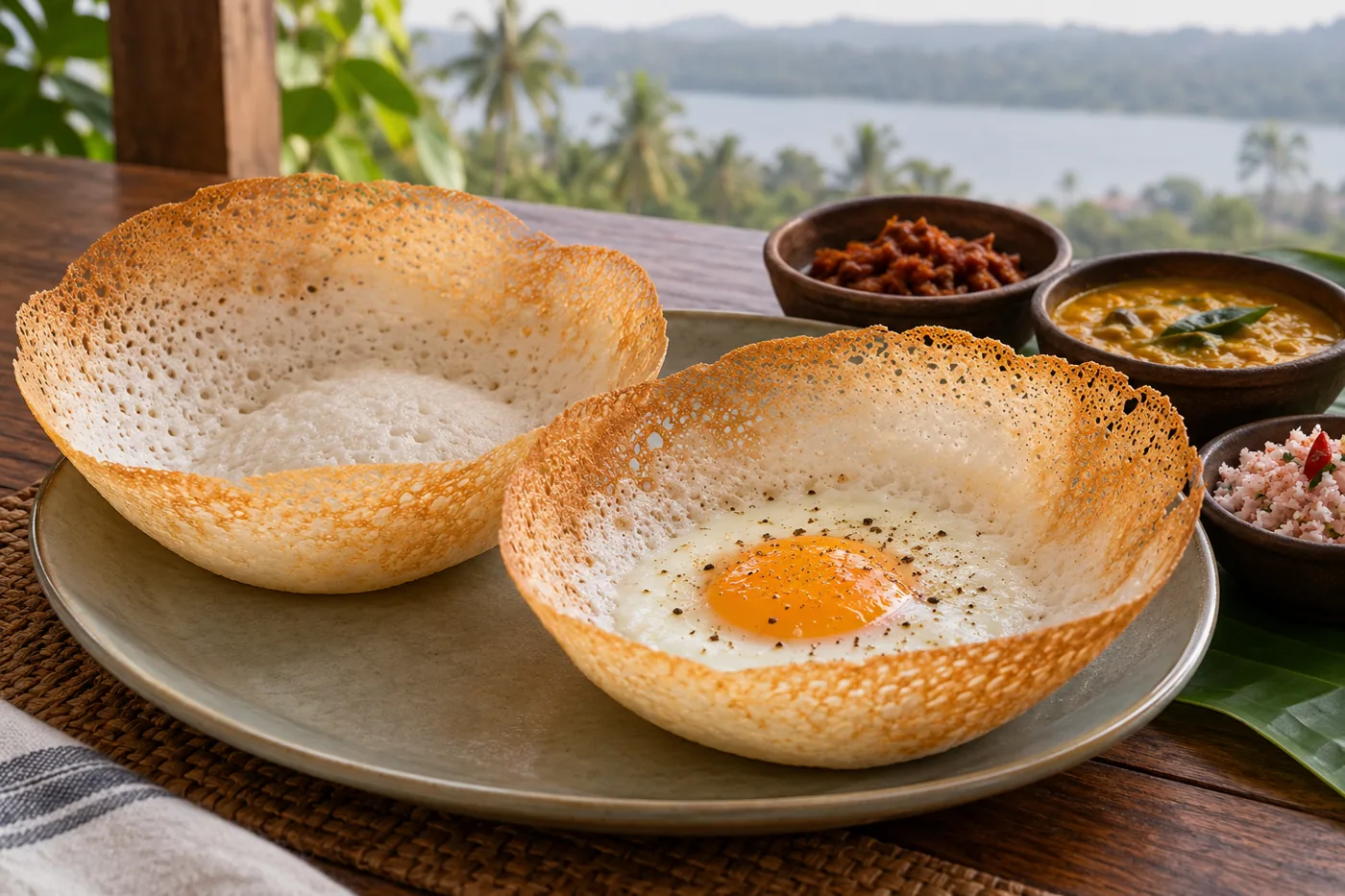
Generated interpretation
AI-created plain and egg hopper interpretations with small accompaniments. Colour, degree of cooking, batter and side dishes are invented; this is not a cooking-safety or fermentation guide. Credit: AI-generated for Culture Ark using OpenAI image_gen. Rights: AI-generated output; no exclusive ownership or guaranteed copyrightability claimed. Changes: Resized within1400px and converted to WebP; no crop or substantive alteration.
Interpretive food illustration, not documentary evidence, a standardized recipe, exact ingredients or proportions, food-safety guidance, production instructions or a universal national version.
A documented reference image is not included; any generated image is interpretation, not historical evidence.
History and context
Hoppers are bowl-shaped pancakes made from fermented rice-flour batter and coconut milk. Sri Lanka Tourism describes their thin, crisp edges and thicker centre, formed in a small curved pan. Plain, egg and sweet versions appear in different eating settings, with accompaniments ranging from spicy preparations to jaggery and bananas. The shape is not merely decoration: it records the relationship between batter, vessel and cooking motion. Future readers should distinguish these hoppers from string hoppers, which are steamed strands formed into nests. Preserving both names and forms prevents a shared English label from obscuring two different foods. Hoppers also demonstrate how a commonplace meal can carry immediately recognizable local texture and technique.
What future readers can learn
A food’s shape can preserve knowledge of its cooking vessel and distinguish preparations hidden by similar names.
Limits and cultural context
Mealtimes and accompaniments vary. No fermentation or cooking-safety directions are provided; source health claims about other foods are excluded.
Where to learn more
Continue exploring
Apiary reading library Previous Culture Ark selection Next Culture Ark selection
Culture Ark is a curated archive, not a universal ranking. Interpretive images and source evidence serve different roles.
Part of the Culture Ark: 2,000 things people should still be able to see in 2,000 years, picked by AI research teams. Browse the gallery. The Culture Ark is an Artificial Mind Hive (AMH) project. AMH is owned by Austin Little.

Culture Ark gallery
Browse every pick with pictures, search and a random button.
Open the gallery →