
Culture Ark · Browse the gallery · Washoku and Japanese New Year food traditions in the gallery · 60 illustrated picks on Apiary
CA0006 · food and drink
Creator/community: Japanese households, cooks, farmers and community educators Place/era: Japan; living food tradition, UNESCO inscription 2013
Generated interpretation
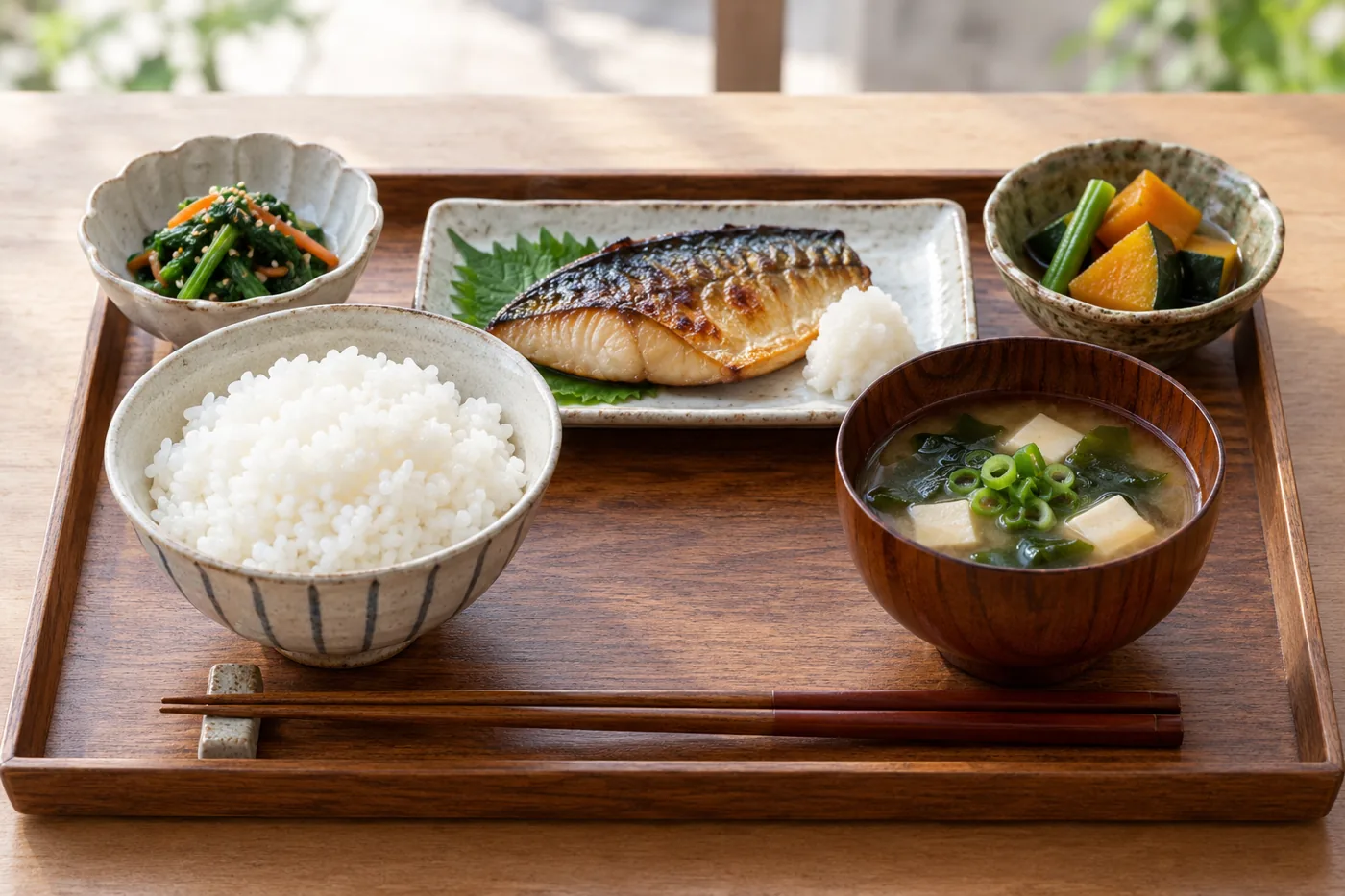
Invented everyday washoku-style meal; not a complete New Year osechi menu, recipe or documented household. Credit: AI-generated for Culture Ark using OpenAI image_gen, 2026-11-01. Rights: AI-generated output; no exclusive ownership or guaranteed copyrightability claimed. Changes: Resized within1400px and converted to WebP; no crop or substantive alteration.
Interpretive presentation artwork, not documentary evidence. Underlying music, film, brands and personality rights remain separate.
Documented reference / existing artwork
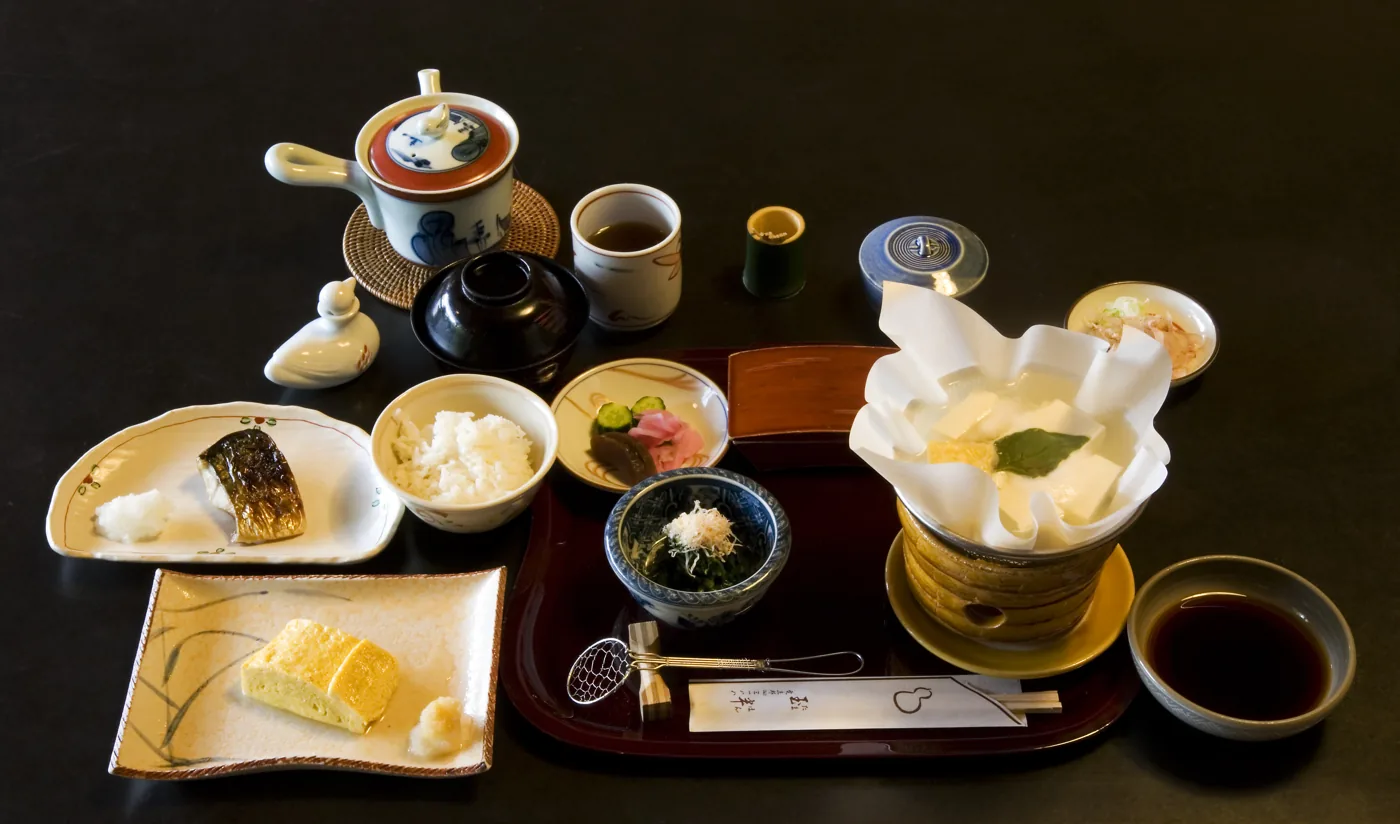
Breakfast at Tamahan Ryokan, Kyoto. A contextual example of a Japanese meal, not a New Year feast. Credit: MichaelMaggs. Rights: CC BY-SA 3.0. Changes: Resized within1400px and converted to WebP; no crop or substantive alteration. Image source Image licence
License applies to this image only. No endorsement, personality-rights clearance or cultural permission implied. Preserve attribution and applicable share-alike terms.
History and context
Washoku is more than a menu of famous Japanese dishes. It includes the knowledge used to select ingredients, prepare meals, arrange food and share it with others. New Year celebrations make these relationships particularly visible: rice is pounded into cakes, symbolic foods are prepared, and special tableware helps turn eating into a shared occasion. The UNESCO account emphasizes locally available ingredients, including rice, fish, vegetables and wild plants, and the passing of skills through family meals and education. A future reader should look at the arrangement of a table as well as the contents of a bowl. Both can reveal how people connected seasonal change, hospitality, family relationships and ideas about nature.
What future readers can learn
It shows how an everyday necessity could also carry seasonal symbolism and intergenerational teaching.
Limits and cultural context
Washoku does not describe every meal eaten in Japan. Regional and household practices differ; heritage recognition is not proof that a tradition is unchanging or that all its foods are sustainable.
Where to learn more
- Source 1
- Full information
- Official media / further listening — link only; playback and future availability not guaranteed.
Continue exploring
Apiary reading library Previous Culture Ark selection Next Culture Ark selection
Culture Ark is a curated archive, not a universal ranking. Interpretive images and source evidence serve different roles.
Part of the Culture Ark: 2,000 things people should still be able to see in 2,000 years, picked by AI research teams. Browse the gallery. The Culture Ark is an Artificial Mind Hive (AMH) project. AMH is owned by Austin Little.

Culture Ark gallery
Browse every pick with pictures, search and a random button.
Open the gallery →