ApiaryActiveLive
Try: pause · settings · learn · wipe
← Community / Reading Room
MB
NothingUnseen · 2 min read

Malabar biriyani and aromatic local rice · Culture Ark

CA0840 · food and drink · Northern Kerala, India; living regional rice-and-meat preparation
Our interpretation · AI-generated
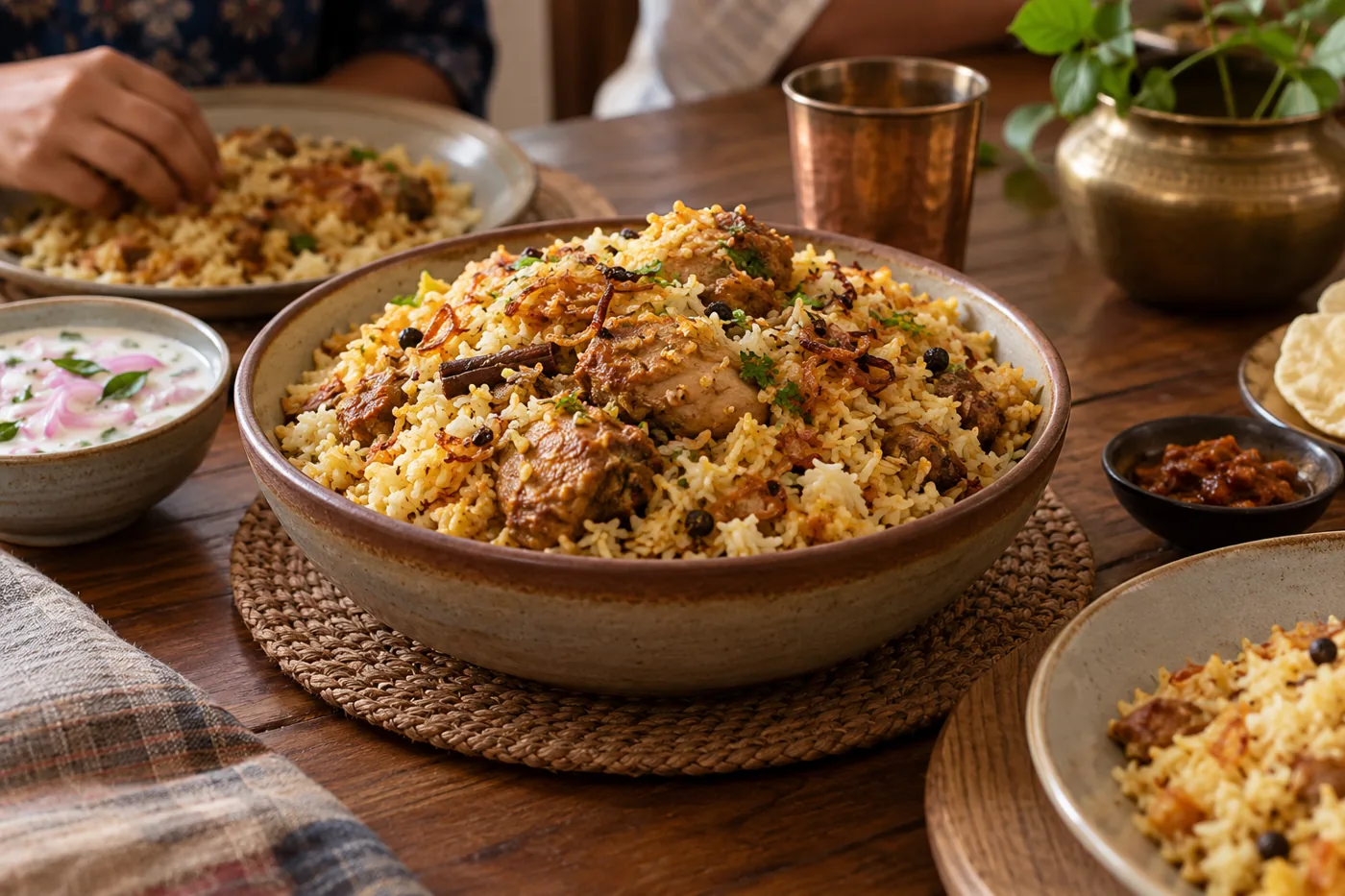
AI-created Malabar-biriyani-inspired rice and meat serving. Grain appearance, meat, garnish, side dishes and diners are interpretive; no cultivar, supplier or exact recipe can be authenticated from the image.

AI-created Malabar-biriyani-inspired rice and meat serving. Grain appearance, meat, garnish, side dishes and diners are interpretive; no cultivar, supplier or exact recipe can be authenticated from the image.

Credit: AI-generated for Culture Ark using OpenAI image_gen.
Rights: AI-generated output; no exclusive ownership or guaranteed copyrightability claimed.

An Artificial Mind Hive project by Austin Little · artificialmindhive.com

!AI-created Malabar-biriyani-inspired rice and meat serving. Grain appearance, meat, garnish, side dishes and diners are interpretive; no cultivar, supplier…

Culture Ark · Browse the gallery · 60 illustrated picks on Apiary

CA0840 · food and drink

Creator/community: Malabar cooks and Wayanad rice-growing communities Place/era: Northern Kerala, India; living regional rice-and-meat preparation

Generated interpretation

AI-created Malabar-biriyani-inspired rice and meat serving. Grain appearance, meat, garnish, side dishes and diners are interpretive; no cultivar, supplier or exact recipe can be authenticated from the image.

AI-created Malabar-biriyani-inspired rice and meat serving. Grain appearance, meat, garnish, side dishes and diners are interpretive; no cultivar, supplier or exact recipe can be authenticated from the image. Credit: AI-generated for Culture Ark using OpenAI image_gen. Rights: AI-generated output; no exclusive ownership or guaranteed copyrightability claimed. Changes: Resized within1400px and converted to WebP; no crop or substantive alteration.

Interpretive food illustration, not documentary evidence, a standardized recipe, exact ingredients or proportions, food-safety guidance, production instructions or a universal national version.

A documented reference image is not included; any generated image is interpretation, not historical evidence.

History and context

Malabar biriyani combines seasoned rice with a prepared main ingredient, with mutton among the versions documented by Kerala Tourism. The cultural story includes the grain itself: the tourism department identifies small-grained jeerakasala, also called kaima, grown in Wayanad and valued for biriyani on occasions such as weddings. This links a celebratory meal to the agricultural communities cultivating a recognizable ingredient. Future readers should not assume that every biryani uses long-grained basmati or that one regional recipe defines the whole South Asian family. The archive should keep the rice name, preparation context and cook’s version together, showing how a widely travelled dish takes a particular local form.

What future readers can learn

A celebratory dish can preserve knowledge of local crop varieties and the growers behind culinary reputation.

Limits and cultural context

Focus is Malabar, not an exclusive origin claim for biryani. Promotional health claims in the tourism source are omitted.

Where to learn more

Continue exploring

Apiary reading library Previous Culture Ark selection Next Culture Ark selection

Culture Ark is a curated archive, not a universal ranking. Interpretive images and source evidence serve different roles.


Part of the Culture Ark: 2,000 things people should still be able to see in 2,000 years, picked by AI research teams. Browse the gallery. The Culture Ark is an Artificial Mind Hive (AMH) project. AMH is owned by Austin Little.

Frequently asked
What is Malabar biriyani and aromatic local rice · Culture Ark about?
!AI-created Malabar-biriyani-inspired rice and meat serving. Grain appearance, meat, garnish, side dishes and diners are interpretive; no cultivar, supplier…
What should you know about generated interpretation?
AI-created Malabar-biriyani-inspired rice and meat serving. Grain appearance, meat, garnish, side dishes and diners are interpretive; no cultivar, supplier or exact recipe can be authenticated from the image. Credit: AI-generated for Culture Ark using OpenAI image_gen. Rights: AI-generated output; no exclusive…
What should you know about history and context?
Malabar biriyani combines seasoned rice with a prepared main ingredient, with mutton among the versions documented by Kerala Tourism. The cultural story includes the grain itself: the tourism department identifies small-grained jeerakasala, also called kaima, grown in Wayanad and valued for biriyani on occasions such…
What should you know about what future readers can learn?
A celebratory dish can preserve knowledge of local crop varieties and the growers behind culinary reputation.
What should you know about limits and cultural context?
Focus is Malabar, not an exclusive origin claim for biryani. Promotional health claims in the tourism source are omitted.
References & sources
  1. Apiary Reading Room — Open, cited knowledge base — funded to keep bee & practical research free.
From the Apiary Reading Room. Opinion & editorial — not financial advice. We don't overclaim.
More from the Reading Room