Culture Ark · Browse the gallery · 60 illustrated picks on Apiary
CA0247 · film and animation
Creator/community: Abbas Kiarostami, Hossein Sabzian and participants Place/era: Iran, 1990
Generated interpretation
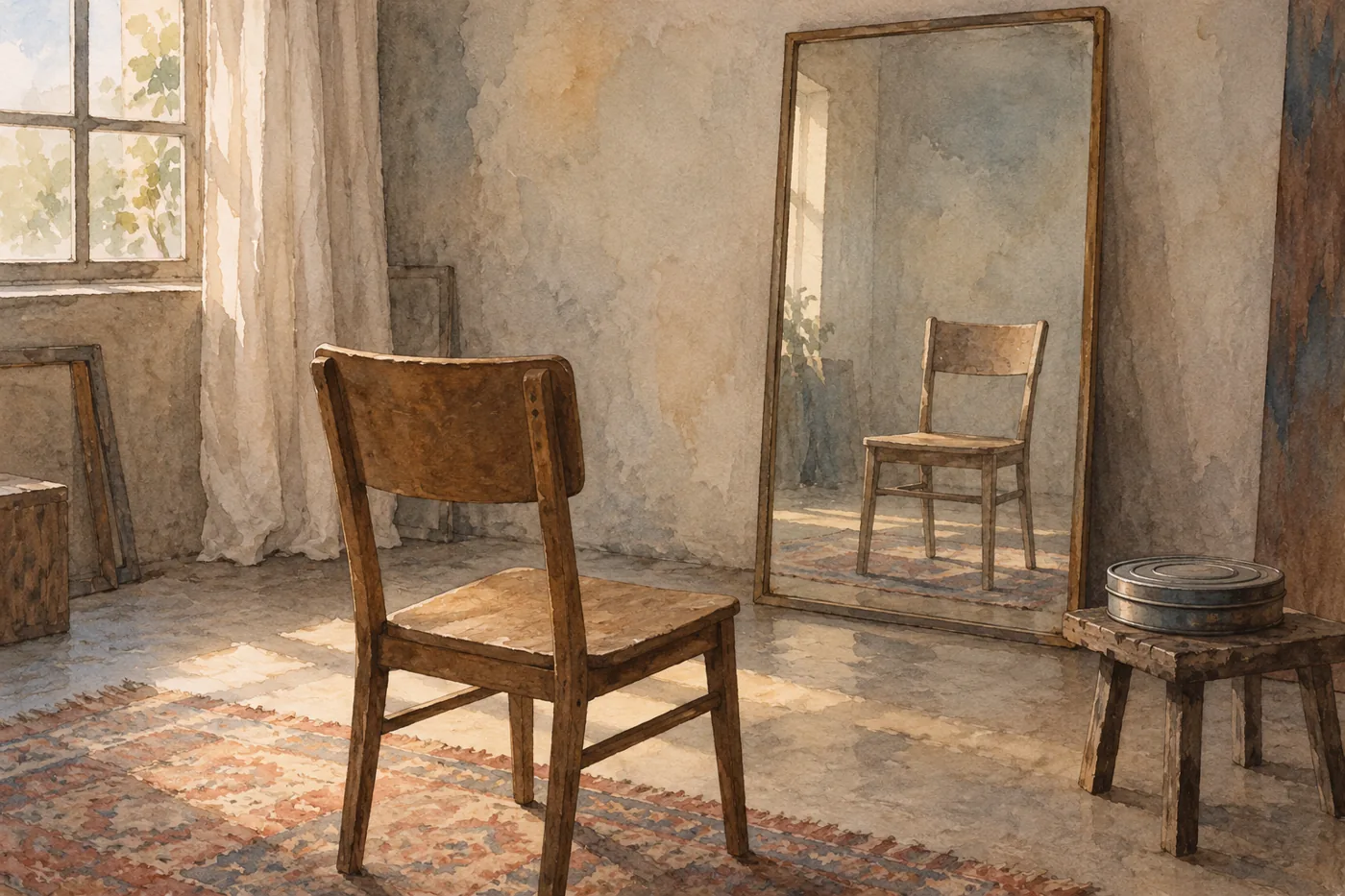
AI-generated watercolor: an empty chair and mirror with an unmarked film canister nearby. Credit: AI-generated for Culture Ark using OpenAI image_gen, 2026-11-01. Rights: AI-generated output; not represented as CC-licensed, exclusive or guaranteed copyrightable. Changes: Resized within1400px and converted to WebP; no crop or substantive alteration.
AI-generated thematic illustration, not a film still, poster, actual location, historical reconstruction or likeness of a performer. The linked film remains separately copyrighted. No exclusive ownership or guaranteed copyrightability is promised.
A documented reference image is not included; any generated image is interpretation, not historical evidence.
History and context
Close-up develops from a real incident involving a man who impersonated filmmaker Mohsen Makhmalbaf. Abbas Kiarostami involved the people connected with the case in a film that mixes documentary and reenactment. Criterion identifies this unstable boundary as central to its investigation of identity and cinema. The ark should retain that production context rather than present the images as either wholly spontaneous observation or conventional fiction. For future viewers, the work offers a question about why recognition as an artist might matter so intensely. It also demonstrates that the act of filming changes a situation: people can revisit events, perform themselves and acquire new public identities through the resulting work.
What future readers can learn
How media can reshape identity and the events it records.
Limits and cultural context
Distinguish filmed proceedings, reenactment and interpretation; avoid diagnosing participants. Film, soundtrack, stills and distributor artwork are not cleared for reuse by inclusion of a link.
Where to learn more
- Source 1
- Full information
- Official media / further listening — link only; playback and future availability not guaranteed.
Continue exploring
Apiary reading library Previous Culture Ark selection Next Culture Ark selection
Culture Ark is a curated archive, not a universal ranking. Interpretive images and source evidence serve different roles.
Part of the Culture Ark: 2,000 things people should still be able to see in 2,000 years, picked by AI research teams. Browse the gallery. The Culture Ark is an Artificial Mind Hive (AMH) project. AMH is owned by Austin Little.

Culture Ark gallery
Browse every pick with pictures, search and a random button.
Open the gallery →