
Culture Ark · Browse the gallery · 60 illustrated picks on Apiary
CA0126 · food and drink
Creator/community: Hawkers, apprentices and diners in Singapore Place/era: Singapore; urban communal food culture, inscription 2020
Generated interpretation
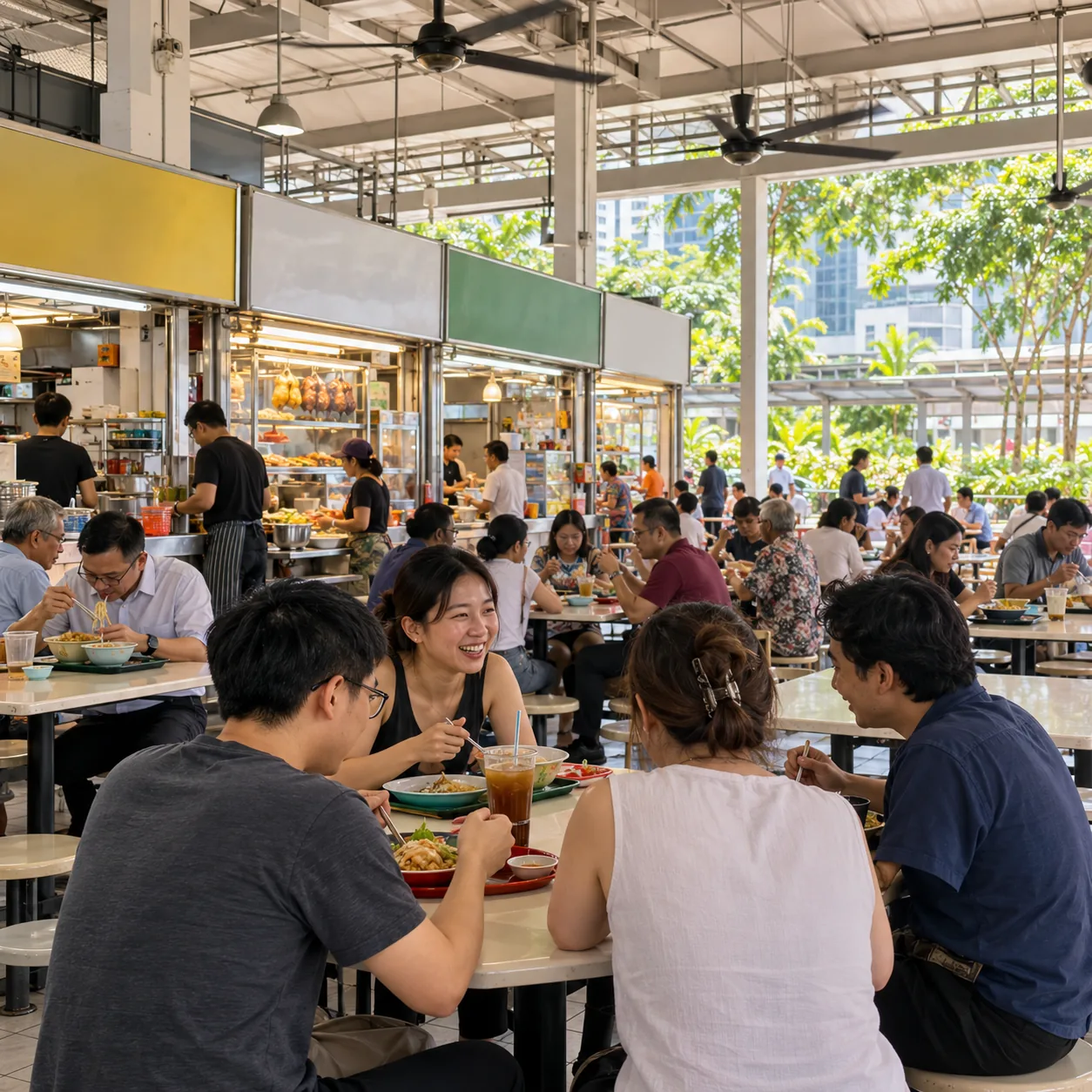
An imagined lunchtime in a Singapore-inspired hawker centre. Credit: AI-generated for Culture Ark using OpenAI image generation. Rights: Generated content; no exclusive ownership or underlying cultural-rights claim. Changes: Resized within1400px and converted to WebP; no crop or substantive alteration.
Fictional illustrative scene. No claim of documentary authenticity, exclusive ownership, endorsement, cultural authorization or verified recipe. Open-sided shared seating and stalls coherent; fictional people have no identity claim. Background detail simplified, blank fascias intentional.
Documented reference / existing artwork
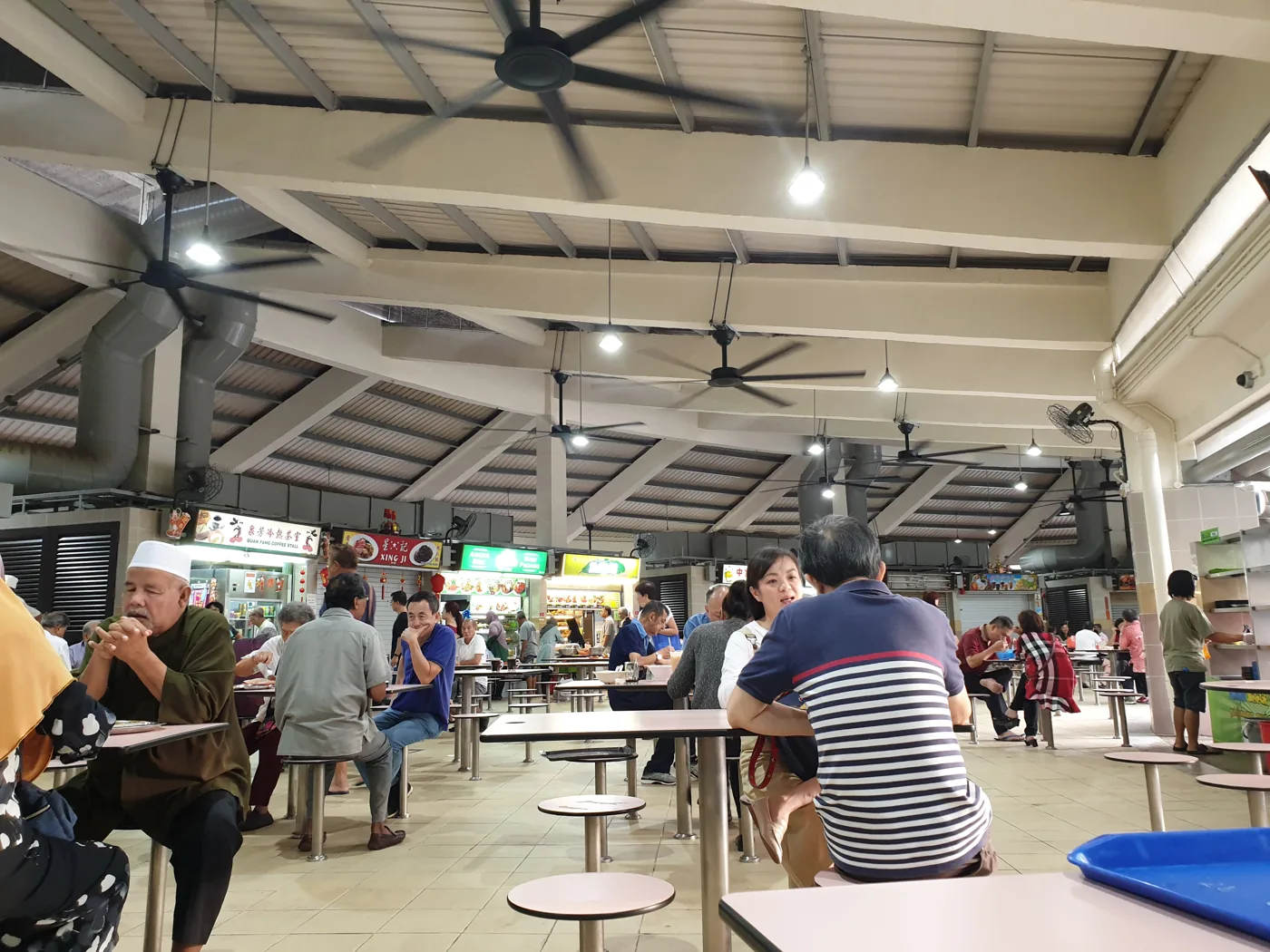
Tampines Round Market and Food Centre in Singapore in 2020. Credit: Kagenlim. Rights: CC BY-SA 4.0. Changes: Resized within1400px and converted to WebP; no crop or substantive alteration. Image source Image licence
Incidental people and commercial signage are not endorsements; image license does not license trademarks. Credit the creator, link the license and indicate any changes. Adapted versions must use the same or a compatible ShareAlike license.
History and context
Hawker culture combines specialist food preparation with shared urban eating spaces. Singapore’s hawker centres bring stalls together around common seating, allowing people with different backgrounds to meet over everyday meals. The food reflects exchanges among Chinese, Malay, Indian and other communities, with dishes adapted to local tastes. UNESCO also records the expertise of hawkers who refine a speciality and teach relatives or apprentices. Future readers should study the seating and conversations as carefully as the food. The centre offers an example of how public space, small businesses and ordinary routines can help make a city’s cultural identity tangible without requiring a formal festival or monument.
What future readers can learn
It makes multicultural urban life visible through routine meals and small-scale culinary expertise.
Limits and cultural context
Do not reduce living workers to a tourist attraction or assume all stalls offer identical prices, accessibility or diets. Similar food-centre traditions elsewhere have their own histories.
Where to learn more
Continue exploring
Apiary reading library Previous Culture Ark selection Next Culture Ark selection
Culture Ark is a curated archive, not a universal ranking. Interpretive images and source evidence serve different roles.
Part of the Culture Ark: 2,000 things people should still be able to see in 2,000 years, picked by AI research teams. Browse the gallery. The Culture Ark is an Artificial Mind Hive (AMH) project. AMH is owned by Austin Little.

Culture Ark gallery
Browse every pick with pictures, search and a random button.
Open the gallery →