
Culture Ark · Browse the gallery · Congolese rumba in the gallery · 60 illustrated picks on Apiary
CA0040 · music
Creator/community: Musicians and audiences of the Democratic Republic of the Congo, Republic of the Congo and diasporas Place/era: Urban Congo communities; living music and dance tradition
Generated interpretation
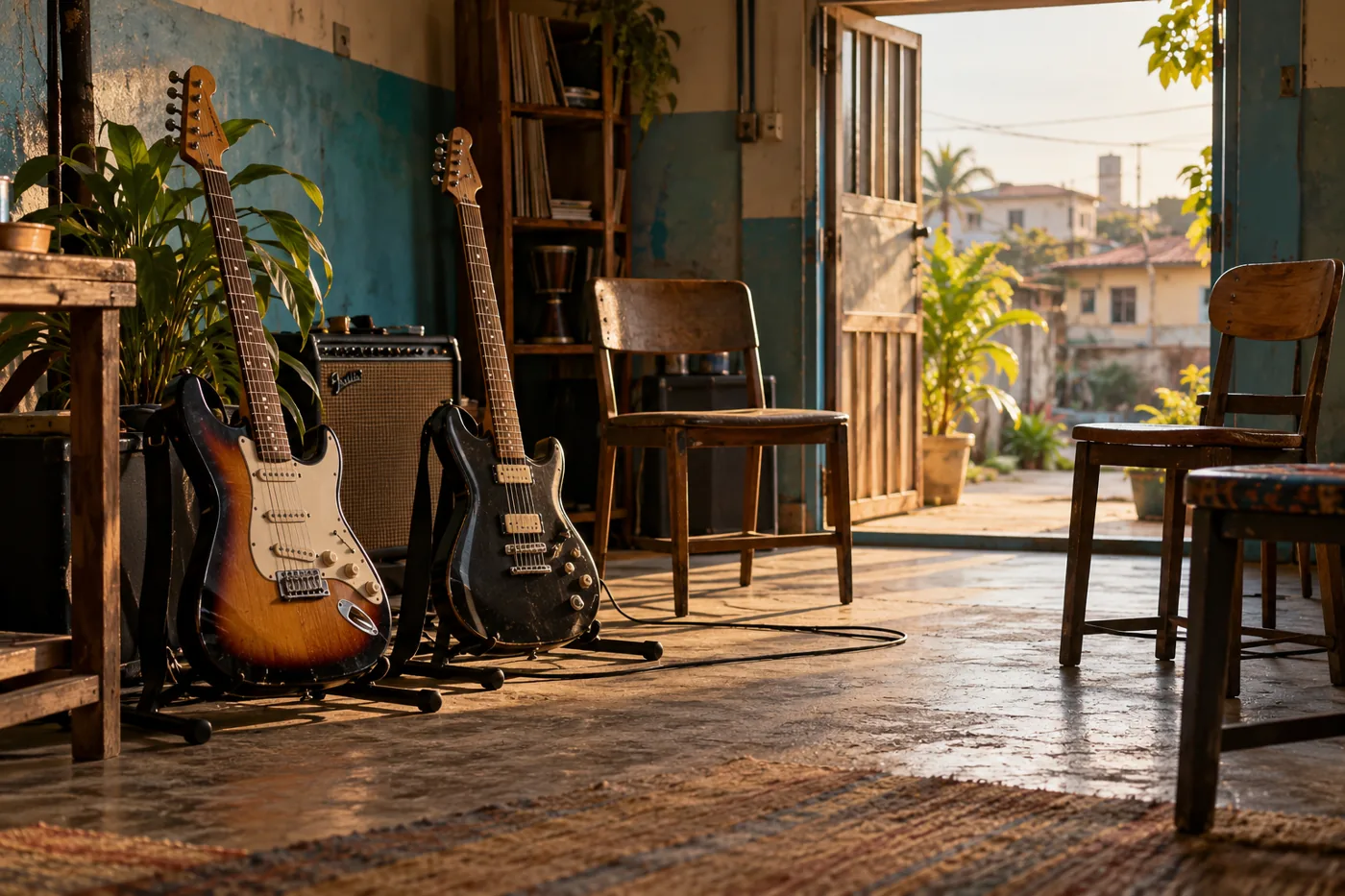
Unbranded guitars and chairs in an imagined urban rehearsal space evoke musical work. This is not Bakolo Music International’s actual room or a documented Kinshasa address. Credit: AI-generated for Culture Ark using OpenAI image_gen. Rights: AI-generated output; no exclusive ownership or guaranteed copyrightability claimed. Changes: Resized within1400px and converted to WebP; no crop or substantive alteration.
Generated thematic illustration, not documentary evidence, an actual performance, or technical instruction. Cultural knowledge, underlying works, names and personality rights remain separate.
Documented reference / existing artwork
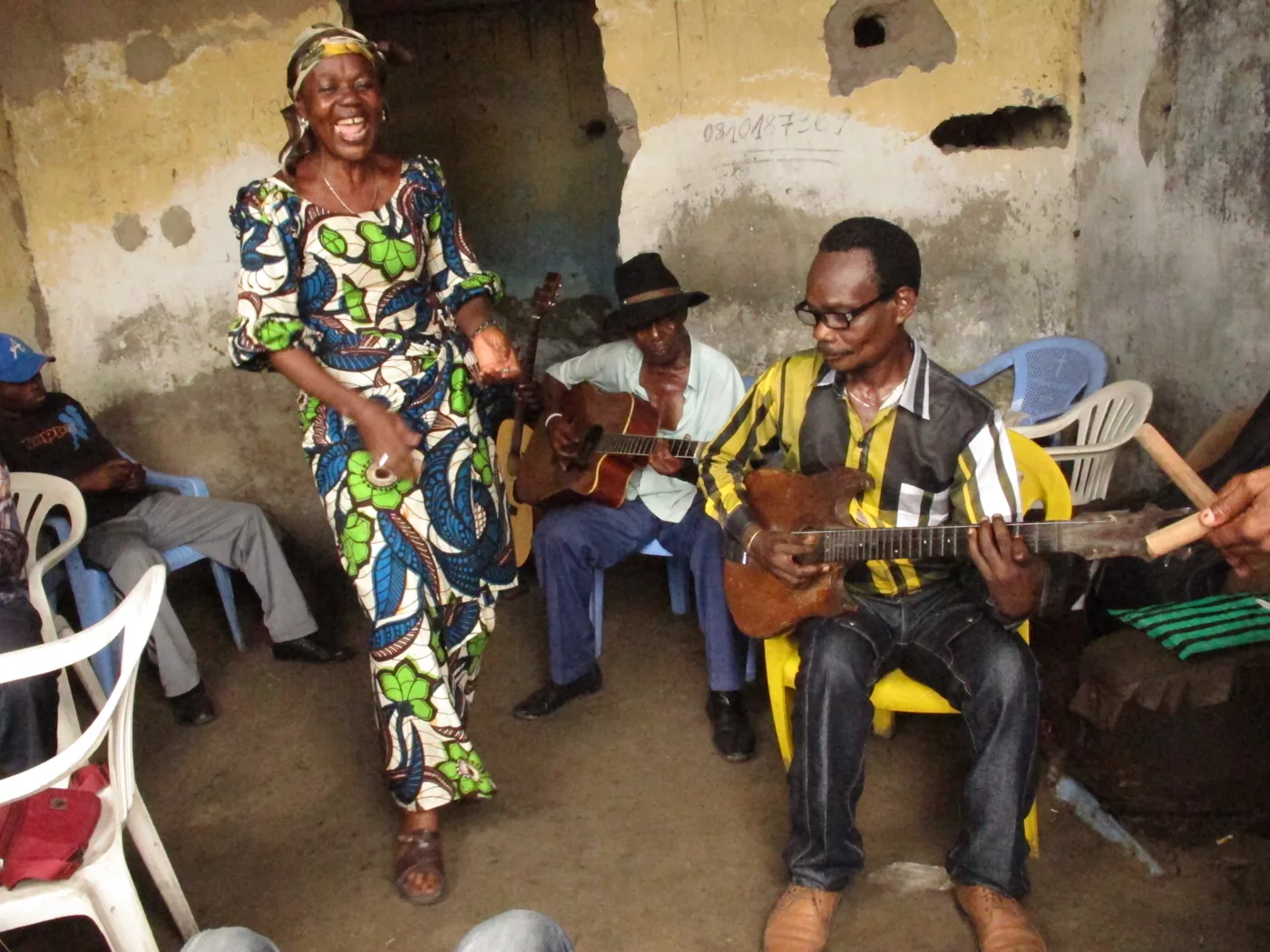
Bakolo Music International rehearsing in Kinshasa, as identified by the photographer. No claim that the group is the oldest is adopted here. Credit: Jeanne Vu Van. Rights: CC BY-SA 4.0. Changes: Resized within1400px and converted to WebP; no crop or substantive alteration. Image source Image licence
Reuse terms apply to this image only. Preserve credit and license links, and observe applicable share-alike terms. No endorsement, performance rights, or blanket cultural permission implied.
History and context
Congolese rumba is a music-and-dance practice shared across the Democratic Republic of the Congo and the Republic of the Congo. UNESCO describes professional and amateur performers, neighborhood clubs, choirs and community teaching rather than only a commercial record industry. Its uses include celebration and mourning in public and private spaces. Women’s contributions to romantic and religious styles are explicitly recognized in the nomination account. This entry preserves a form that can bind generations and diaspora communities while also supporting working musicians. The paired national attribution matters because a cultural network can extend beyond the administrative line used to organize a museum or catalog.
What future readers can learn
Curatorial interpretation: Popular music can be work, social connection and collective memory simultaneously.
Limits and cultural context
Do not confuse Congolese rumba with Cuban rumba merely because they share a name. This entry is not an exhaustive origin history.
Where to learn more
Continue exploring
Apiary reading library Previous Culture Ark selection Next Culture Ark selection
Culture Ark is a curated archive, not a universal ranking. Interpretive images and source evidence serve different roles.
Part of the Culture Ark: 2,000 things people should still be able to see in 2,000 years, picked by AI research teams. Browse the gallery. The Culture Ark is an Artificial Mind Hive (AMH) project. AMH is owned by Austin Little.

Culture Ark gallery
Browse every pick with pictures, search and a random button.
Open the gallery →