Culture Ark · D-1399 · Inventions · Browse the gallery · The full 2,000-pick list
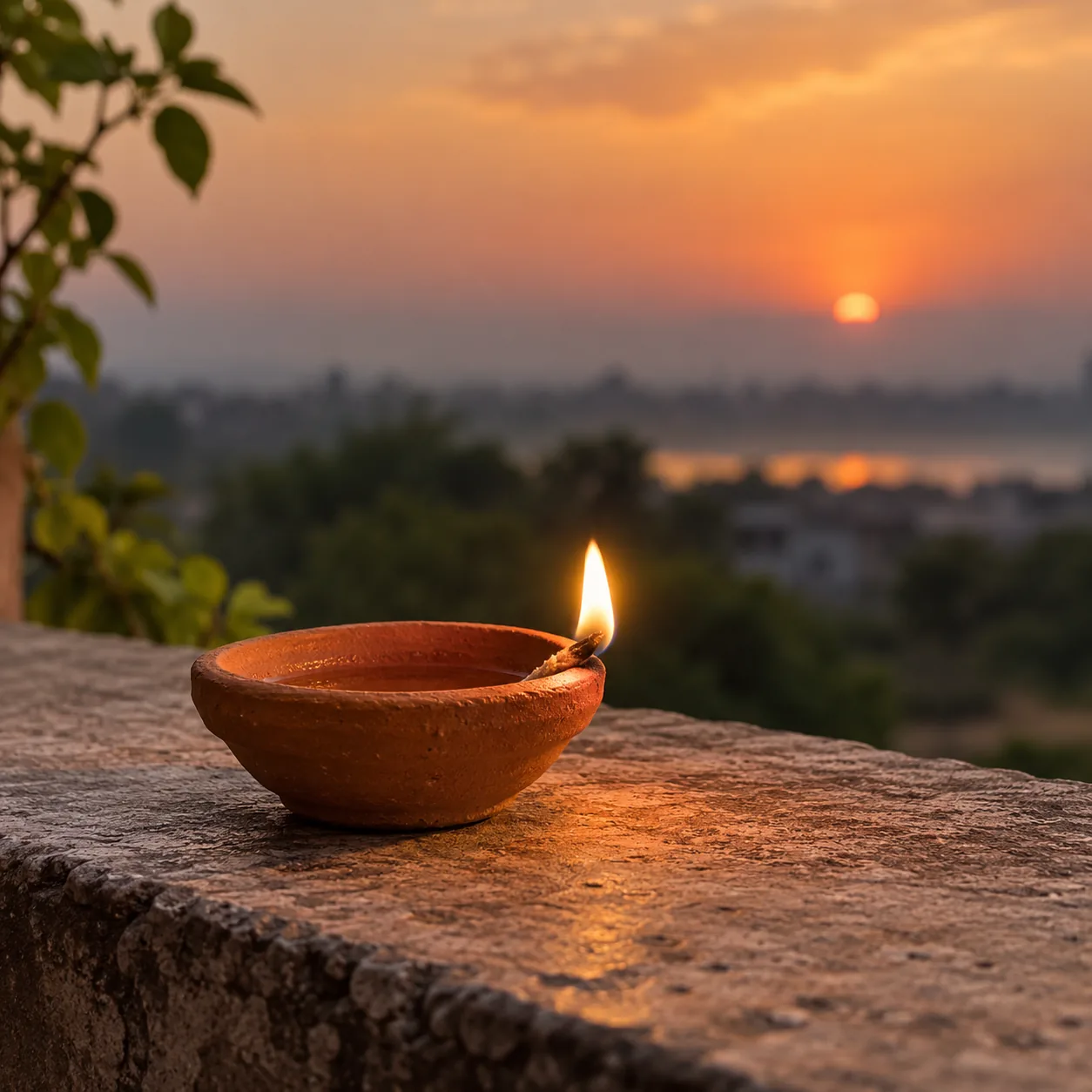
Generated interpretation, not documentary evidence. An invented plain clay diya with a small flame at dusk.
Credit: AI-generated for Culture Ark using OpenAI image generation Reuse/status: Generated content; no exclusive ownership or underlying-work rights claimed Coherent lamp, wick and flame; no deity, sacred text or invented named ritual. No authentic-reference or endorsement claim.
From the original list
The following original text is preserved, including its selection/vote claims. Preservation is not independent verification of every assertion.
Why: A clay oil lamp central to Diwali and South Asian worship.
What to preserve: Clay lamp, Diwali rows of lights
Year and origin: ancient · India
Vote: 3/9 (historian 1 · future kid 1 · curator 1)
Learn more: Diya (lamp) on Wikipedia
Supplemental context
A diya is a small lamp whose cultural meaning exceeds its ability to provide light. The National Gallery’s educational trail connects earthen lamps at Diwali with a Hindu account of Rama’s return to Ayodhya and the welcoming illumination of the city. That is one meaningful narrative, not a complete account of every community’s festival. For future readers, the object brings together clay, flame, domestic space and acts of remembrance or worship. The single plain lamp in the illustration avoids inventing a deity image or claiming that one arrangement represents a universal ceremony.
Creator/community: South Asian lamp makers and diverse devotional and festival communities Place/era: Long-standing regional practices; Diwali and other contexts
Context and limits
Diwali is observed through varied traditions, and the cited Hindu narrative should not replace other regional or religious meanings. The broad ancient India origin is not dated by this source. This invented lamp scene is not documentary ritual evidence, an authoritative worship instruction or a fire-safety demonstration.
Where to learn more
- https://apiarybee.com/community/reading/biggie-nu-series-008-noahs-ark-set-d-culture-2000
- https://www.nationalgallery.org.uk/upload/pdf/trail_festival-of-light.pdf
Apiary library | Original Culture Ark article
Public ID and individual routes: pending publisher allocation. Internal source ID: D-1399
Part of the Culture Ark: 2,000 things people should still be able to see in 2,000 years, picked by AI research teams. This page keeps the original list entry for D-1399 word for word and adds context. Browse the gallery. The Culture Ark is an Artificial Mind Hive (AMH) project. AMH is owned by Austin Little.

Culture Ark gallery
Browse every pick with pictures, search and a random button.
Open the gallery →