Culture Ark · D-1383 · Inventions · Browse the gallery · The full 2,000-pick list
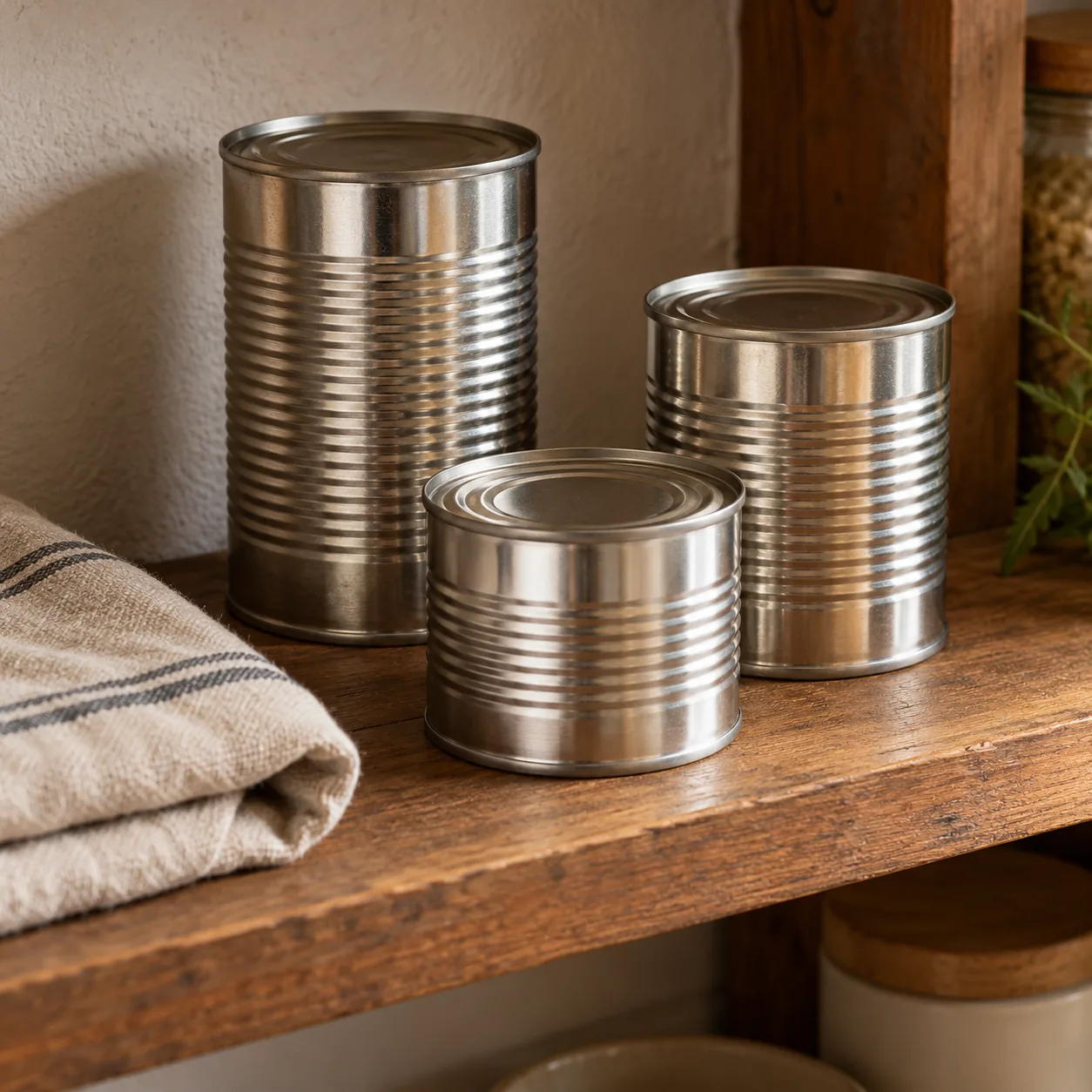
Generated interpretation, not documentary evidence. Three invented sealed unlabelled metal cans; no verified contents, coatings, historical identity or preservation performance.
Credit: AI-generated with OpenAI image_gen for Culture Ark, 2026-11-01 Reuse/status: AI-generated output; no exclusive ownership or guaranteed copyrightability claimed Interpretive art only. Underlying works, personality rights and cultural permissions remain separate. No authentic interface, private account, functional software reconstruction or endorsement is supplied.
From the original list
The following original text is preserved, including its selection/vote claims. Preservation is not independent verification of every assertion.
Why: Preserved food for armies, explorers and pantries.
What to preserve: Durand patent, can sizes, Campbell's soup can
Year and origin: 1810 · United Kingdom
Vote: 3/9 (historian 1 · future kid 1 · curator 1)
Learn more: Steel and tin cans on Wikipedia
Supplemental context
The food can connects preservation with transport, industry and everyday pantry habits. Durand’s patent was part of a chain of contributors and later commercial refinement rather than a complete industry appearing overnight. Future readers can study the relationship between an inexpensive container and large systems of provisioning, while recognizing the labor and processes hidden by a sealed metal surface.
Creator/community: Peter Durand, Philippe de Girard, Bryan Donkin, John Hall and later canning workers Place/era: British patent in 1810 and early commercial development, followed by international industries
Context and limits
The three plain cans are invented props, not Durand-era specimens, Campbell’s packaging or chemically tested containers. Their contents, coatings, seals and material composition are unknown. Tin can does not necessarily mean a container made entirely of tin. No safe canning process, food-storage duration or consumption judgment is supplied by this illustration.
Where to learn more
- https://apiarybee.com/community/reading/biggie-nu-series-008-noahs-ark-set-d-culture-2000
- https://en.wikipedia.org/wiki/Steel_and_tin_cans
Apiary library | Original Culture Ark article
Public ID and individual routes: pending publisher allocation. Internal source ID: D-1383
Part of the Culture Ark: 2,000 things people should still be able to see in 2,000 years, picked by AI research teams. This page keeps the original list entry for D-1383 word for word and adds context. Browse the gallery. The Culture Ark is an Artificial Mind Hive (AMH) project. AMH is owned by Austin Little.

Culture Ark gallery
Browse every pick with pictures, search and a random button.
Open the gallery →