Culture Ark · D-1338 · Inventions · Browse the gallery · The full 2,000-pick list
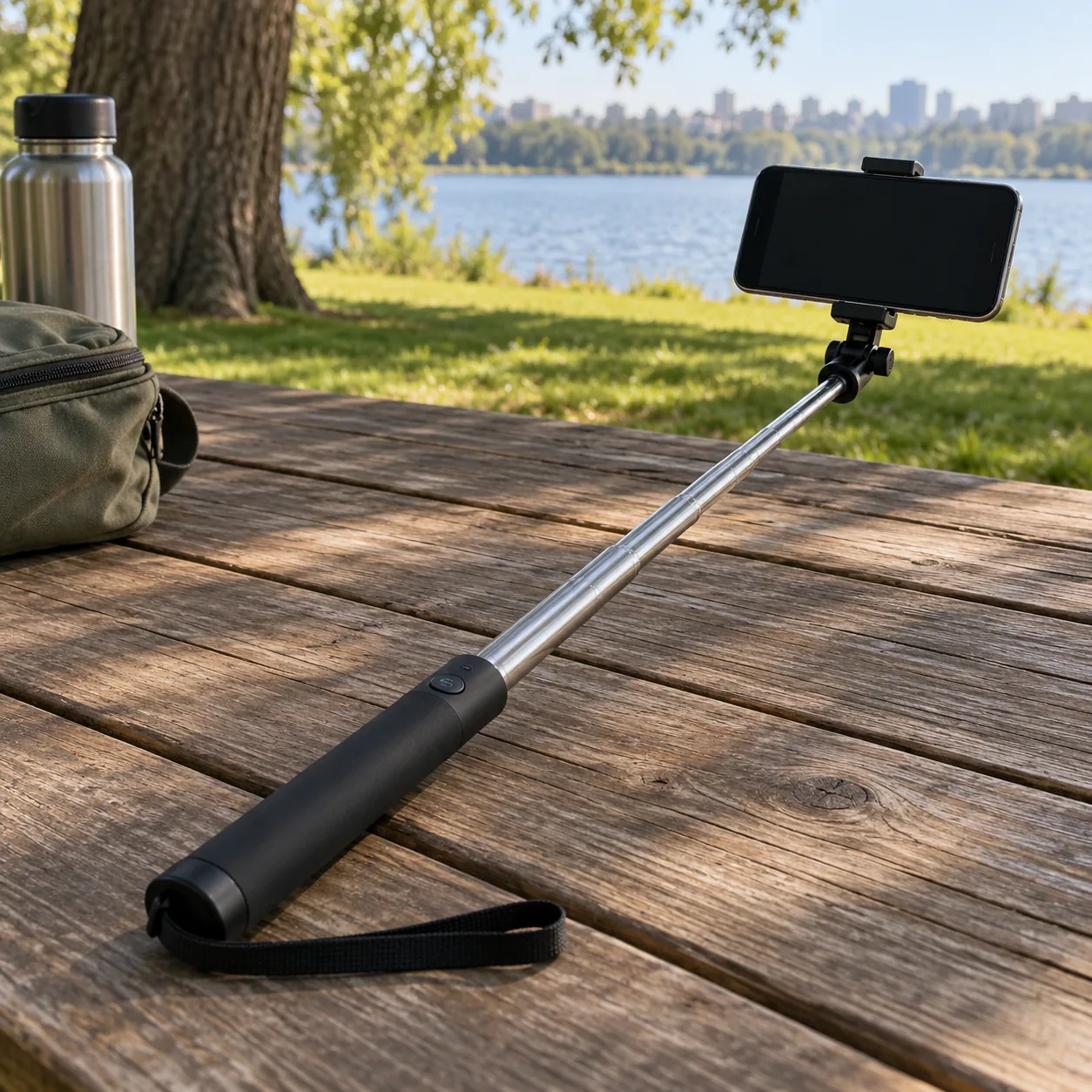
Generated interpretation, not documentary evidence. Invented selfie stick and blank-screen phone on a picnic table; not a patent drawing or tested support.
Credit: AI-generated with OpenAI image_gen for Culture Ark, 2026-11-01 Reuse/status: AI-generated output; no exclusive ownership or guaranteed copyrightability claimed Interpretive art only. Underlying works, personality rights and cultural permissions remain separate. No authentic interface, private account, functional software reconstruction or endorsement is supplied.
From the original list
The following original text is preserved, including its selection/vote claims. Preservation is not independent verification of every assertion.
Why: An extendable pole for photographing yourself, mocked and beloved.
What to preserve: Minolta patent by Hiroshi Ueda, 2014 craze
Year and origin: 1983 · Japan
Vote: 4/9 (historian 1 · future kid 2 · curator 1)
Learn more: Selfie stick on Wikipedia
Supplemental context
The selfie stick extends the reach of a camera or phone, making the photographer part of a wider composition. A 1983 patent by Ueda and Mima belongs to a longer history of self-portrait accessories, while the familiar term spread much later. Future readers can examine how a simple accessory became a focus of arguments about tourism, public space and self-presentation.
Creator/community: Hiroshi Ueda and Yujiro Mima, later accessory designers and self-portrait makers Place/era: Japan-linked 1983 telescopic-extender patent; later international popularity
Context and limits
The phone, clamp and pole are invented contextual props, not a Minolta patent drawing or certified support. The original attribution to Ueda alone is supplemented with the co-inventor named in the source. No safe loading, operating method or venue permission is implied, and the scenery is not a documented location.
Where to learn more
- https://apiarybee.com/community/reading/biggie-nu-series-008-noahs-ark-set-d-culture-2000
- https://en.wikipedia.org/wiki/Selfie_stick
Apiary library | Original Culture Ark article
Public ID and individual routes: pending publisher allocation. Internal source ID: D-1338
Part of the Culture Ark: 2,000 things people should still be able to see in 2,000 years, picked by AI research teams. This page keeps the original list entry for D-1338 word for word and adds context. Browse the gallery. The Culture Ark is an Artificial Mind Hive (AMH) project. AMH is owned by Austin Little.

Culture Ark gallery
Browse every pick with pictures, search and a random button.
Open the gallery →