Culture Ark · D-1341 · Inventions · Browse the gallery · The full 2,000-pick list
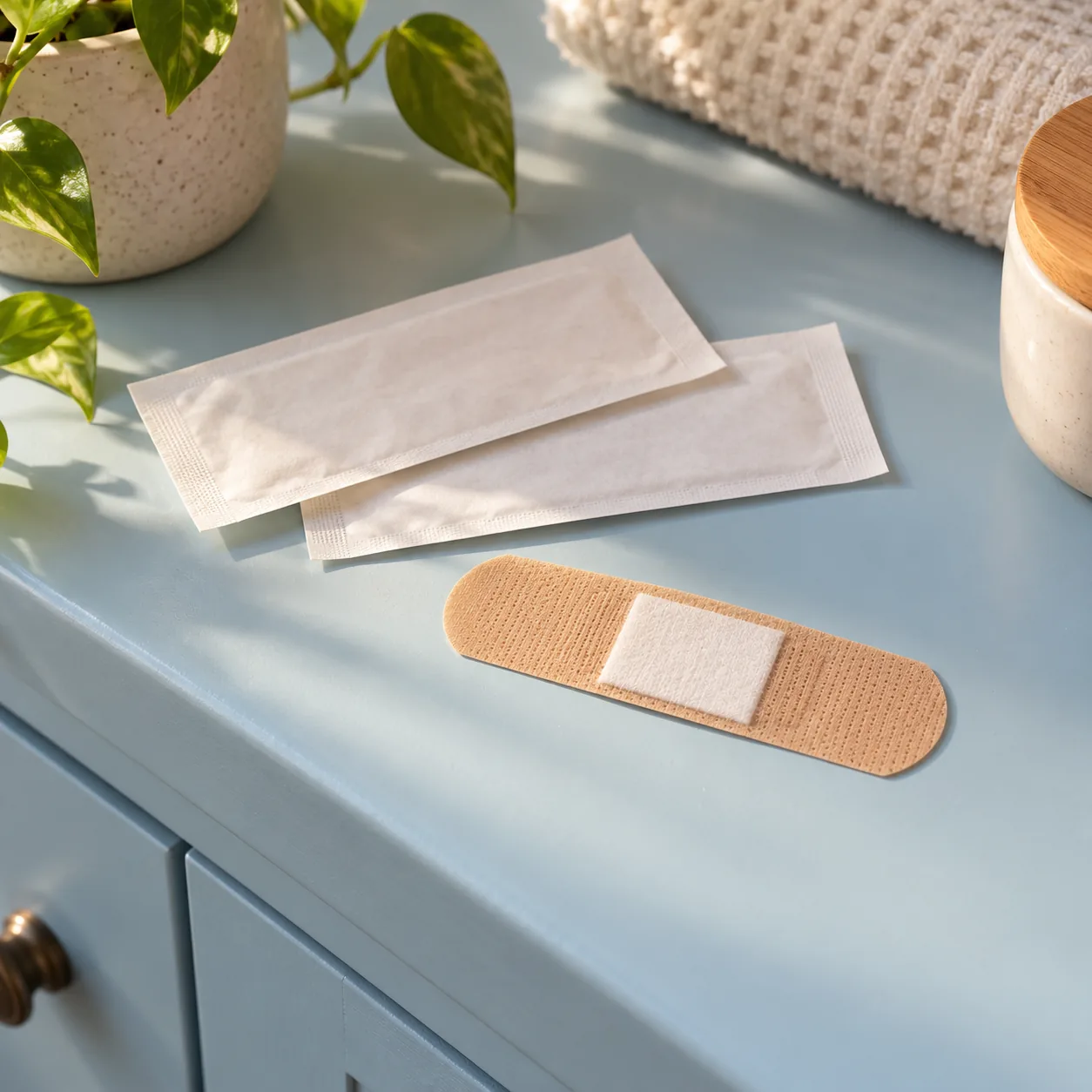
Generated interpretation, not documentary evidence. A plain beige strip with a white pad and two blank wrappers evokes household care, not an authentic branded package or medical application.
Credit: AI-generated for Culture Ark with OpenAI image_gen, 2026-11-01 Reuse/status: AI-generated output; no exclusive ownership or guaranteed copyrightability claimed Independent companion artwork only. Underlying works, performer and trademark rights remain separate. No exclusive ownership or public-domain claim.
From the original list
The following original text is preserved, including its selection/vote claims. Preservation is not independent verification of every assertion.
Why: The everyday plaster for scraped knees.
What to preserve: Earle Dickson's invention, cartoon-print bandages
Year and origin: 1920 · United States
Vote: 4/9 (historian 1 · future kid 2 · curator 1)
Learn more: Band-Aid on Wikipedia
Supplemental context
An adhesive bandage turns a small combination of materials into a familiar household object. The brand's own historical timeline credits Earle Dickson with combining tape and gauze in 1920, then distinguishes that experiment from the product's appearance in stores in 1921. Later changes in size, packaging and decoration show that the familiar strip was developed over time rather than arriving in its present form all at once. Future readers can examine the object as both a manufactured dressing and a token of everyday care. Printed characters and advertising added cultural meanings beyond the basic materials. The illustration deliberately avoids those licensed designs and the brand's packaging, so it can accompany the history without pretending to be an authentic commercial specimen.
Creator/community: Earle Dickson and manufacturers and users of adhesive bandages Place/era: United States; 1920 invention account, 1921 retail introduction
Context and limits
BAND-AID is a brand, not the name of every adhesive dressing. Manufacturer history is attributed. This historical entry gives no wound-care or treatment instructions, and beige is not a universal skin color.
Where to learn more
- https://apiarybee.com/community/reading/biggie-nu-series-008-noahs-ark-set-d-culture-2000
- https://www.band-aid.com/about/history
Apiary library | Original Culture Ark article
Public ID and individual routes: pending publisher allocation. Internal source ID: D-1341
Part of the Culture Ark: 2,000 things people should still be able to see in 2,000 years, picked by AI research teams. This page keeps the original list entry for D-1341 word for word and adds context. Browse the gallery. The Culture Ark is an Artificial Mind Hive (AMH) project. AMH is owned by Austin Little.

Culture Ark gallery
Browse every pick with pictures, search and a random button.
Open the gallery →