Culture Ark · D-1297 · Inventions · Browse the gallery · The full 2,000-pick list
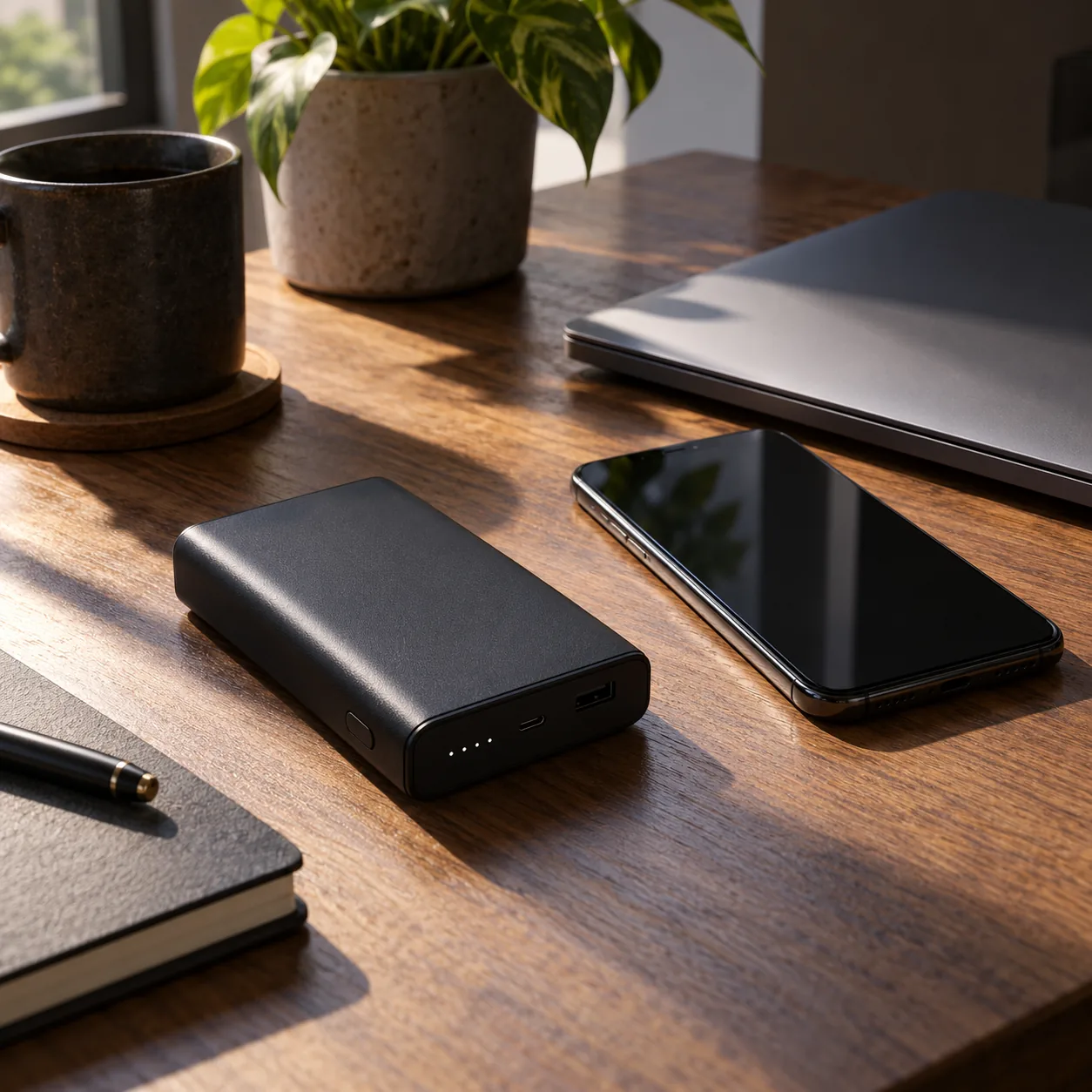
Generated interpretation, not documentary evidence. A closed power-bank-like object, dark phone and closed laptop evoke portable energy; ports and indicator dots are decorative, not verified chemistry or circuitry.
Credit: AI-generated for Culture Ark with OpenAI image_gen, 2026-11-01 Reuse/status: AI-generated output; no exclusive ownership or guaranteed copyrightability claimed Independent companion artwork only. Underlying works, performer and trademark rights remain separate. No exclusive ownership or public-domain claim.
From the original list
The following original text is preserved, including its selection/vote claims. Preservation is not independent verification of every assertion.
Why: Powers phones, laptops and electric cars.
What to preserve: Sony first commercial cell, Nobel 2019, swelling failure
Year and origin: 1991 · Japan
Vote: 5/9 (historian 2 · future kid 1 · curator 2)
Learn more: Lithium-ion battery on Wikipedia
Supplemental context
Lithium-ion batteries link research in materials to the cultural expectation that electronic objects can travel with their users. The United States Department of Energy's historical account describes contributions by Whittingham, Goodenough and Yoshino and connects them with Sony's 1991 commercialization. It also records their recognition in the 2019 Nobel Prize in Chemistry. These are stages in a collaborative history, not evidence that one person suddenly invented every rechargeable device. Future readers can examine how portable energy influenced habits of communication, work and entertainment while remembering that batteries differ in chemistry, construction and intended use. A closed battery pack alone cannot reveal all those properties. This card therefore evokes ordinary portable electronics without pretending to provide a verified internal arrangement or instructions for making or repairing a cell.
Creator/community: M. Stanley Whittingham, John B. Goodenough, Akira Yoshino and many subsequent researchers and manufacturers Place/era: Research from the 1970s onward; Sony commercialization in 1991
Context and limits
The 1991 date is a commercialization milestone. Official Nobel pages returned access errors; the independently opened DOE account supports the award history. No charging, dismantling or swollen-battery handling instructions are supplied.
Where to learn more
- https://apiarybee.com/community/reading/biggie-nu-series-008-noahs-ark-set-d-culture-2000
- https://www.energy.gov/science/articles/charging-development-lithium-ion-batteries
Apiary library | Original Culture Ark article
Public ID and individual routes: pending publisher allocation. Internal source ID: D-1297
Part of the Culture Ark: 2,000 things people should still be able to see in 2,000 years, picked by AI research teams. This page keeps the original list entry for D-1297 word for word and adds context. Browse the gallery. The Culture Ark is an Artificial Mind Hive (AMH) project. AMH is owned by Austin Little.

Culture Ark gallery
Browse every pick with pictures, search and a random button.
Open the gallery →