Culture Ark · D-1299 · Inventions · Browse the gallery · The full 2,000-pick list
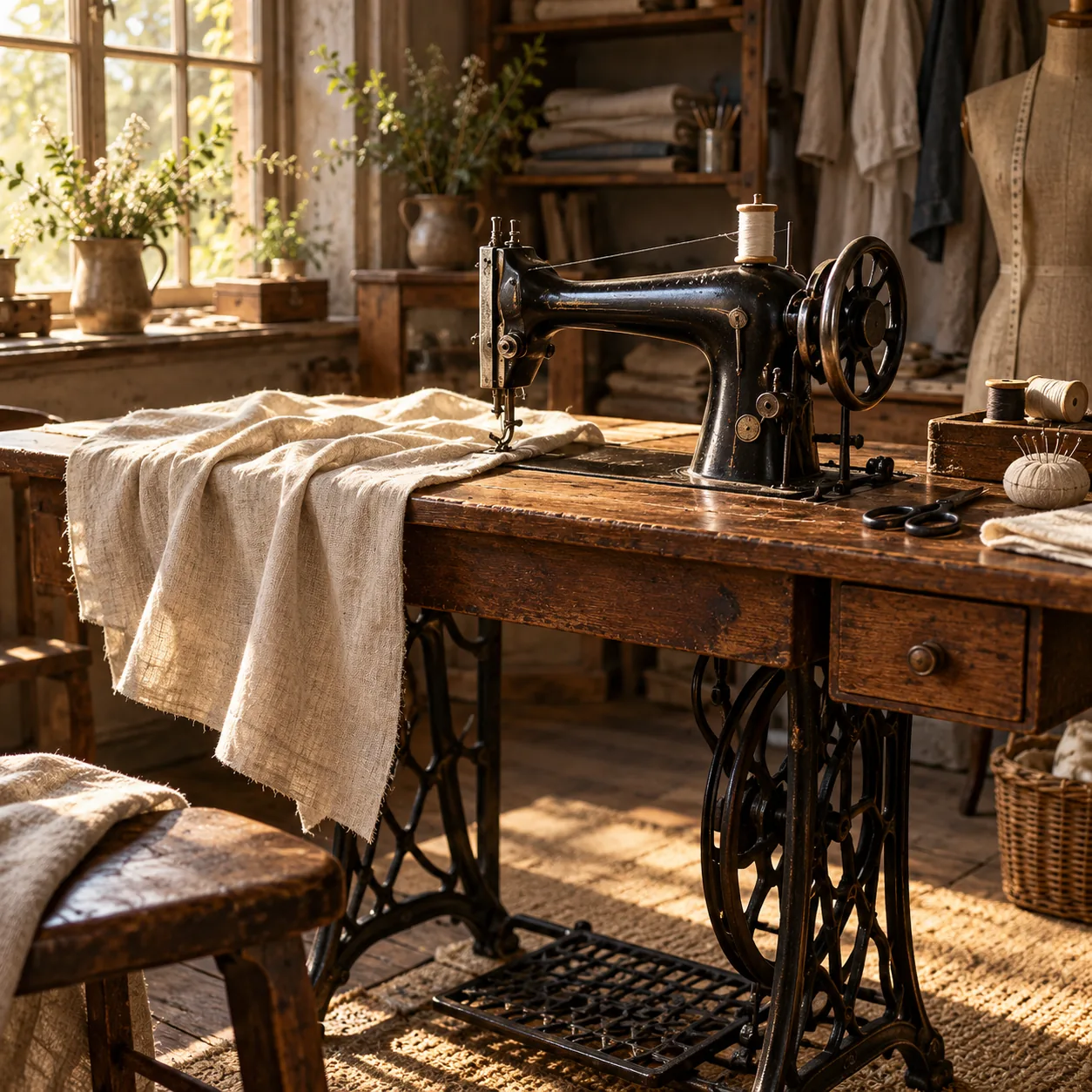
Generated interpretation, not documentary evidence. A fictional black treadle machine, cloth and spools evoke sewing work; not Howe’s original machine, an authenticated Singer model or a functional mechanical plan.
Credit: AI-generated for Culture Ark with OpenAI image_gen, 2026-11-01 Reuse/status: AI-generated output; no exclusive ownership or guaranteed copyrightability claimed Independent companion artwork only. Underlying works, performer and trademark rights remain separate. No exclusive ownership or public-domain claim.
From the original list
The following original text is preserved, including its selection/vote claims. Preservation is not independent verification of every assertion.
Why: Industrialized clothing and home tailoring.
What to preserve: Howe and Singer machines, treadle models
Year and origin: 1846 · United States
Vote: 5/9 (historian 2 · future kid 1 · curator 2)
Learn more: Sewing machine on Wikipedia
Supplemental context
The sewing machine sits at the intersection of invention, manufacturing and skilled labor. The Museum of American Heritage's historical account describes earlier experiments as well as Howe's 1846 patent and Singer's later work, making clear that the familiar device did not emerge from a single isolated act. Patent disputes and arrangements among manufacturers also shaped its development. Future readers should examine what machines changed about clothing production without assuming that they eliminated skill or automatically improved every worker's conditions. A domestic treadle machine, a factory machine and the hands using them belong to different settings. Preserving an actual model and its operating documentation would explain its mechanism; this selection instead emphasizes the broader relationship between equipment, household work, commercial production and the culture of making and mending clothes.
Creator/community: Elias Howe, Isaac Singer, earlier inventors and generations of sewing workers Place/era: Multiple nineteenth-century developments; Howe patent milestone in 1846
Context and limits
The archived 1846 date identifies Howe’s patent milestone, not the first sewing attempt or every later treadle model. The card’s thread path and mechanism are not validated; it is not an operating or repair manual.
Where to learn more
- https://apiarybee.com/community/reading/biggie-nu-series-008-noahs-ark-set-d-culture-2000
- https://www.moah.org/sewingmachines
Apiary library | Original Culture Ark article
Public ID and individual routes: pending publisher allocation. Internal source ID: D-1299
Part of the Culture Ark: 2,000 things people should still be able to see in 2,000 years, picked by AI research teams. This page keeps the original list entry for D-1299 word for word and adds context. Browse the gallery. The Culture Ark is an Artificial Mind Hive (AMH) project. AMH is owned by Austin Little.

Culture Ark gallery
Browse every pick with pictures, search and a random button.
Open the gallery →