Culture Ark · D-1173 · Language and humor · Browse the gallery · The full 2,000-pick list
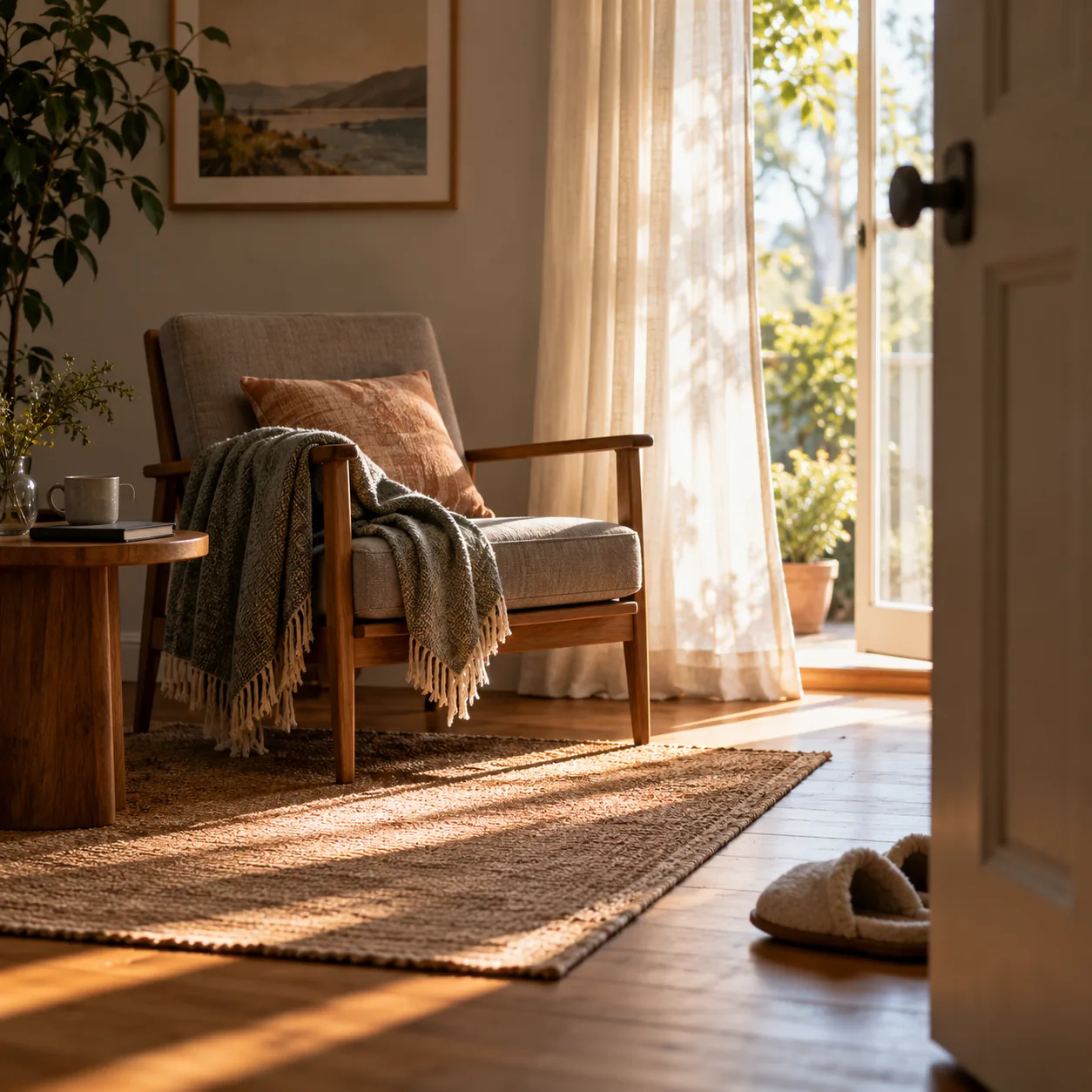
Generated interpretation, not documentary evidence. An empty chair and softly lit doorway offer a non-diagnostic metaphor for distance and reconnection.
Credit: AI-generated for Culture Ark using OpenAI image generation Reuse/status: Generated content; no exclusive ownership or underlying-work rights claimed Room, chair and slippers coherent; no stereotyped or distressed person depicted. Conceptual setting, not evidence of social withdrawal or a treatment recommendation. No authentic-reference or endorsement claim.
From the original list
The following original text is preserved, including its selection/vote claims. Preservation is not independent verification of every assertion.
Why: People who withdraw from society.
What to preserve: the word
Year and origin: 1998 · Japan
Vote: 4/9 (historian 2 · future kid 1 · curator 1)
Learn more: Hikikomori on Wikipedia
Supplemental context
Hikikomori is commonly used in discussions of prolonged social withdrawal. The Foreign Press Center Japan’s record of Tamaki Saitō’s 2019 briefing emphasizes middle-aged people as well as younger groups, family circumstances and support needs. This helps counter a narrow stereotype of the term as describing only adolescents. For future readers, the selection raises questions about how societies name participation, isolation and dependence. An archive should include people’s own accounts and the changing language of support, not merely outside descriptions of those who withdraw.
Creator/community: People experiencing social withdrawal, families, support communities and researchers including Tamaki Saitō Place/era: Japan and wider discussion; especially prominent in late-twentieth-century and later public debate
Context and limits
1998 is retained as the original entry’s historical marker, not verified here as the onset of the phenomenon. Definitions and survey methods vary. This is not a diagnosis, and ordinary solitude or introversion should not be equated with hikikomori. An empty room cannot demonstrate someone’s mental state; respect privacy and avoid stigmatizing assumptions.
Where to learn more
- https://apiarybee.com/community/reading/biggie-nu-series-008-noahs-ark-set-d-culture-2000
- https://fpcj.jp/en/worldnews-en/briefings-en/p=73828/
Apiary library | Original Culture Ark article
Public ID and individual routes: pending publisher allocation. Internal source ID: D-1173
Part of the Culture Ark: 2,000 things people should still be able to see in 2,000 years, picked by AI research teams. This page keeps the original list entry for D-1173 word for word and adds context. Browse the gallery. The Culture Ark is an Artificial Mind Hive (AMH) project. AMH is owned by Austin Little.

Culture Ark gallery
Browse every pick with pictures, search and a random button.
Open the gallery →