Culture Ark · D-1178 · Language and humor · Browse the gallery · The full 2,000-pick list
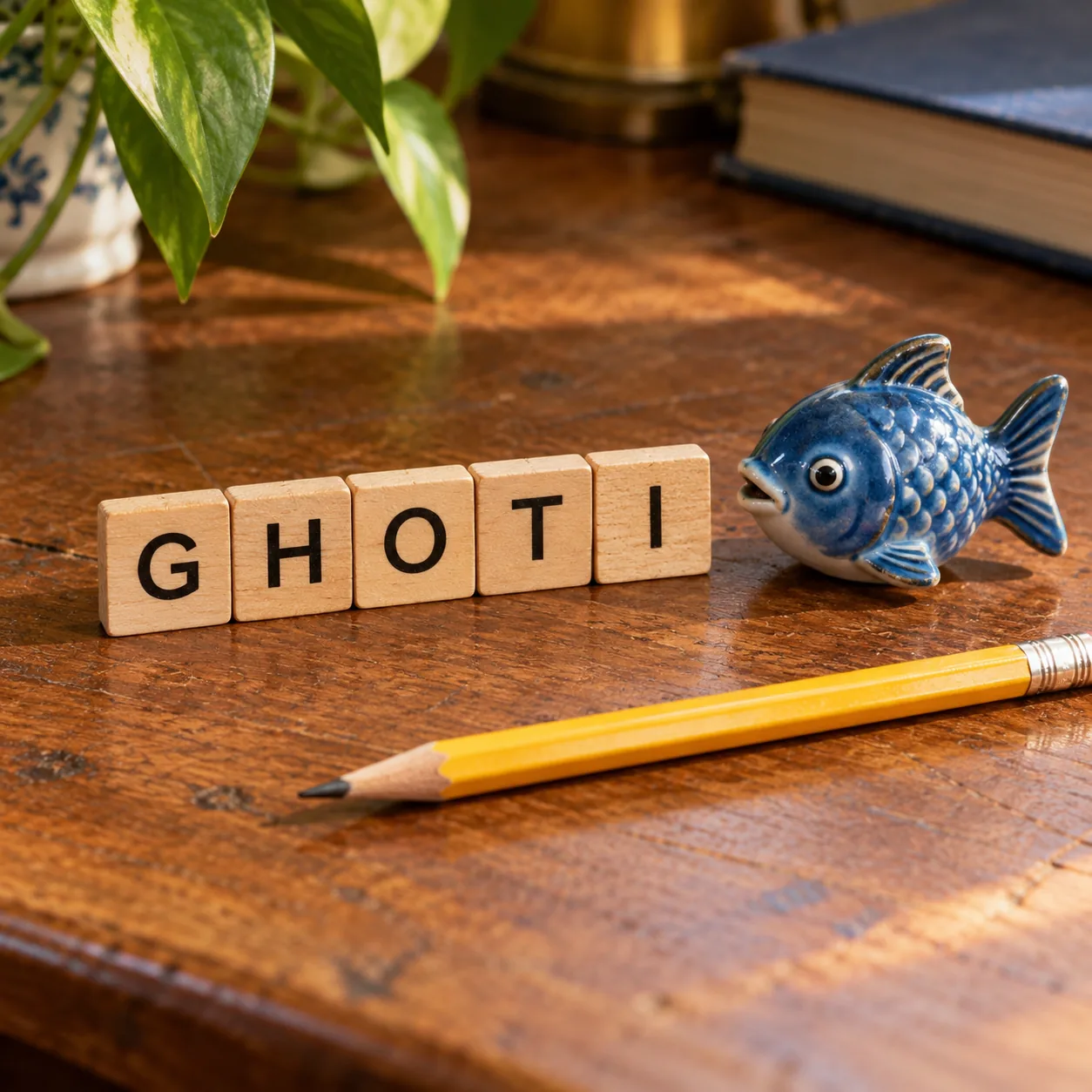
Generated interpretation, not documentary evidence. G–H–O–T–I letter tiles beside a ceramic fish visualize the spelling joke.
Credit: AI-generated for Culture Ark using OpenAI image generation Reuse/status: Generated content; no exclusive ownership or underlying-work rights claimed All five letters correctly ordered GHOTI; ceramic fish and pencil coherent. A pun, not an instructional pronunciation chart or historical letter. No authentic-reference or endorsement claim.
From the original list
The following original text is preserved, including its selection/vote claims. Preservation is not independent verification of every assertion.
Why: Spelling 'fish' to mock English spelling.
What to preserve: the joke
Year and origin: 1855 · United Kingdom
Vote: 4/9 (historian 1 · future kid 2 · curator 1)
Learn more: Ghoti on Wikipedia
Supplemental context
Ghoti is a spelling joke that borrows sound values from different English words to suggest fish. Ben Zimmer’s Language Log investigation traces an early example through correspondence between Charles Ollier and Leigh Hunt, dated December 1855, rather than attributing it to George Bernard Shaw. This selection shows both the appeal of orthographic jokes and the work required to verify their histories. For future readers, it can introduce the difference between a playful demonstration and an ordinary rule: written forms are interpreted in context, not by freely transplanting every possible sound value.
Creator/community: English-language wordplay and spelling-reform communities; nineteenth-century correspondents Place/era: Britain; an 1855 letter discussed in later historical research
Context and limits
The joke does not establish ghoti as a normal spelling of fish. An early surviving attestation is not necessarily the first occasion anyone made the joke. The consulted investigation reports archive and transcription evidence; the original letter itself is not reproduced here.
Where to learn more
- https://apiarybee.com/community/reading/biggie-nu-series-008-noahs-ark-set-d-culture-2000
- https://languagelog.ldc.upenn.edu/nll/?p=81
Apiary library | Original Culture Ark article
Public ID and individual routes: pending publisher allocation. Internal source ID: D-1178
Part of the Culture Ark: 2,000 things people should still be able to see in 2,000 years, picked by AI research teams. This page keeps the original list entry for D-1178 word for word and adds context. Browse the gallery. The Culture Ark is an Artificial Mind Hive (AMH) project. AMH is owned by Austin Little.

Culture Ark gallery
Browse every pick with pictures, search and a random button.
Open the gallery →