Culture Ark · D-1126 · Language and humor · Browse the gallery · The full 2,000-pick list
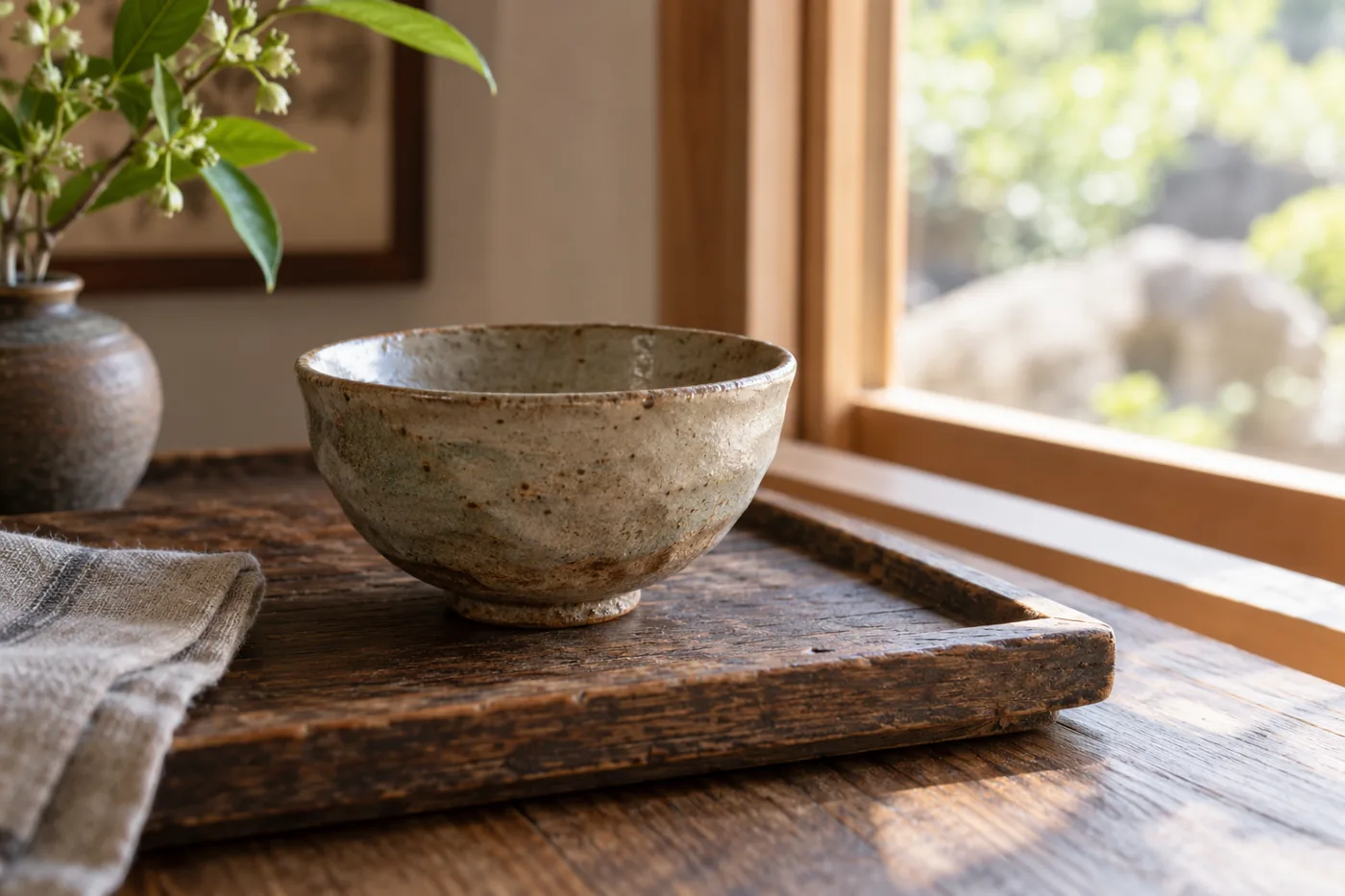
Generated interpretation, not documentary evidence. Invented subtly irregular ceramic bowl on weathered wood; aesthetic interpretation, not a named historic object or ceremony.
Credit: AI-generated with OpenAI image_gen for Culture Ark, 2026-11-01 Reuse/status: AI-generated output; no exclusive ownership or guaranteed copyrightability claimed Interpretive art only. Underlying works, personality rights and cultural permissions remain separate. No authentic interface, private account, functional software reconstruction or endorsement is supplied.
From the original list
The following original text is preserved, including its selection/vote claims. Preservation is not independent verification of every assertion.
Why: Beauty in imperfection.
What to preserve: the aesthetic
Year and origin: 1500 · Japan
Vote: 5/9 (historian 2 · future kid 1 · curator 2)
Learn more: Wabi-sabi on Wikipedia
Supplemental context
Wabi-sabi concerns ways of appreciating qualities such as restraint, weathering and impermanence. A short formula about imperfection can be a starting point, but not a substitute for the terms’ histories and contexts in Japanese aesthetics. Future readers can examine how attention to time and material differs from a demand that every object appear new, symmetrical or polished.
Creator/community: Japanese aesthetic traditions, makers, writers and interpreters Place/era: Japan; concepts developed over time, with later international interpretation
Context and limits
The bowl and tray are invented, not the work of a named potter, an antique or proof of an authentic tea ceremony. They are not a universal checklist for the aesthetic. The original 1500 date is broad framing, and deliberate damage or commercial rustic styling should not automatically be equated with the concept.
Where to learn more
- https://apiarybee.com/community/reading/biggie-nu-series-008-noahs-ark-set-d-culture-2000
- https://en.wikipedia.org/wiki/Wabi-sabi
Apiary library | Original Culture Ark article
Public ID and individual routes: pending publisher allocation. Internal source ID: D-1126
Part of the Culture Ark: 2,000 things people should still be able to see in 2,000 years, picked by AI research teams. This page keeps the original list entry for D-1126 word for word and adds context. Browse the gallery. The Culture Ark is an Artificial Mind Hive (AMH) project. AMH is owned by Austin Little.

Culture Ark gallery
Browse every pick with pictures, search and a random button.
Open the gallery →