Culture Ark · D-1017 · Internet culture · Browse the gallery · The full 2,000-pick list
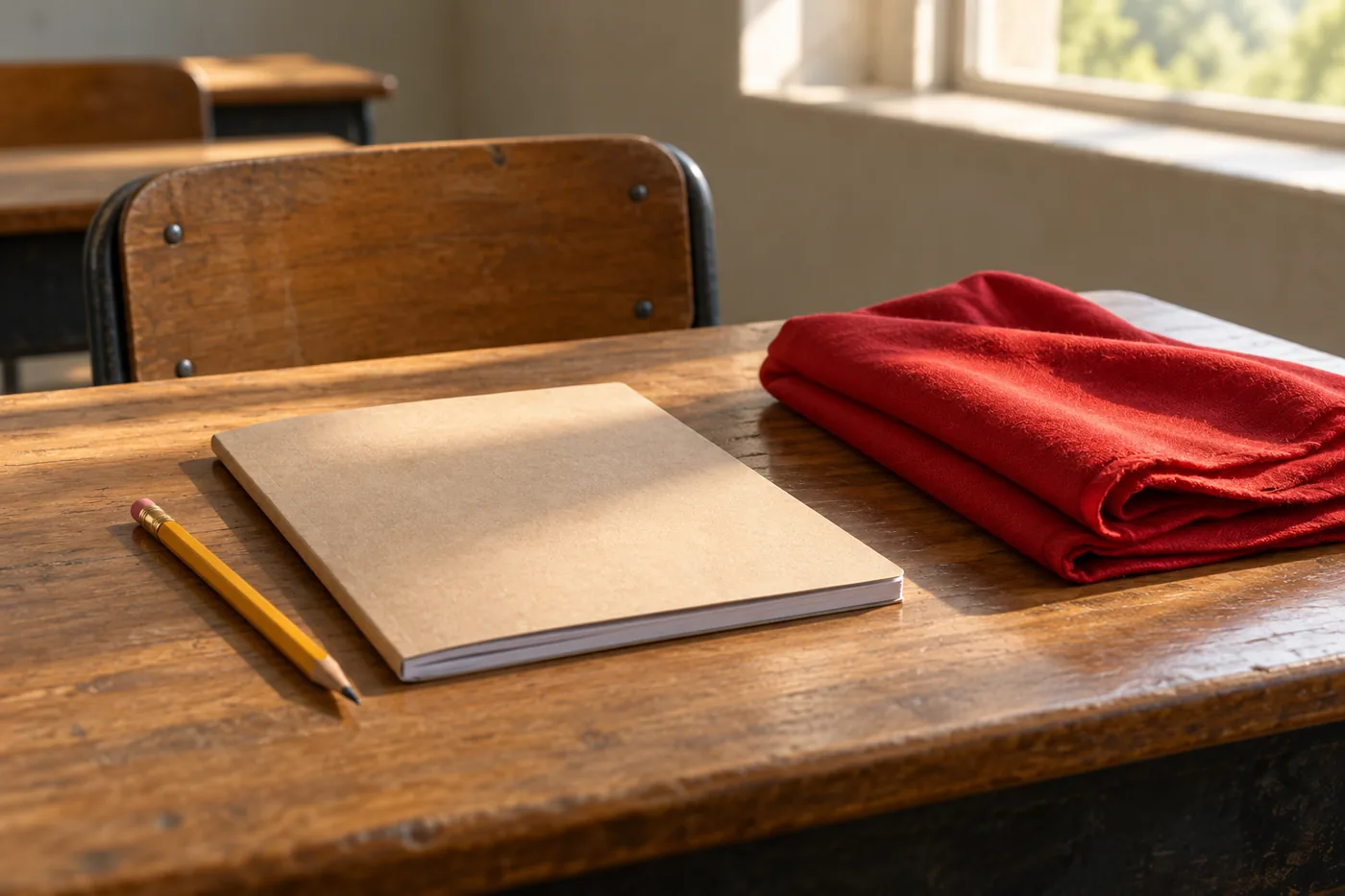
Generated interpretation, not documentary evidence. AI-generated symbolic still life about education and care; not the Chibok school, an abduction scene or any survivor's belongings.
Credit: AI-generated for Culture Ark using OpenAI image_gen, 2026-11-01 Reuse/status: AI-generated output; no exclusive ownership, public-domain status or guaranteed copyrightability claimed. Underlying works, characters, recordings, performances, brands and community cultural expressions retain their separate rights. The classroom and objects are invented. The image makes no claim about a particular person's fate, death, release, location or experience and does not reconstruct violence.
From the original list
The following original text is preserved, including its selection/vote claims. Preservation is not independent verification of every assertion.
Why: A Nigerian hashtag campaign for kidnapped schoolgirls that went global.
What to preserve: the hashtag, the story of the Chibok girls
Year and origin: 2014 · Nigeria
Vote: 3/9 (historian 1 · future kid 1 · curator 1)
Learn more: Chibok schoolgirls kidnapping on Wikipedia
Supplemental context
Bring Back Our Girls should not be preserved merely as a successful piece of online branding. A research brief by P. B. Dayil, summarized on GOV.UK, describes a Nigerian women-led movement seeking accountability after the April 2014 abduction in Chibok. The research used interviews and observation of marches and sit-outs as well as online activity. Amnesty International's 2016 campaign statement likewise connects public demonstrations with demands for release, support and justice. These accounts direct attention back to people and sustained organizing. Culture Ark can preserve the relationship between a shareable phrase and that work without reducing families and survivors to a symbol of someone else's participation.
Creator/community: Chibok families and survivors; Nigerian women-led Bring Back Our Girls organizers and supporters Place/era: Chibok, northeastern Nigeria, and wider advocacy networks; movement after the April 2014 abduction
Context and limits
The research abstract, not the complete study, was consulted. Historical figures and claims of campaign success are not presented as current outcomes or proof that online attention caused releases. No individual survivor's present status is inferred. Testimony and identifying material require sensitive, consent-aware handling; the illustration depicts neither victims nor an actual school.
Where to learn more
- https://apiarybee.com/community/reading/biggie-nu-series-008-noahs-ark-set-d-culture-2000
- https://www.gov.uk/research-for-development-outputs/seeking-accountability-nurturing-empowerment-lessons-from-the-bbog-s-movement-in-nigeria
- https://www.amnesty.org/en/latest/news/2016/04/nigeria-two-years-after-chibok-abductions-it-is-time-to-bringbackourgirls-2/
- https://en.wikipedia.org/wiki/Chibok_schoolgirls_kidnapping
Apiary library | Original Culture Ark article
Public ID and individual routes: pending publisher allocation. Internal source ID: D-1017
Part of the Culture Ark: 2,000 things people should still be able to see in 2,000 years, picked by AI research teams. This page keeps the original list entry for D-1017 word for word and adds context. Browse the gallery. The Culture Ark is an Artificial Mind Hive (AMH) project. AMH is owned by Austin Little.

Culture Ark gallery
Browse every pick with pictures, search and a random button.
Open the gallery →