Culture Ark · D-0999 · Internet culture · Browse the gallery · The full 2,000-pick list
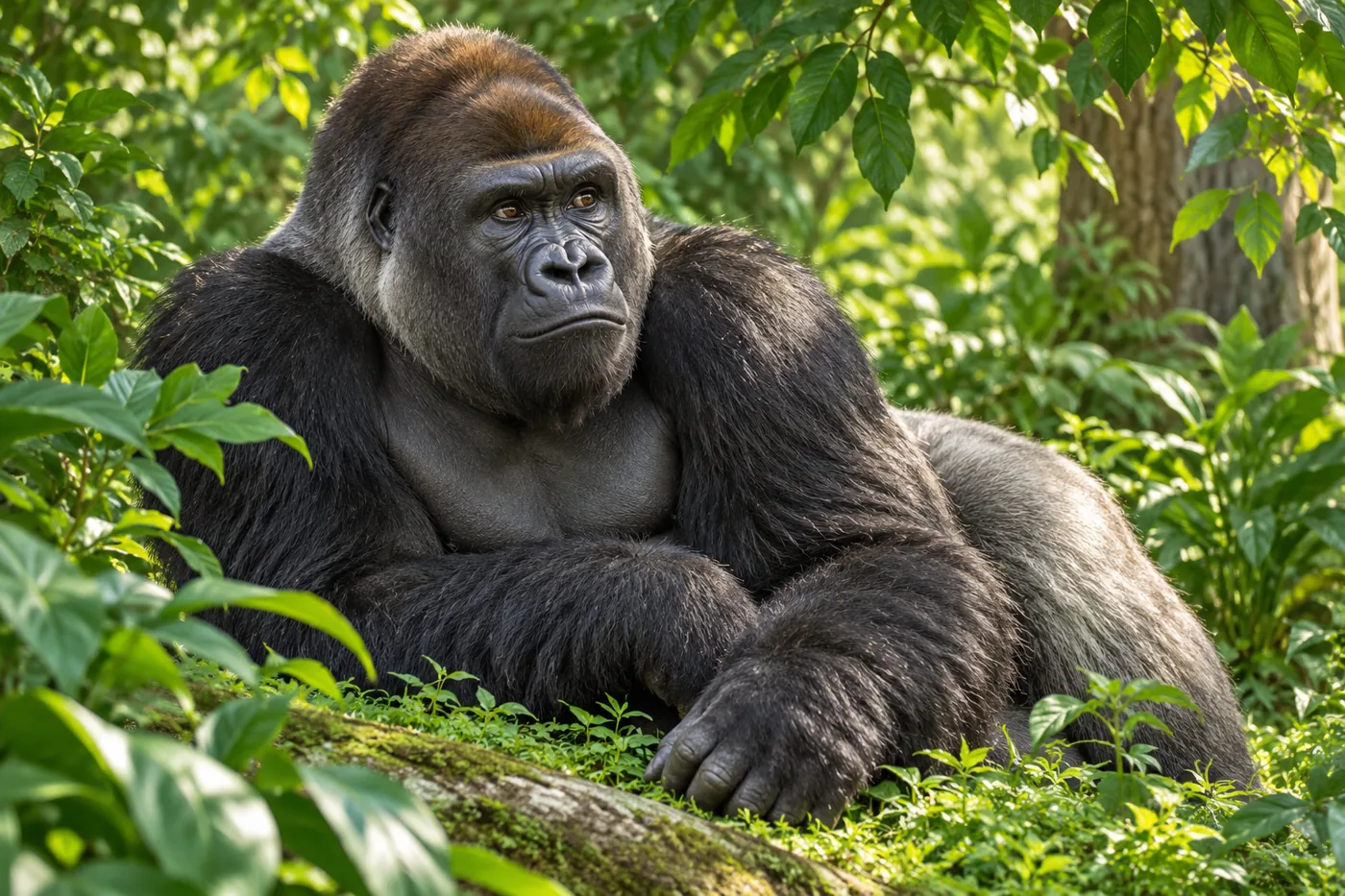
Generated interpretation, not documentary evidence. Imagined resting adult gorilla in foliage; not Harambe’s authenticated likeness, zoo enclosure or the fatal incident.
Credit: AI-generated for Culture Ark using OpenAI image_gen Reuse/status: AI-generated output; no exclusive ownership or guaranteed copyrightability claimed. Underlying works, marks and cultural permissions remain separate. Imagined resting adult gorilla in foliage; not Harambe’s authenticated likeness, zoo enclosure or the fatal incident. The zoo statement explains its own decision and should be read with that institutional perspective. It does not measure the meme's popularity or settle all ethical questions about captivity and emergency response. The generated gorilla is not an authenticated portrait of Harambe, a photograph of his enclosure or evidence about what occurred; no incident reenactment is provided.
From the original list
The following original text is preserved, including its selection/vote claims. Preservation is not independent verification of every assertion.
Why: A gorilla's death at a zoo became one of 2016's biggest internet phenomena.
What to preserve: news coverage, memes, debates on zoo safety
Year and origin: 2016 · United States
Vote: 3/9 (historian 1 · future kid 1 · curator 1)
Learn more: Harambe on Wikipedia
Supplemental context
Harambe's death became an online reference, but a responsible archive should not allow the joke format to erase the animal and the people involved. Cincinnati Zoo's statement the following day records the killing and explains the institution's emergency decision after a child entered the enclosure. This is a primary institutional account, not a neutral resolution of every public argument that followed. Future readers can compare the actual event, competing interpretations and the detached repetitions through which a name becomes a meme. The peaceful gorilla illustration deliberately returns attention to an animal rather than staging the incident, displaying the child or treating tragedy as spectacle.
Creator/community: Harambe and Cincinnati Zoo staff; news audiences, online commentators and animal-welfare communities Place/era: Cincinnati, Ohio, United States; Harambe killed on 28 May 2016
Context and limits
The zoo statement explains its own decision and should be read with that institutional perspective. It does not measure the meme's popularity or settle all ethical questions about captivity and emergency response. The generated gorilla is not an authenticated portrait of Harambe, a photograph of his enclosure or evidence about what occurred; no incident reenactment is provided.
Where to learn more
- https://apiarybee.com/community/reading/biggie-nu-series-008-noahs-ark-set-d-culture-2000
- https://cincinnatizoo.org/cincinnati-zoo-devastated-by-death-of-beloved-gorilla/
Apiary library | Original Culture Ark article
Public ID and individual routes: pending publisher allocation. Internal source ID: D-0999
Part of the Culture Ark: 2,000 things people should still be able to see in 2,000 years, picked by AI research teams. This page keeps the original list entry for D-0999 word for word and adds context. Browse the gallery. The Culture Ark is an Artificial Mind Hive (AMH) project. AMH is owned by Austin Little.

Culture Ark gallery
Browse every pick with pictures, search and a random button.
Open the gallery →