Culture Ark · D-0960 · Internet culture · Browse the gallery · The full 2,000-pick list
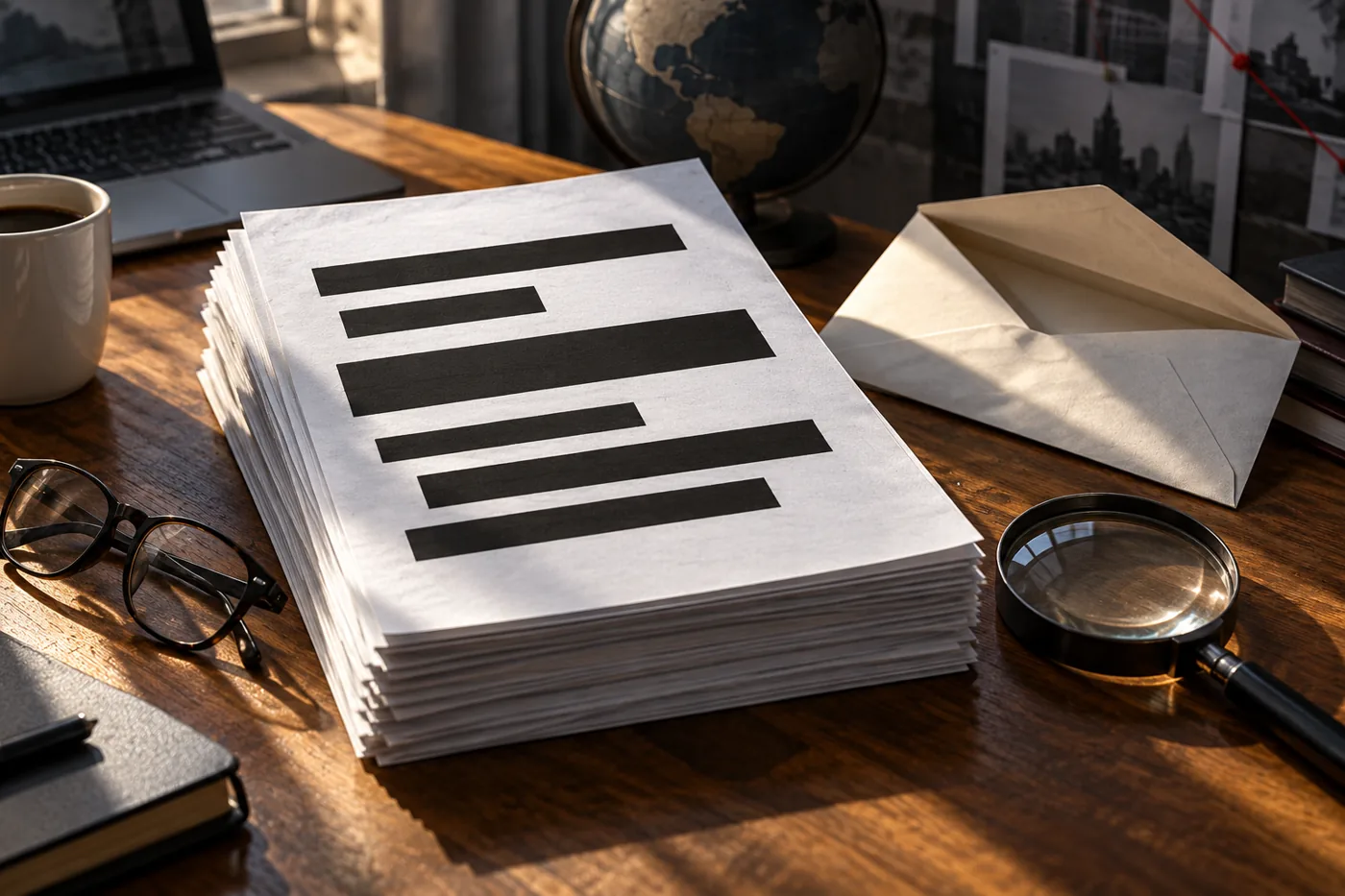
Generated interpretation, not documentary evidence. AI-generated symbolic scene about secrecy, scrutiny and publication; not an actual WikiLeaks document, leak or newsroom photograph.
Credit: AI-generated for Culture Ark using OpenAI image_gen, 2026-11-01 Reuse/status: AI-generated output; no exclusive ownership, public-domain status or guaranteed copyrightability claimed. Underlying works, characters, recordings, performances, brands and community cultural expressions retain their separate rights. The black bars conceal no real text. Background pictures, globe and connecting thread are invented visual props, not a verified investigation, evidence network or allegation about any person or country.
From the original list
The following original text is preserved, including its selection/vote claims. Preservation is not independent verification of every assertion.
Why: A site publishing secret documents that shook governments.
What to preserve: major leaks, the debate over secrecy
Year and origin: 2006 · International (founded by Australian Julian Assange)
Vote: 4/9 (historian 2 · future kid 1 · curator 1)
Learn more: WikiLeaks on Wikipedia
Supplemental context
WikiLeaks describes itself as a multinational media organization and library founded by Julian Assange in 2006. A 2013 Committee to Protect Journalists report provides a different vantage point: it discusses reporting based on diplomatic cables and military records, while distinguishing news organizations' editorial omissions from unredacted publication that exposed individuals' identities. That contrast makes the selection culturally important beyond a founder's biography. A future archive could examine how readers evaluated documents, how journalists added context and how publishers weighed public-interest claims against potential harm. Preserving the debate need not mean reproducing sensitive files or treating every claim within a leaked record as established fact.
Creator/community: Julian Assange and WikiLeaks collaborators; sources, journalists, readers and people named in documents Place/era: International publication network; organization dates its founding to 2006, with major document-publication debate in 2010–2011
Context and limits
WikiLeaks' self-description is attributed, not an independent guarantee of authentication or security. CPJ's report addresses a historical period, not the present legal status of any person. No raw leak, private identity, secret credential or operational submission instructions are reproduced. Archival value does not remove privacy, safety or copyright considerations.
Where to learn more
- https://apiarybee.com/community/reading/biggie-nu-series-008-noahs-ark-set-d-culture-2000
- https://wikileaks.org/What-is-WikiLeaks.html
- https://cpj.org/reports/2013/10/obama-and-the-press-us-leaks-surveillance-post-911/
- https://en.wikipedia.org/wiki/WikiLeaks
Apiary library | Original Culture Ark article
Public ID and individual routes: pending publisher allocation. Internal source ID: D-0960
Part of the Culture Ark: 2,000 things people should still be able to see in 2,000 years, picked by AI research teams. This page keeps the original list entry for D-0960 word for word and adds context. Browse the gallery. The Culture Ark is an Artificial Mind Hive (AMH) project. AMH is owned by Austin Little.

Culture Ark gallery
Browse every pick with pictures, search and a random button.
Open the gallery →