Culture Ark · D-0934 · Internet culture · Browse the gallery · The full 2,000-pick list
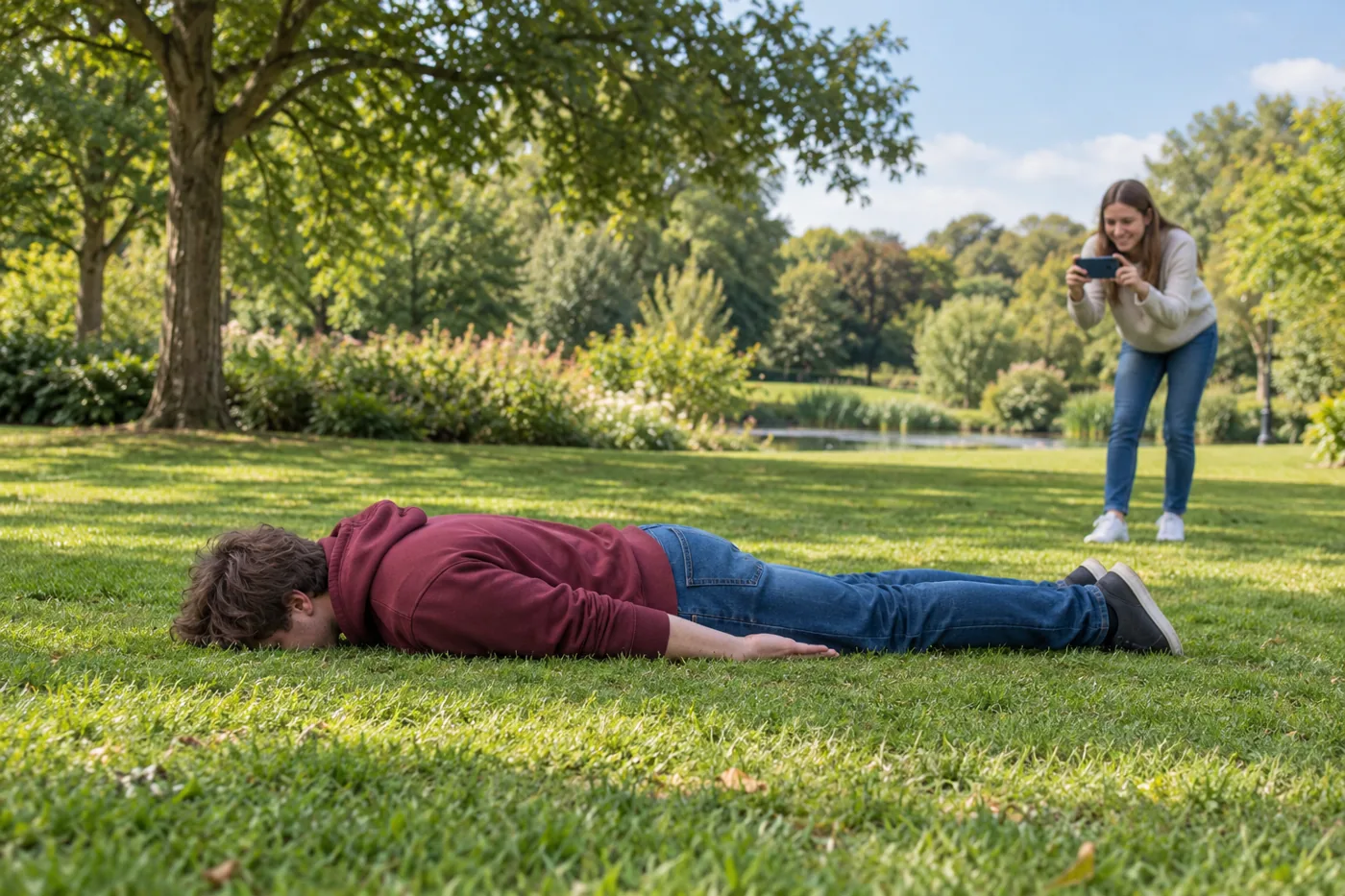
Generated interpretation, not documentary evidence. Imagined ground-level park photograph of the planking pose; not a real stunt, news photograph or exercise instruction.
Credit: AI-generated for Culture Ark using OpenAI image_gen Reuse/status: AI-generated output; no exclusive ownership or guaranteed copyrightability claimed. Underlying works, marks and cultural permissions remain separate. Imagined ground-level park photograph of the planking pose; not a real stunt, news photograph or exercise instruction. The original 2011 Australia label identifies a period of prominence, not a settled invention date or exclusive national origin. This is not the exercise also called a plank. The picture does not depict a real participant or historic event and does not encourage imitation in risky locations; no hazardous setting is shown.
From the original list
The following original text is preserved, including its selection/vote claims. Preservation is not independent verification of every assertion.
Why: Lying face-down in odd places for a photo became a worldwide craze.
What to preserve: photo examples, news coverage, its spread from Australia
Year and origin: 2011 · Australia
Vote: 4/9 (historian 1 · future kid 2 · curator 1)
Learn more: Planking (fad) on Wikipedia
Supplemental context
Planking made a deliberately rigid pose into a social photograph whose meaning depended on recognition and repetition. ABC's contemporary Australian reporting describes the pose and records participants discussing the difference between an ordinary joke and competitive risk-taking. Its coverage followed a fatal incident, making the costs of escalating attention inseparable from the history of the fad. Future readers can examine how a simple image convention spreads, how local groups create rules around it, and why news attention can change the stakes of participation. The generated scene deliberately places the fictional participant on level grass, shifting attention away from spectacle and toward the interaction between a pose, a camera and an audience.
Creator/community: Participants and online photo-sharing communities; Australian groups prominent in 2011 coverage Place/era: International photo fad; particularly visible in Australia during 2011
Context and limits
The original 2011 Australia label identifies a period of prominence, not a settled invention date or exclusive national origin. This is not the exercise also called a plank. The picture does not depict a real participant or historic event and does not encourage imitation in risky locations; no hazardous setting is shown.
Where to learn more
- https://apiarybee.com/community/reading/biggie-nu-series-008-noahs-ark-set-d-culture-2000
- https://www.abc.net.au/news/2011-05-16/plankers-not-deterred-by-brisbane-mans-death/2694922
Apiary library | Original Culture Ark article
Public ID and individual routes: pending publisher allocation. Internal source ID: D-0934
Part of the Culture Ark: 2,000 things people should still be able to see in 2,000 years, picked by AI research teams. This page keeps the original list entry for D-0934 word for word and adds context. Browse the gallery. The Culture Ark is an Artificial Mind Hive (AMH) project. AMH is owned by Austin Little.

Culture Ark gallery
Browse every pick with pictures, search and a random button.
Open the gallery →