Culture Ark · D-0849 · Food · Browse the gallery · The full 2,000-pick list
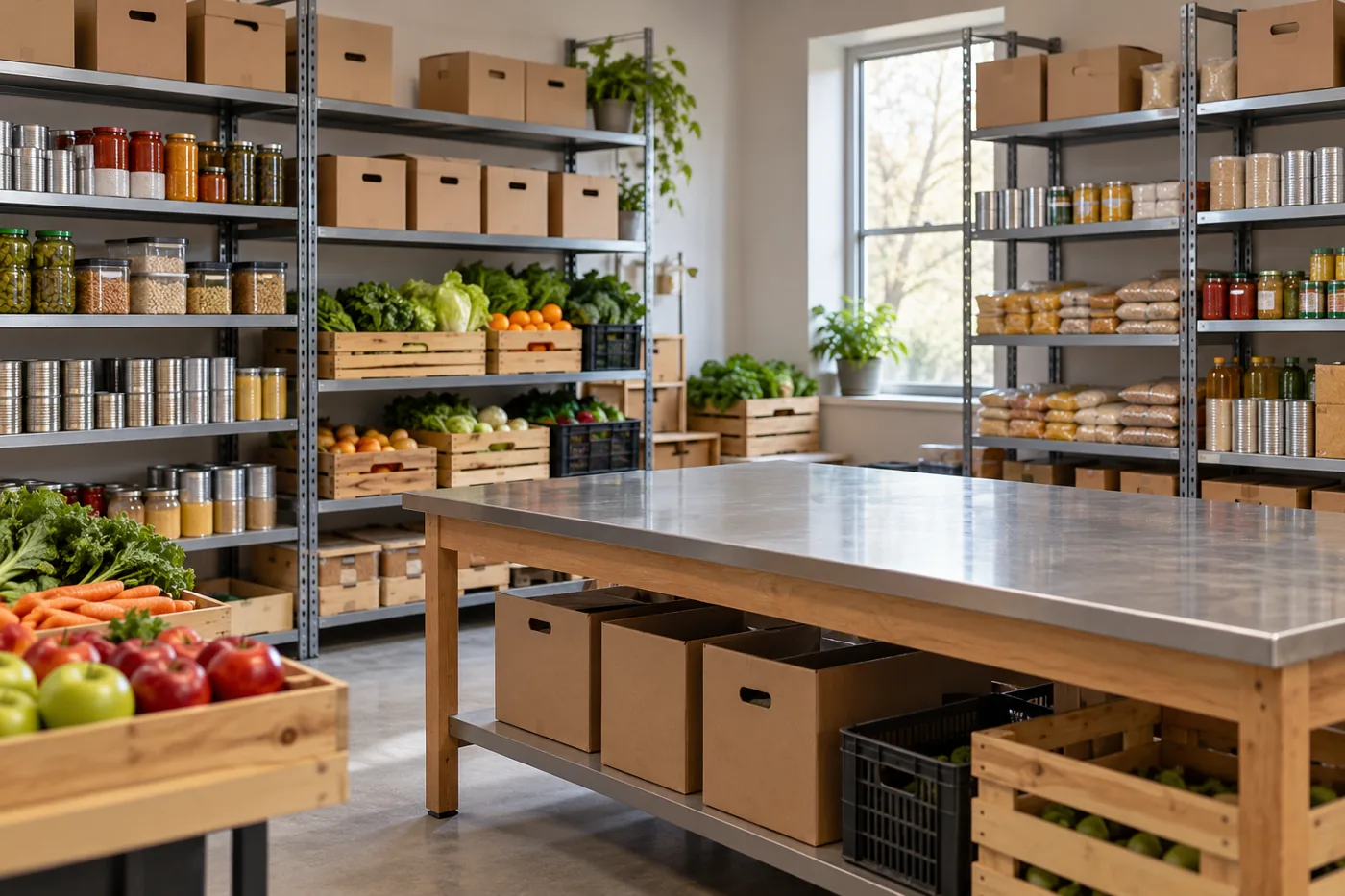
Generated interpretation, not documentary evidence. Imagined food-bank packing room with boxes, produce and plain cans; not a photograph of a real charity or recipients.
Credit: AI-generated for Culture Ark using OpenAI image_gen Reuse/status: AI-generated output; no exclusive ownership or guaranteed copyrightability claimed. Underlying works, marks and cultural permissions remain separate. Imagined food-bank packing room with boxes, produce and plain cans; not a photograph of a real charity or recipients. The 1967 milestone concerns a particular modern United States food-bank model, not the invention of generosity, food sharing or organized relief. A Senate tribute and a network's history carry institutional perspectives. The image does not document a specific organization, guarantee food quality or portray people in need as anonymous spectacle.
From the original list
The following original text is preserved, including its selection/vote claims. Preservation is not independent verification of every assertion.
Why: Charity food distribution.
What to preserve: History
Year and origin: 1967 · United States
Vote: 3/9 (historian 1 · future kid 1 · curator 1)
Learn more: Food bank on Wikipedia
Supplemental context
The food bank preserves a social response to the contradiction between discarded food and unmet need. A 2003 United States Senate tribute records John van Hengel's establishment of St. Mary's food bank in Phoenix in 1967, while Feeding America's own history recounts the suggestion of a mother who asked why food could not be stored for people rather than thrown away. Together these accounts make the institution more than a founder's achievement: volunteers, donors and people experiencing hunger shaped the idea. Future readers can examine how charitable distribution organizes resources, while also asking what economic conditions make such organizations necessary. The illustration depicts an imagined packing space, not identifiable recipients or a real charity facility.
Creator/community: John van Hengel, St. Mary’s volunteers, food donors and recipient communities; later food-bank networks Place/era: Phoenix, Arizona, United States; St. Mary’s food bank established in 1967
Context and limits
The 1967 milestone concerns a particular modern United States food-bank model, not the invention of generosity, food sharing or organized relief. A Senate tribute and a network's history carry institutional perspectives. The image does not document a specific organization, guarantee food quality or portray people in need as anonymous spectacle.
Where to learn more
- https://apiarybee.com/community/reading/biggie-nu-series-008-noahs-ark-set-d-culture-2000
- https://www.feedingamerica.org/about-us/our-history
- https://www.govinfo.gov/content/pkg/CREC-2003-03-13/pdf/CREC-2003-03-13-pt1-PgS3724-2.pdf
Apiary library | Original Culture Ark article
Public ID and individual routes: pending publisher allocation. Internal source ID: D-0849
Part of the Culture Ark: 2,000 things people should still be able to see in 2,000 years, picked by AI research teams. This page keeps the original list entry for D-0849 word for word and adds context. Browse the gallery. The Culture Ark is an Artificial Mind Hive (AMH) project. AMH is owned by Austin Little.

Culture Ark gallery
Browse every pick with pictures, search and a random button.
Open the gallery →