Culture Ark · D-0783 · Food · Browse the gallery · The full 2,000-pick list
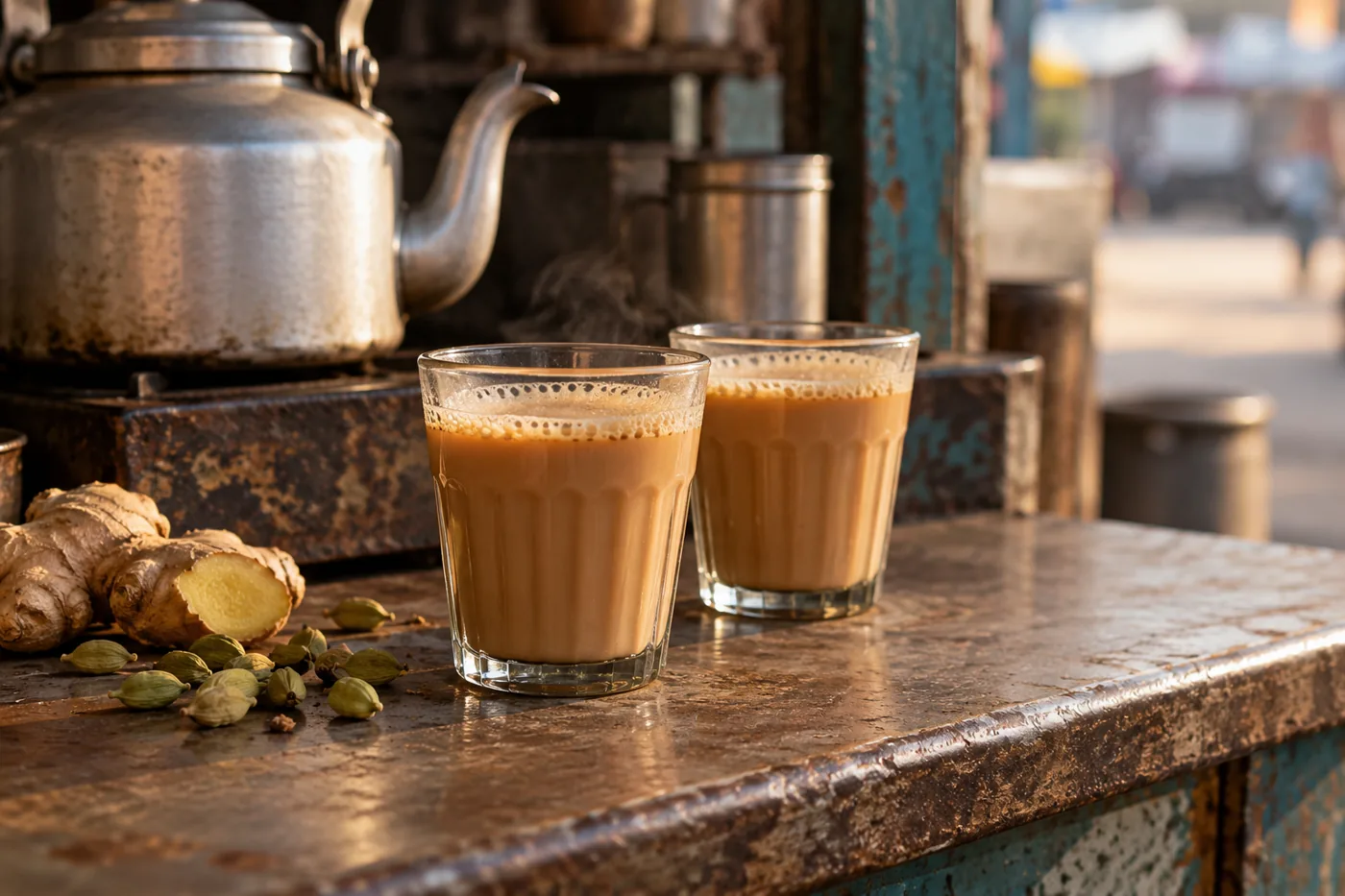
Generated interpretation, not documentary evidence. Two imagined glasses of spiced milk tea with ginger and cardamom at a fictional stall.
Credit: AI-generated for Culture Ark using OpenAI image generation Reuse/status: Generated content; no exclusive ownership or underlying-work rights claimed Tan tea, coherent glassware and kettle are visible; illustrative spice arrangement is not a recipe or identified vendor. No authentic-reference or endorsement claim.
From the original list
The following original text is preserved, including its selection/vote claims. Preservation is not independent verification of every assertion.
Why: Spiced milk tea from roadside stalls.
What to preserve: Recipe, chaiwalas
Year and origin: 19th century · India
Vote: 3/9 (historian 1 · future kid 1 · curator 1)
Learn more: Masala chai on Wikipedia
Supplemental context
Masala chai combines black tea, milk and spices with routines of work, hospitality and family connection. Leena Trivedi-Grenier's account links her Gujarati family's tea habits to the wider history of colonial plantations and roadside vendors, placing vendors' spice additions between World War I and the 1930s. Her essay also emphasizes regional variation and the fact that not everyone drinks spiced tea. Future readers can use this selection to compare a household's remembered ritual with a commercial drink sold elsewhere under the same name.
Creator/community: South Asian household cooks and chaiwalas; Leena Trivedi-Grenier documents her Gujarati family experience Place/era: India and diaspora; colonial tea trade and twentieth-century spiced-tea practices
Context and limits
The original nineteenth-century label is not a secure invention date for every modern masala-chai form. This is a situated food writer's account, not a universal South Asian recipe or medical claim. The illustration's spice choices do not prescribe ingredients or proportions.
Where to learn more
- https://apiarybee.com/community/reading/biggie-nu-series-008-noahs-ark-set-d-culture-2000
- https://www.epicurious.com/expert-advice/masala-chai-history-recipe-article
Apiary library | Original Culture Ark article
Public ID and individual routes: pending publisher allocation. Internal source ID: D-0783
Part of the Culture Ark: 2,000 things people should still be able to see in 2,000 years, picked by AI research teams. This page keeps the original list entry for D-0783 word for word and adds context. Browse the gallery. The Culture Ark is an Artificial Mind Hive (AMH) project. AMH is owned by Austin Little.

Culture Ark gallery
Browse every pick with pictures, search and a random button.
Open the gallery →