Culture Ark · D-0782 · Food · Browse the gallery · The full 2,000-pick list
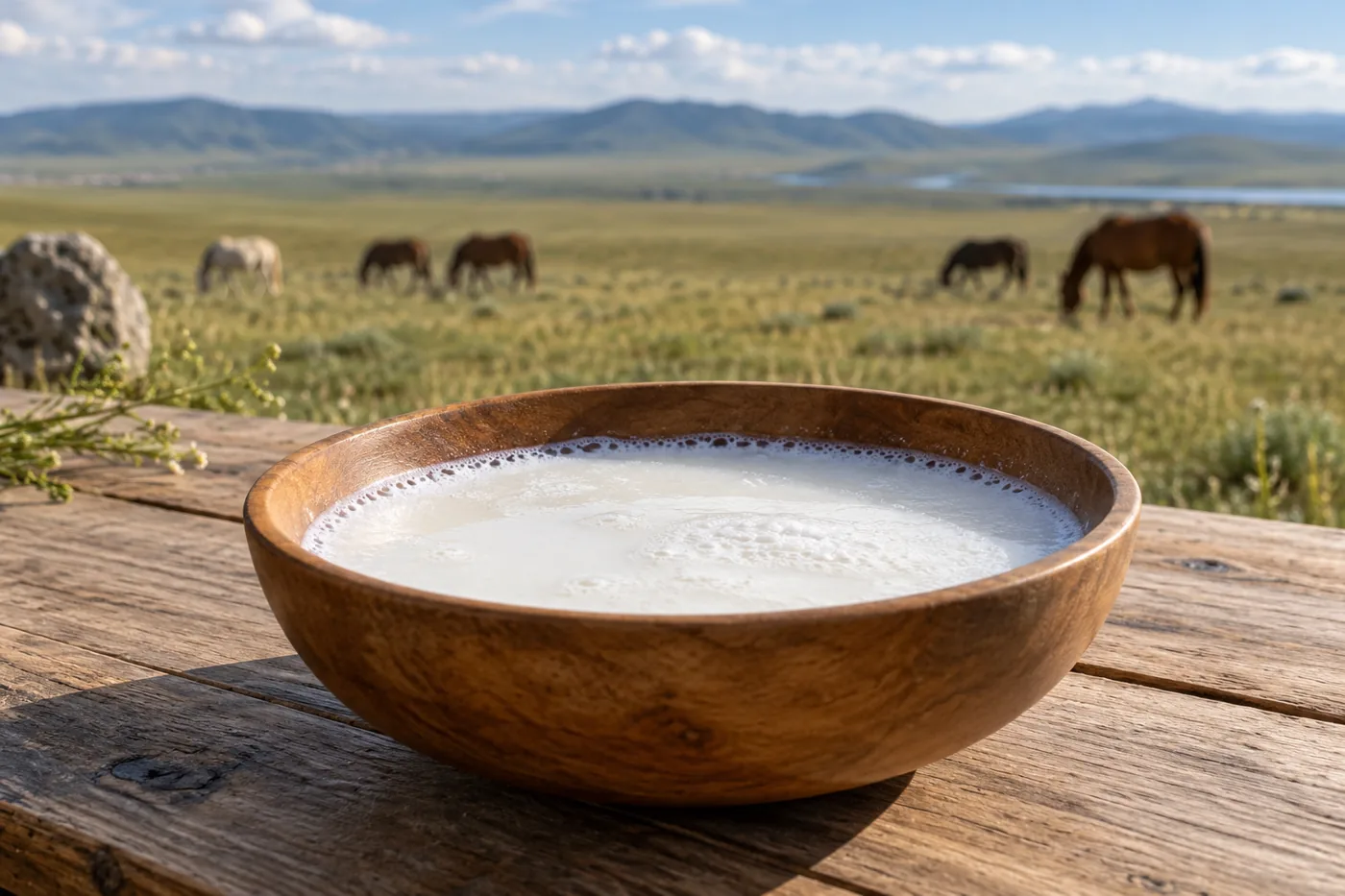
Generated interpretation, not documentary evidence. An invented bowl of white fermented milk with horses in a distant grassland setting.
Credit: AI-generated for Culture Ark using OpenAI image generation Reuse/status: Generated content; no exclusive ownership or underlying-work rights claimed Bowl and lightly foamy milk are clear; horses and landscape are contextual, not a documented community, herd or production method. No authentic-reference or endorsement claim.
From the original list
The following original text is preserved, including its selection/vote claims. Preservation is not independent verification of every assertion.
Why: Fermented mare's milk of the steppe.
What to preserve: Process
Year and origin: ancient · Central Asia
Vote: 3/9 (historian 1 · future kid 1 · curator 1)
Learn more: Kumis on Wikipedia
Supplemental context
Kumis connects a fermented drink with horse husbandry, specialist vessels and hospitality. The Abai Institute's account of Kazakh foods describes qūmys as fermented mare's milk and names wooden churns, leather containers and a churn staff among its associated objects. It distinguishes the drink from shubat, which is made with camel milk. For a future audience, that distinction matters: a broad label such as steppe food can otherwise erase differences in livestock, vocabulary and practice. Preserving community descriptions and the names of tools can show how a drink belongs to a larger pattern of work and social exchange, rather than existing as a recipe alone.
Creator/community: Central Asian pastoral communities; the cited account specifically describes Kazakh qūmys Place/era: Central Asia; continuing mare-milk fermentation traditions
Context and limits
This source describes a Kazakh example, not every Central Asian or Mongolian tradition and not a verified invention date. Its medicinal claims are not adopted here. The illustration and text are not fermentation instructions, food-safety guidance or evidence of an exact historic vessel.
Where to learn more
- https://apiarybee.com/community/reading/biggie-nu-series-008-noahs-ark-set-d-culture-2000
- https://oq.gov.kz/en/abai/qazaq-taghamdary
Apiary library | Original Culture Ark article
Public ID and individual routes: pending publisher allocation. Internal source ID: D-0782
Part of the Culture Ark: 2,000 things people should still be able to see in 2,000 years, picked by AI research teams. This page keeps the original list entry for D-0782 word for word and adds context. Browse the gallery. The Culture Ark is an Artificial Mind Hive (AMH) project. AMH is owned by Austin Little.

Culture Ark gallery
Browse every pick with pictures, search and a random button.
Open the gallery →