Culture Ark · D-0566 · Games · Browse the gallery · The full 2,000-pick list
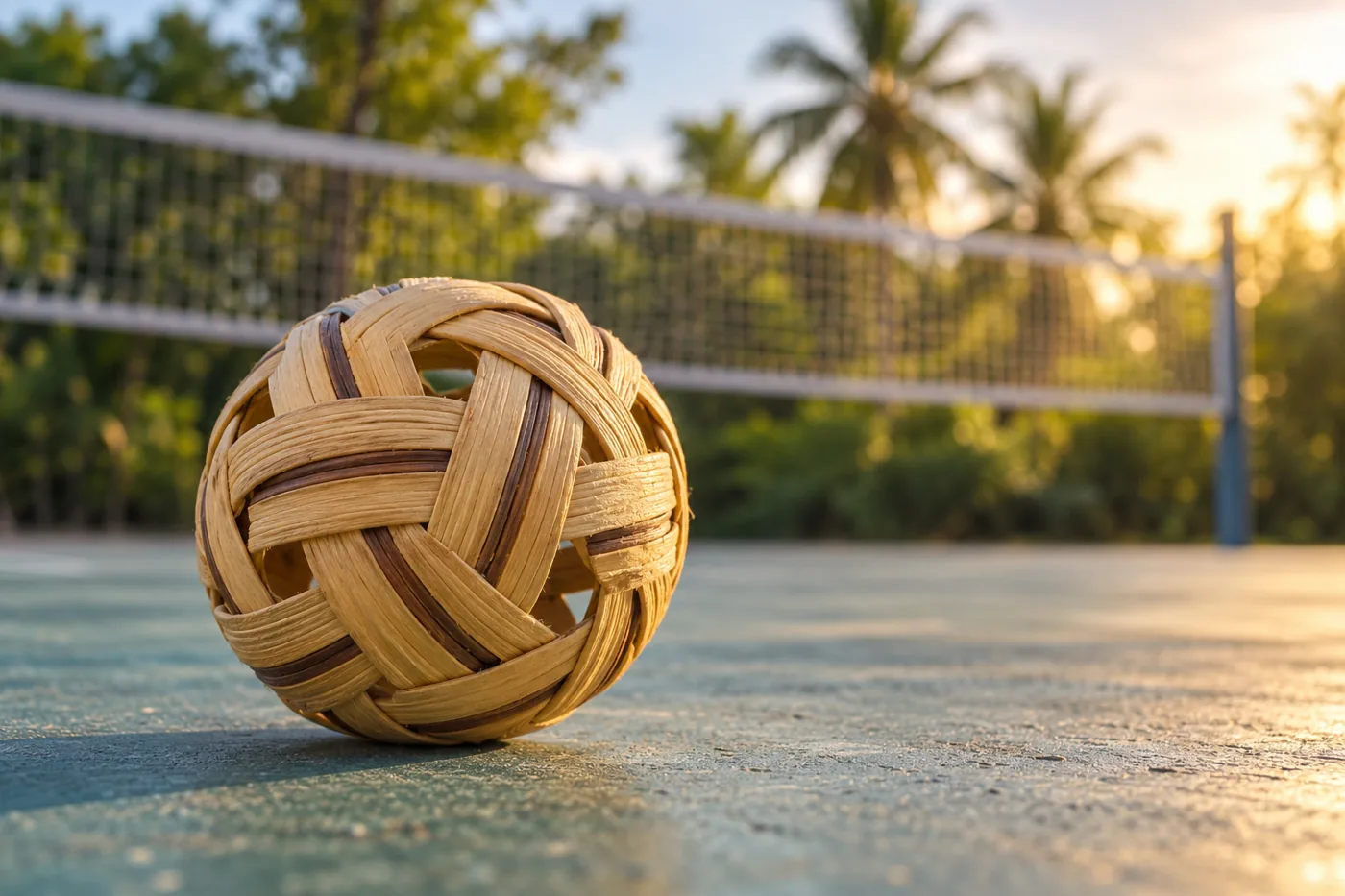
Generated interpretation, not documentary evidence. AI-generated sepak-takraw material study; not a match photograph, regulation ball or measured court.
Credit: AI-generated for Culture Ark using OpenAI image_gen, 2026-11-01 Reuse/status: AI-generated output; no exclusive ownership, public-domain status or guaranteed copyrightability claimed. Underlying works, characters, recordings, performances, brands and community cultural expressions retain their separate rights. The lattice is illustrative, with no verified hole count, intersections, circumference or weight. The ball’s apparent natural material must not be confused with the synthetic equipment described by ActiveSG.
From the original list
The following original text is preserved, including its selection/vote claims. Preservation is not independent verification of every assertion.
Why: Volleyball played with feet and a rattan ball.
What to preserve: Rules, ball
Year and origin: 15th century · Southeast Asia
Vote: 5/9 (historian 1 · future kid 2 · curator 2)
Learn more: Sepak takraw on Wikipedia
Supplemental context
The shorthand “volleyball played with feet” points toward sepak takraw but leaves out important differences. ActiveSG describes a regu format with three players and contact using legs, head and torso, while prohibiting arms and hands. Its equipment account specifies synthetic-fiber competition balls, showing why a rattan-style illustration should not be mistaken for every modern match ball. Sport Singapore also documents a community program combining coaching and friendly competitions. For an archive, rules, materials and social setting should travel together: a dated competition specification and an account of neighborhood learning answer different questions.
Creator/community: Southeast Asian playing communities and sporting organizations; Singapore sources document one national context Place/era: Southeast Asia; regional traditions and modern organized net-game formats
Context and limits
The original fifteenth-century origin label is retained, not established by these contemporary sources. Rule formats and equipment requirements need dates and organizers. No score system is presented as universally current, and the generated weave is neither a manufacturing pattern nor certified competition equipment.
Where to learn more
- https://apiarybee.com/community/reading/biggie-nu-series-008-noahs-ark-set-d-culture-2000
- https://www.activesgcircle.gov.sg/learn/sepak-takraw/rules-and-regulations-of-sepak-takraw?tab=how_to_play
- https://www.activesgcircle.gov.sg/learn/sepak-takraw/equipment-and-attire-for-sepak-takraw
- https://www.sportsingapore.gov.sg/our-work/sportcares/programmes/youth/lets-sepak/
- https://en.wikipedia.org/wiki/Sepak_takraw
Apiary library | Original Culture Ark article
Public ID and individual routes: pending publisher allocation. Internal source ID: D-0566
Part of the Culture Ark: 2,000 things people should still be able to see in 2,000 years, picked by AI research teams. This page keeps the original list entry for D-0566 word for word and adds context. Browse the gallery. The Culture Ark is an Artificial Mind Hive (AMH) project. AMH is owned by Austin Little.

Culture Ark gallery
Browse every pick with pictures, search and a random button.
Open the gallery →