Culture Ark · D-0569 · Games · Browse the gallery · The full 2,000-pick list
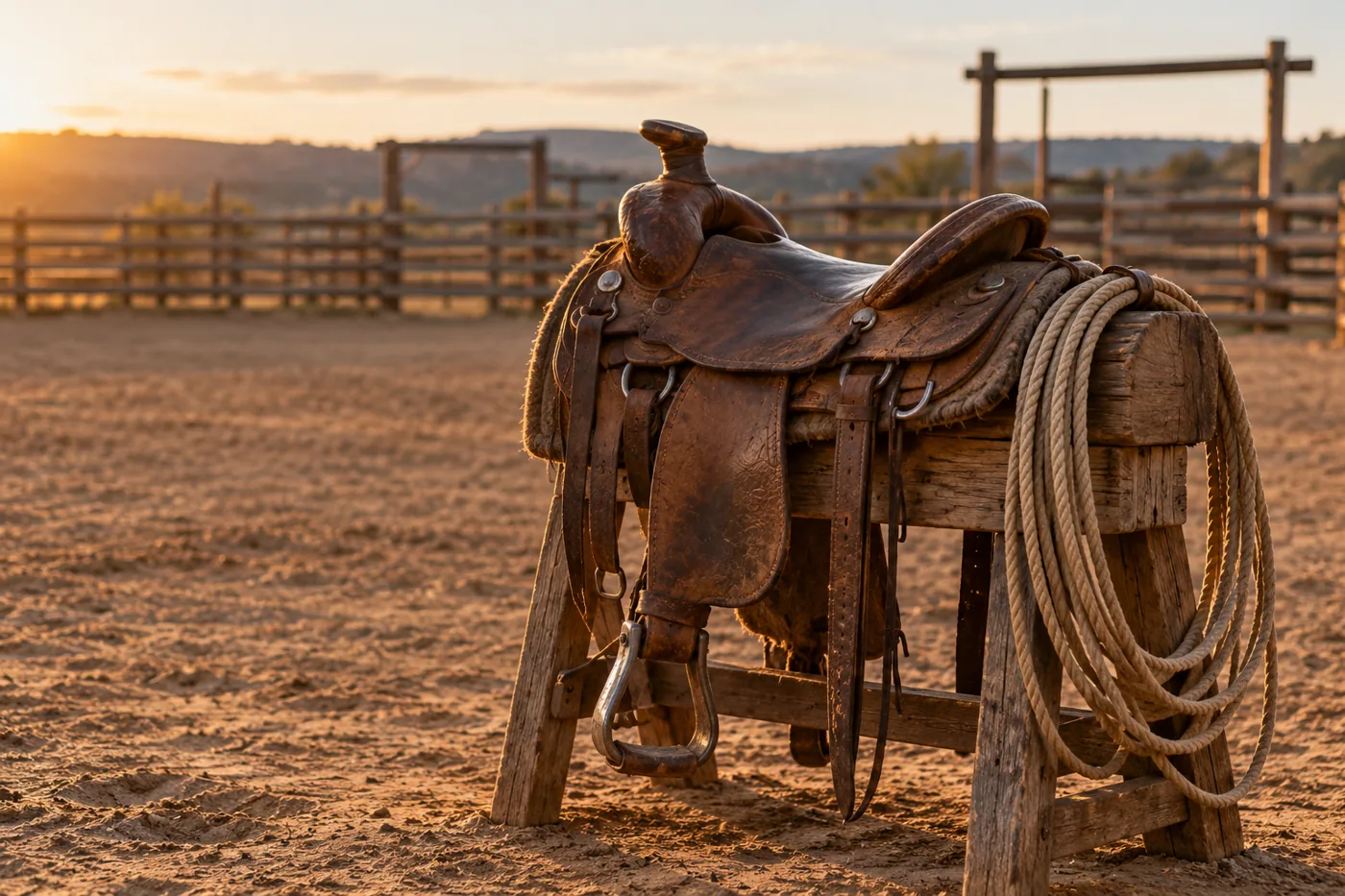
Generated interpretation, not documentary evidence. AI-generated ranch-skill and rodeo still life; not a named rider’s equipment, museum object or competition-ready setup.
Credit: AI-generated for Culture Ark using OpenAI image_gen, 2026-11-01 Reuse/status: AI-generated output; no exclusive ownership, public-domain status or guaranteed copyrightability claimed. Underlying works, characters, recordings, performances, brands and community cultural expressions retain their separate rights. The saddle, stand and rope are invented. Tack construction, rigging and knots have not been validated and must not be used as riding or roping instructions.
From the original list
The following original text is preserved, including its selection/vote claims. Preservation is not independent verification of every assertion.
Why: Ranch skills turned competitive spectacle.
What to preserve: Events
Year and origin: 19th century · Mexico / United States
Vote: 5/9 (historian 2 · future kid 1 · curator 2)
Learn more: Rodeo on Wikipedia
Supplemental context
Rodeo turns skills associated with ranch work into events performed for spectators. The National Cowboy & Western Heritage Museum’s educational material describes riding and roping contests becoming more organized in the late nineteenth century. Its Caballeros y Vaqueros exhibition separately traces working equipment and decorative traditions through colonial Mexico and several cultural influences. Read together, these sources discourage a simple story of one isolated national invention. An archive could preserve a dated event program alongside a working object and testimony from its maker or user, distinguishing everyday labor from the competitive spectacle built around it.
Creator/community: Ranch workers, vaqueros, cowboys, cowgirls, competitors and organizers across distinct communities Place/era: Mexico and the United States, with wider influences; organized sporting developments in the late nineteenth century and later
Context and limits
Rodeo includes different events and communities; no single event sequence or first-ever contest is certified here. The museum’s celebratory framing is not a substitute for participant diversity, labor history or animal-welfare perspectives. Saddles, recordings, venue access and individual designs require separate provenance and permission checks.
Where to learn more
- https://apiarybee.com/community/reading/biggie-nu-series-008-noahs-ark-set-d-culture-2000
- https://nationalcowboymuseum.org/wp-content/uploads/2026/01/Cowboy-Science-Rodeo-color-pkt-1-2026.pdf
- https://nationalcowboymuseum.org/exhibitions/caballeros-y-vaqueros-the-origin-of-western-horse-cultures/
- https://en.wikipedia.org/wiki/Rodeo
Apiary library | Original Culture Ark article
Public ID and individual routes: pending publisher allocation. Internal source ID: D-0569
Part of the Culture Ark: 2,000 things people should still be able to see in 2,000 years, picked by AI research teams. This page keeps the original list entry for D-0569 word for word and adds context. Browse the gallery. The Culture Ark is an Artificial Mind Hive (AMH) project. AMH is owned by Austin Little.

Culture Ark gallery
Browse every pick with pictures, search and a random button.
Open the gallery →