Culture Ark · D-0526 · Games · Browse the gallery · The full 2,000-pick list
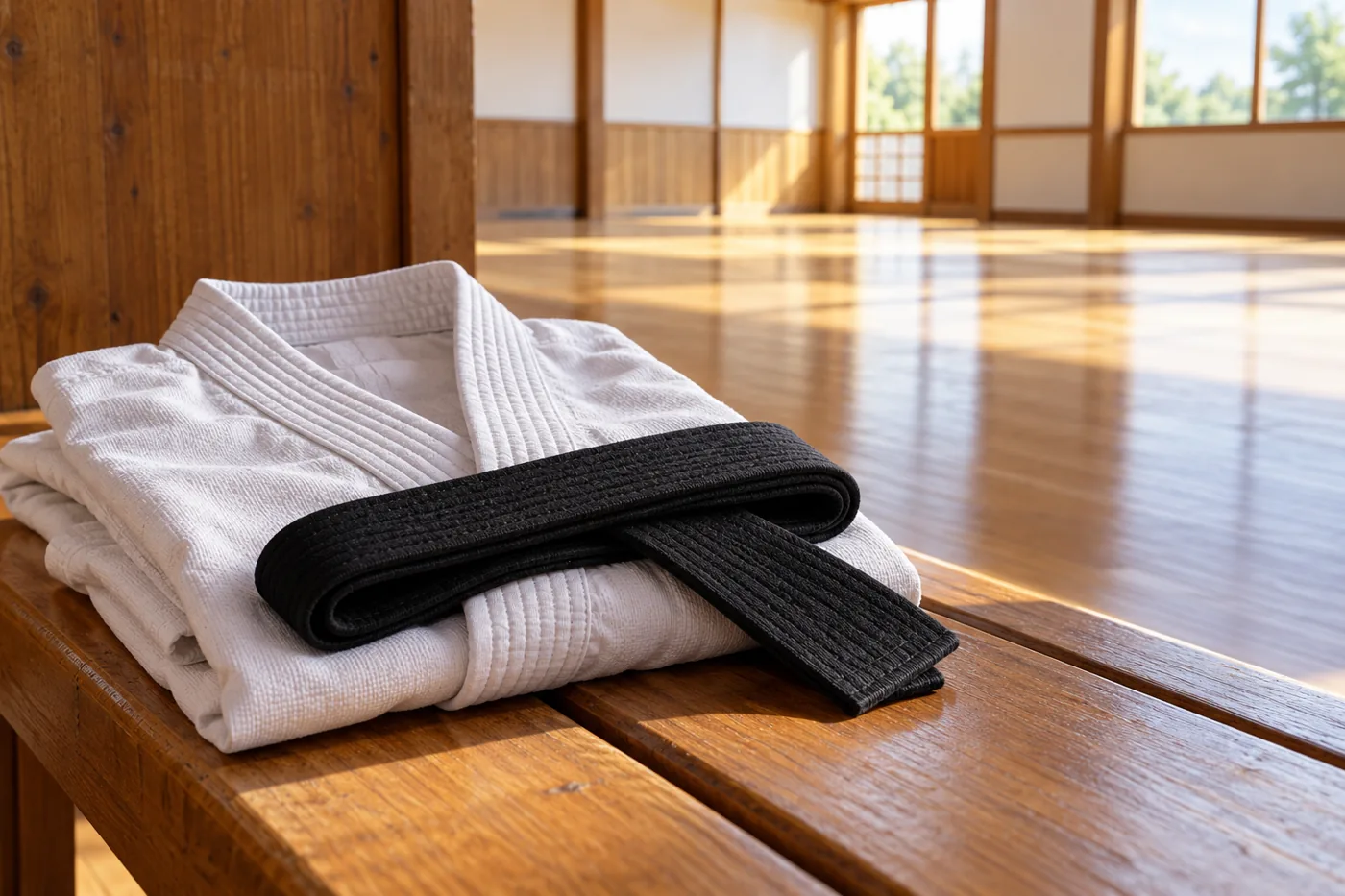
Generated interpretation, not documentary evidence. Invented folded white karate jacket and plain dark belt in an empty practice room.
Credit: AI-generated for Culture Ark using OpenAI image generation Reuse/status: Generated content; no exclusive ownership or underlying-work rights claimed Coherent cotton folds and unlettered belt; no school marks, rank certification or depicted combat instruction. No authentic-reference or endorsement claim.
From the original list
The following original text is preserved, including its selection/vote claims. Preservation is not independent verification of every assertion.
Why: Empty-hand fighting from the Ryukyu Kingdom.
What to preserve: Kata, belts
Year and origin: early 20th century · Okinawa (Japan)
Vote: 6/9 (historian 2 · future kid 2 · curator 2)
Learn more: Karate on Wikipedia
Supplemental context
Karate should be preserved through named lineages and teachers rather than one timeless image of fighting. The Okinawa Karate Information Center explicitly cautions that scarce historical records prevent a clear statement of exactly when and in what form karate began. It presents several origin theories and explains that many named styles were established relatively recently. This makes uncertainty itself useful historical information. A future archive can pair community-authorized accounts with dated demonstrations, while distinguishing training conventions from later popular representations.
Creator/community: Okinawan karate practitioners and distinct teaching lineages Place/era: Okinawa/Ryukyu and later international practice; older roots and modern styles
Context and limits
The original early-twentieth-century date does not settle the beginning of karate. Kata, uniforms, belts and school terminology differ, and a dark belt in a generated image confers no rank. This card depicts generic contemporary clothing, not a particular Okinawan school, sacred practice or instructional stance; no self-defense or health claim is made.
Where to learn more
- https://apiarybee.com/community/reading/biggie-nu-series-008-noahs-ark-set-d-culture-2000
- https://okic.okinawa/en/okinawa-karate-and-kobudo/
Apiary library | Original Culture Ark article
Public ID and individual routes: pending publisher allocation. Internal source ID: D-0526
Part of the Culture Ark: 2,000 things people should still be able to see in 2,000 years, picked by AI research teams. This page keeps the original list entry for D-0526 word for word and adds context. Browse the gallery. The Culture Ark is an Artificial Mind Hive (AMH) project. AMH is owned by Austin Little.

Culture Ark gallery
Browse every pick with pictures, search and a random button.
Open the gallery →