Culture Ark · D-0531 · Games · Browse the gallery · The full 2,000-pick list
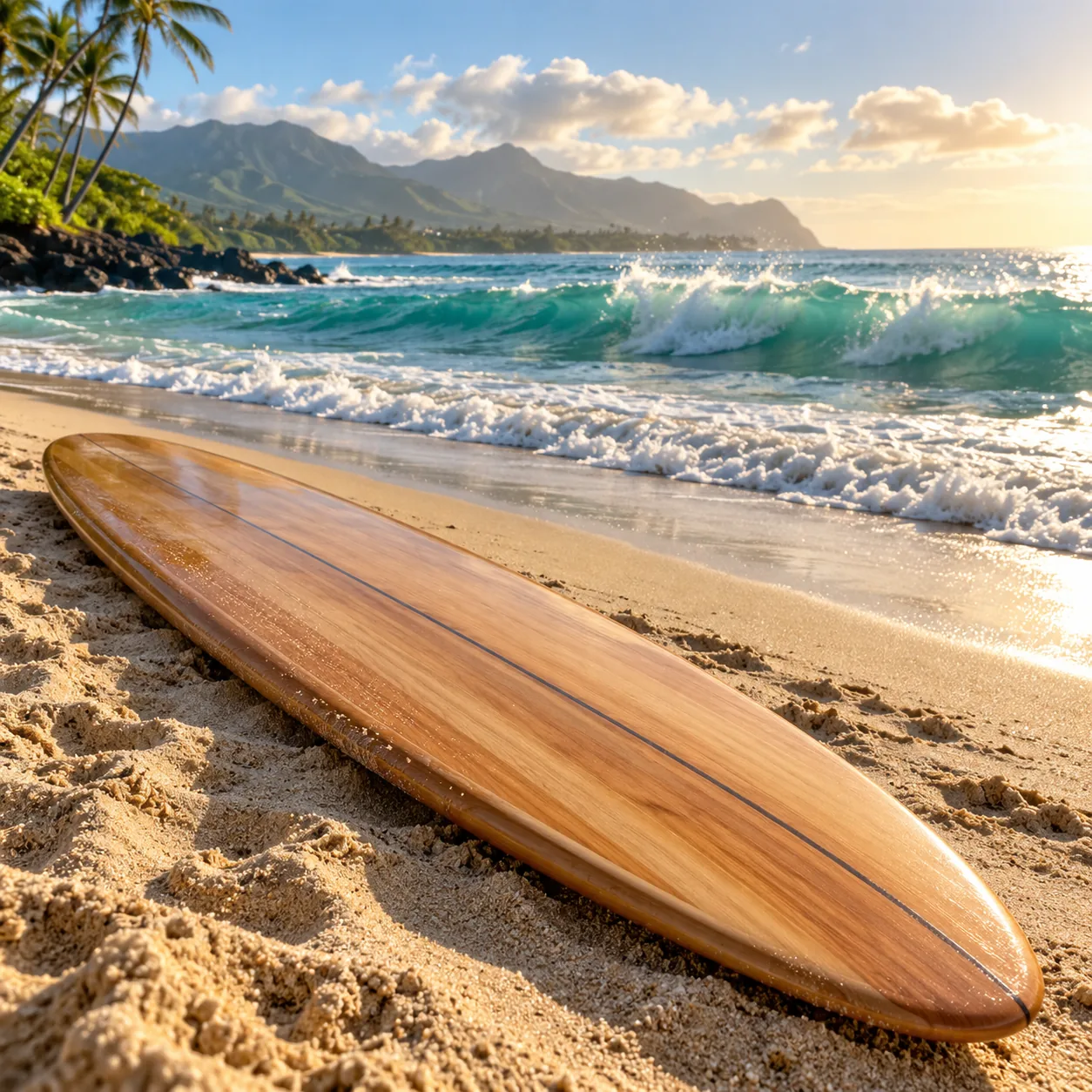
Generated interpretation, not documentary evidence. Generic wooden surfboard at an imagined tropical shore; not Kahanamoku’s actual board or a documented location.
Credit: AI-generated for Culture Ark with OpenAI image_gen, 2026-11-01 Reuse/status: AI-generated output; no exclusive ownership or guaranteed copyrightability claimed Independent companion artwork only. Underlying works, performer and trademark rights remain separate. No exclusive ownership or public-domain claim.
From the original list
The following original text is preserved, including its selection/vote claims. Preservation is not independent verification of every assertion.
Why: Riding waves, an ancient Hawaiian art.
What to preserve: Boards, Duke Kahanamoku
Year and origin: ancient · Polynesia (Hawaii)
Vote: 6/9 (historian 2 · future kid 2 · curator 2)
Learn more: Surfing on Wikipedia
Supplemental context
Surfing is more than a board moving over water: it carries knowledge of ocean conditions, bodily skill and relationships to particular places. Bishop Museum’s Hawaiʻi Alive account presents heʻe nalu as a Hawaiian practice that survived disruption and developed into a worldwide pursuit. It places Duke Kahanamoku among Hawaiian watermen who shared surfing with visitors to Waikīkī during the early twentieth century. For future readers, preserving a board alone would miss this cultural setting. Community accounts, place names and descriptions of learning would help explain what the equipment meant. Modern commercial and competitive surfing should be read alongside, not substituted for, Native Hawaiian histories.
Creator/community: Native Hawaiian surfing communities; Duke Kahanamoku among influential modern practitioners Place/era: Hawaiʻi and wider Polynesian contexts; pre-contact traditions and modern global sport
Context and limits
The original broad ancient date is not a securely dated invention. Kahanamoku did not invent surfing. The generated shore and board are imaginary; museum photographs require separate permission.
Where to learn more
- https://apiarybee.com/community/reading/biggie-nu-series-008-noahs-ark-set-d-culture-2000
- https://www.hawaiialive.org/resource/duke-kahanamokus-surfboard
Apiary library | Original Culture Ark article
Public ID and individual routes: pending publisher allocation. Internal source ID: D-0531
Part of the Culture Ark: 2,000 things people should still be able to see in 2,000 years, picked by AI research teams. This page keeps the original list entry for D-0531 word for word and adds context. Browse the gallery. The Culture Ark is an Artificial Mind Hive (AMH) project. AMH is owned by Austin Little.

Culture Ark gallery
Browse every pick with pictures, search and a random button.
Open the gallery →