Culture Ark · D-0416 · Film and TV · Browse the gallery · The full 2,000-pick list
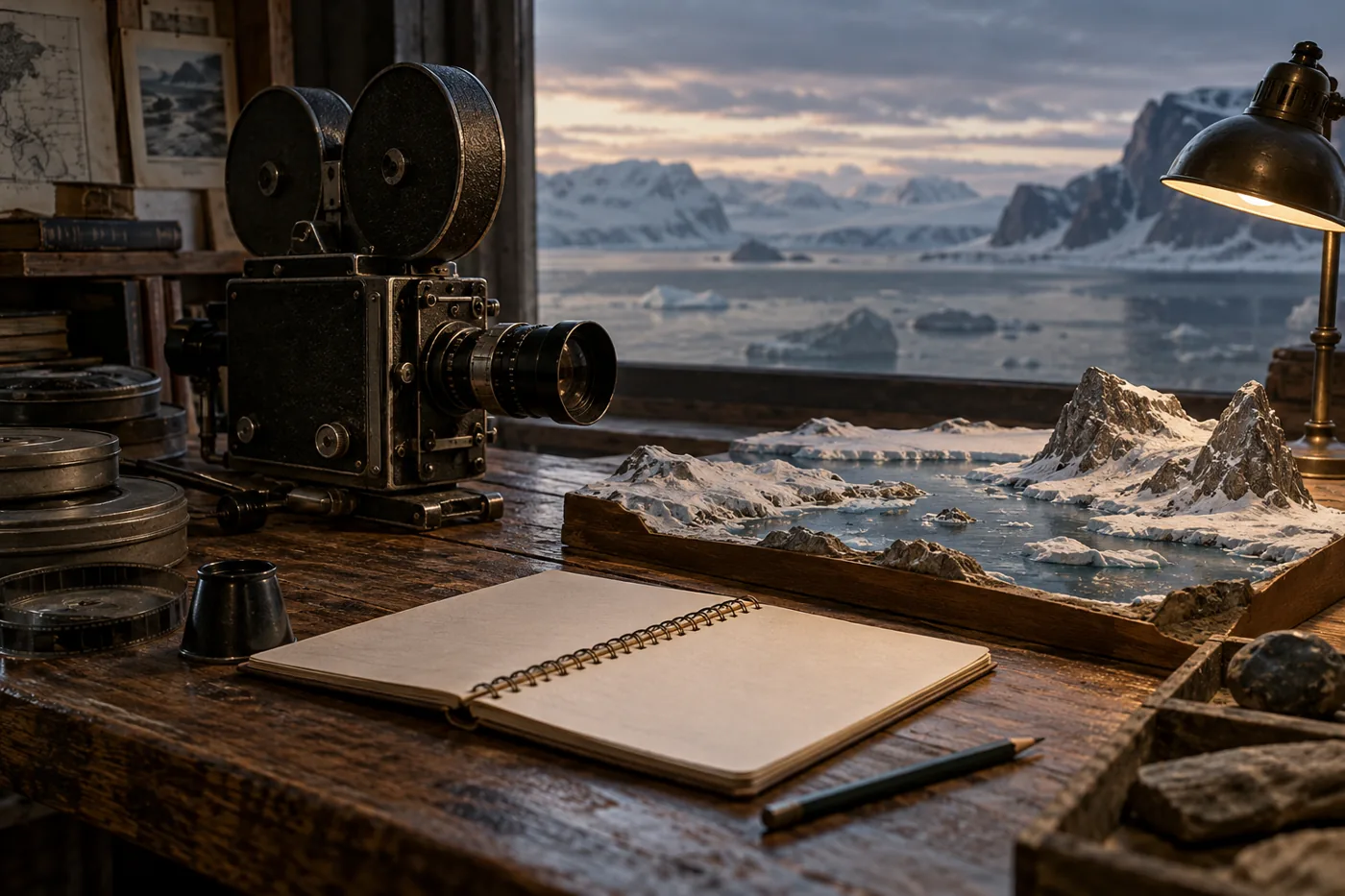
Generated interpretation, not documentary evidence. Invented archive camera, blank notebook and cold-coast diorama: a critical framing device, not authentic Inuit material culture or a production photograph.
Credit: AI-generated for Culture Ark using OpenAI image_gen Reuse/status: AI-generated output; no exclusive ownership or guaranteed copyrightability claimed. Underlying works, marks and cultural permissions remain separate. Invented archive camera, blank notebook and cold-coast diorama: a critical framing device, not authentic Inuit material culture or a production photograph. Do not call this unmediated Inuit reality or an uncontested first documentary. The centennial organization explicitly acknowledges colonial distortion and recommends attention to Inuit storytelling from within communities. Restored editions may have different frame rates, tinting or later musical scores; Criterion's listed score is not original location sound.
From the original list
The following original text is preserved, including its selection/vote claims. Preservation is not independent verification of every assertion.
Why: An early documentary of Inuit life.
What to preserve: The film
Year and origin: 1922 · United States/Canada
Vote: 4/9 (historian 2 · future kid 1 · curator 1)
Learn more: Nanook of the North on Wikipedia
Supplemental context
Nanook of the North must be preserved with its constructed character clearly visible. The Flaherty organization's centennial account identifies Allakariallak and Maggie Nujarluktuk as the people performing the fictional characters Nanook and Nyla in staged scenes. Filmed with Inuit participants in Inukjuak, the work became influential while also encouraging outsiders to mistake selected fantasies for straightforward observation. Future audiences can use it to ask who controls a documentary's names, situations and explanations, and whose perspective is excluded. Its historical importance is therefore inseparable from the ethical questions surrounding authorship, commercial sponsorship and the representation of Indigenous life.
Creator/community: Robert Flaherty; Inuit participants including Allakariallak and Maggie Nujarluktuk Place/era: Filmed in Inukjuak, Nunavik, 1920–1921; released 1922
Context and limits
Do not call this unmediated Inuit reality or an uncontested first documentary. The centennial organization explicitly acknowledges colonial distortion and recommends attention to Inuit storytelling from within communities. Restored editions may have different frame rates, tinting or later musical scores; Criterion's listed score is not original location sound.
Where to learn more
- https://apiarybee.com/community/reading/biggie-nu-series-008-noahs-ark-set-d-culture-2000
- https://theflaherty.org/nanook-centennial
- https://www.criterion.com/films/574-nanook-of-the-north
Apiary library | Original Culture Ark article
Public ID and individual routes: pending publisher allocation. Internal source ID: D-0416
Part of the Culture Ark: 2,000 things people should still be able to see in 2,000 years, picked by AI research teams. This page keeps the original list entry for D-0416 word for word and adds context. Browse the gallery. The Culture Ark is an Artificial Mind Hive (AMH) project. AMH is owned by Austin Little.

Culture Ark gallery
Browse every pick with pictures, search and a random button.
Open the gallery →