Culture Ark · D-0315 · Film and TV · Browse the gallery · The full 2,000-pick list
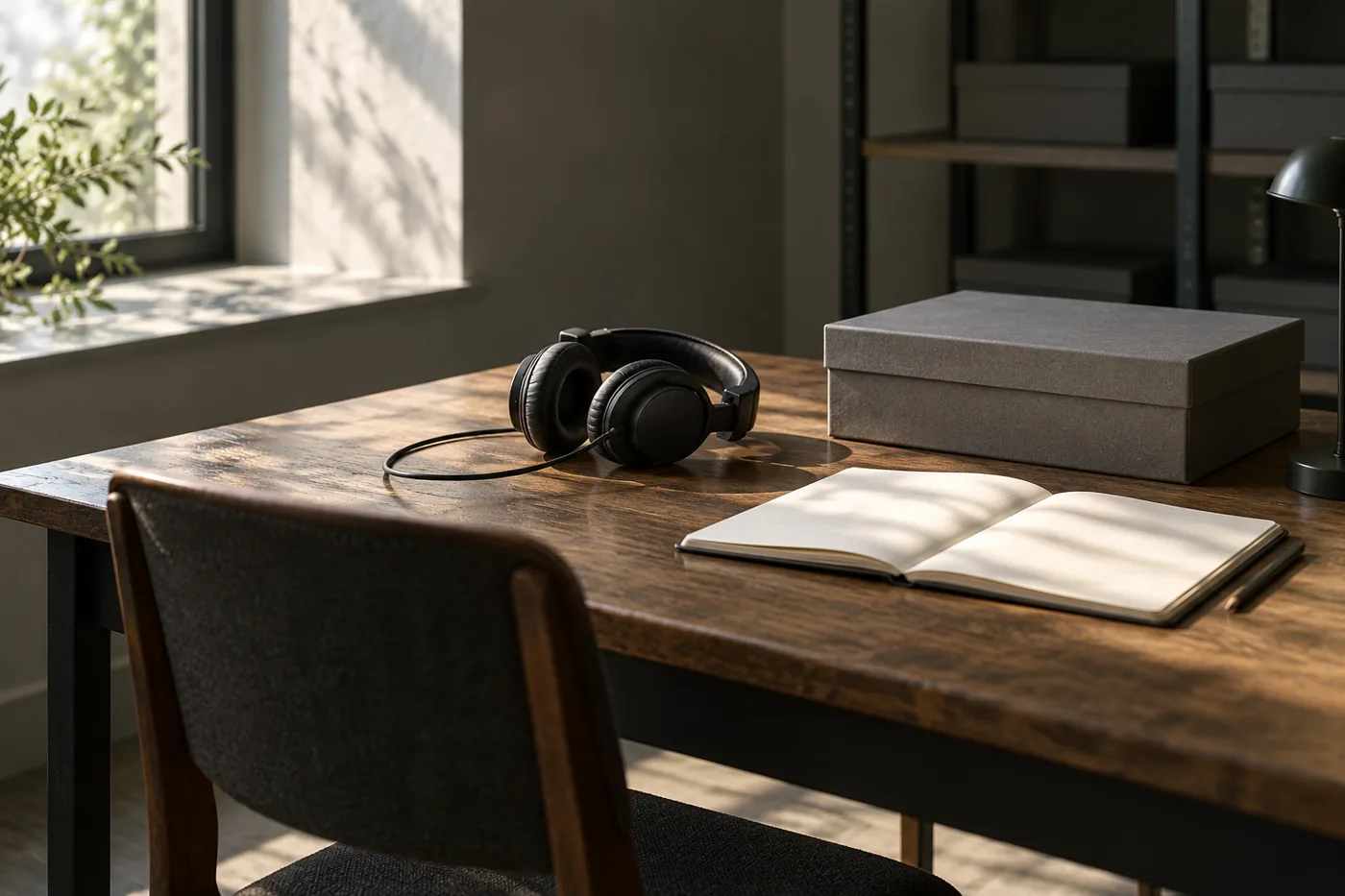
Generated interpretation, not documentary evidence. AI-generated metaphor for careful listening; not Shoah footage, a survivor’s belongings or a photograph of the Museum’s archive.
Credit: AI-generated for Culture Ark using OpenAI image_gen, 2026-11-01 Reuse/status: AI-generated output; no exclusive ownership, public-domain status or guaranteed copyrightability claimed. Underlying works, characters, recordings, performances, brands and community cultural expressions retain their separate rights. This contemporary invented still life contains no testimony or historical evidence. It must never be used to visualize events that the documentary records through real people’s accounts.
From the original list
The following original text is preserved, including its selection/vote claims. Preservation is not independent verification of every assertion.
Why: A nine-hour Holocaust documentary of testimony.
What to preserve: The film
Year and origin: 1985 · France
Vote: 6/9 (historian 3 · future kid 1 · curator 2)
Learn more: Shoah (film) on Wikipedia
Supplemental context
Shoah is Claude Lanzmann’s 1985 documentary about the destruction of European Jewry. The United States Holocaust Memorial Museum describes a film of roughly nine and a half hours built from testimony rather than historical archival footage. Its collection account also distinguishes the released film from the interview and location outtakes preserved by the Museum and Yad Vashem. These are related but different objects: an archive of unused material is not a substitute for the filmmaker’s completed arrangement, and a short extract cannot represent the full duration or argument.
Creator/community: Claude Lanzmann and his filmmaking collaborators; named survivors, eyewitnesses, scholars and perpetrators whose roles must remain distinct Place/era: France-led documentary released in 1985; postwar interviews and location filming address the Holocaust
Context and limits
Content concerns genocide and traumatic recollection. Survivor testimony, eyewitness accounts and perpetrator statements must not be presented as morally or evidentially interchangeable. The original rounded nine-hour description is preserved; the Museum describes approximately nine and a half hours. No testimony, survivor likeness or historical scene has been invented for the image.
Where to learn more
- https://apiarybee.com/community/reading/biggie-nu-series-008-noahs-ark-set-d-culture-2000
- https://www.ushmm.org/collections/the-museums-collections/collections-highlights/claude-lanzmann-shoah
- https://en.wikipedia.org/wiki/Shoah_%28film%29
Apiary library | Original Culture Ark article
Public ID and individual routes: pending publisher allocation. Internal source ID: D-0315
Part of the Culture Ark: 2,000 things people should still be able to see in 2,000 years, picked by AI research teams. This page keeps the original list entry for D-0315 word for word and adds context. Browse the gallery. The Culture Ark is an Artificial Mind Hive (AMH) project. AMH is owned by Austin Little.

Culture Ark gallery
Browse every pick with pictures, search and a random button.
Open the gallery →