Culture Ark · D-0320 · Film and TV · Browse the gallery · The full 2,000-pick list
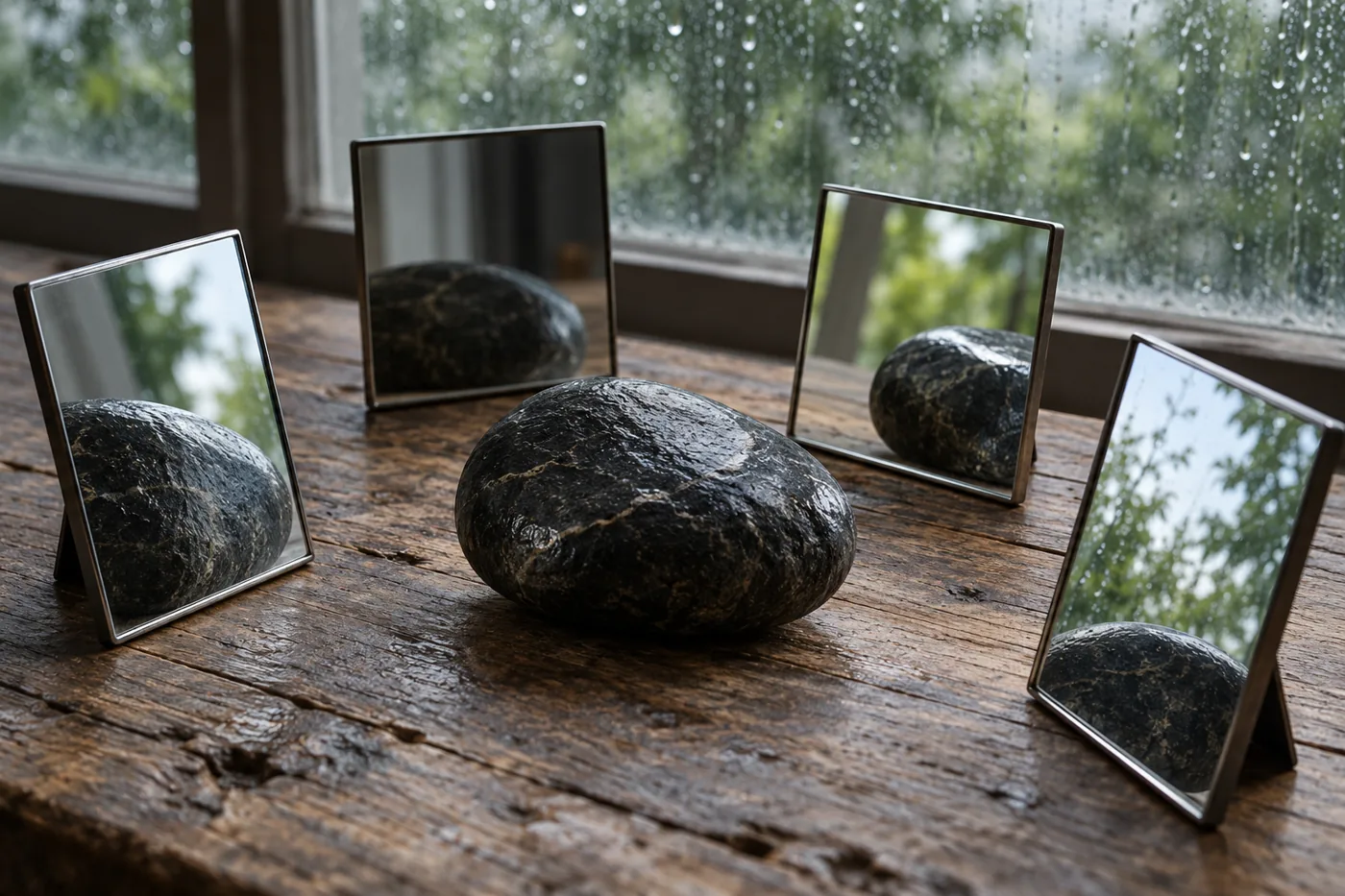
Generated interpretation, not documentary evidence. AI-generated metaphor for partial perspectives; not Rashomon scenery, a film frame or evidence of a crime.
Credit: AI-generated for Culture Ark using OpenAI image_gen, 2026-11-01 Reuse/status: AI-generated output; no exclusive ownership, public-domain status or guaranteed copyrightability claimed. Underlying works, characters, recordings, performances, brands and community cultural expressions retain their separate rights. The arrangement is a contemporary conceptual still life, not a historical Japanese setting or a calibrated demonstration of optical geometry.
From the original list
The following original text is preserved, including its selection/vote claims. Preservation is not independent verification of every assertion.
Why: Four contradicting accounts of one crime gave a name to unreliable truth.
What to preserve: The film
Year and origin: 1950 · Japan
Vote: 5/9 (historian 2 · future kid 1 · curator 2)
Learn more: Rashomon on Wikipedia
Supplemental context
Rashomon presents conflicting accounts of a killing and sexual assault through a deliberately structured set of flashbacks. Criterion’s record identifies the 1950 Japanese feature and credits Kurosawa and Shinobu Hashimoto’s screenplay, based on stories by Ryūnosuke Akutagawa. The film’s arrangement makes uncertainty a viewing experience rather than merely a topic explained in dialogue. Preserving that arrangement, with a clearly identified translation, matters more than extracting a slogan that all truth is unreliable.
Creator/community: Akira Kurosawa, director and co-screenwriter; Shinobu Hashimoto, co-screenwriter; Ryūnosuke Akutagawa, source-story author; cast and crew Place/era: Japan; the 1950 Japanese-language feature, distinct from its source stories and later adaptations
Context and limits
Content includes sexual violence and killing; viewers need advance notice. Do not turn the narrative into a general reason to disbelieve victims or into a stereotype about Japanese culture. The original four-account summary remains unchanged, while the supplement identifies the specific film and separates it from Akutagawa’s stories. Subtitle and restoration versions require their own records.
Where to learn more
- https://apiarybee.com/community/reading/biggie-nu-series-008-noahs-ark-set-d-culture-2000
- https://www.criterion.com/films/307-rashomon
- https://en.wikipedia.org/wiki/Rashomon
Apiary library | Original Culture Ark article
Public ID and individual routes: pending publisher allocation. Internal source ID: D-0320
Part of the Culture Ark: 2,000 things people should still be able to see in 2,000 years, picked by AI research teams. This page keeps the original list entry for D-0320 word for word and adds context. Browse the gallery. The Culture Ark is an Artificial Mind Hive (AMH) project. AMH is owned by Austin Little.

Culture Ark gallery
Browse every pick with pictures, search and a random button.
Open the gallery →