Culture Ark · D-0234 · Film and TV · Browse the gallery · The full 2,000-pick list
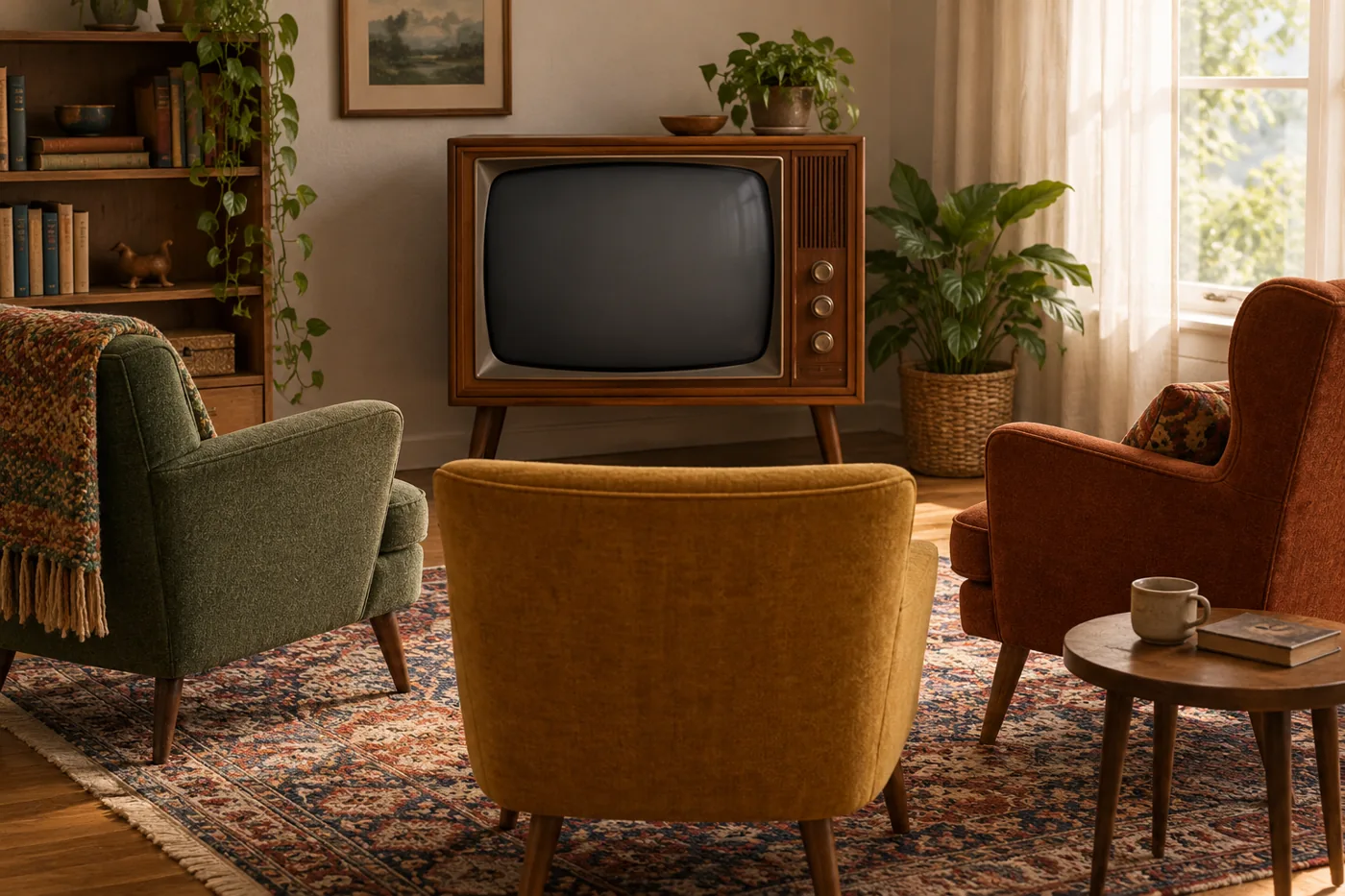
Generated interpretation, not documentary evidence. A generic wooden television with blank curved screen and three empty armchairs in a fictional room; not a broadcast, museum specimen or documented household.
Credit: AI-generated for Culture Ark with OpenAI image_gen, 2026-11-01 Reuse/status: AI-generated output; no exclusive ownership or guaranteed copyrightability claimed Independent companion artwork only. Underlying works, performer and trademark rights remain separate. No exclusive ownership or public-domain claim.
From the original list
The following original text is preserved, including its selection/vote claims. Preservation is not independent verification of every assertion.
Why: The box in the living room that united nations in watching.
What to preserve: Sets, history
Year and origin: 1920s · Worldwide
Vote: 8/9 (historian 3 · future kid 2 · curator 3)
Learn more: Television on Wikipedia
Supplemental context
The Science Museum Group preserves an experimental receiver used in John Logie Baird’s 1925–1926 work. Such an object anchors one stage of television history, but the culture of television also includes schedules, shared viewing, news, entertainment and domestic arrangements. A future collection would benefit from connecting particular sets and broadcast systems with the programs and audiences they served.
Creator/community: Inventors, manufacturers, broadcasters, program makers and viewing communities Place/era: Worldwide; multiple development paths, with major demonstrations in the 1920s
Context and limits
One experimental apparatus is not the sole invention of television or the same thing as later electronic sets. The idea that television ‘united nations’ is a broad interpretation: access, language, censorship and audience experience differed. The card depicts an imagined later domestic set, not Baird’s receiver or a technically verified model.
Where to learn more
- https://apiarybee.com/community/reading/biggie-nu-series-008-noahs-ark-set-d-culture-2000
- https://collection.sciencemuseumgroup.org.uk/objects/co34789
Apiary library | Original Culture Ark article
Public ID and individual routes: pending publisher allocation. Internal source ID: D-0234
Part of the Culture Ark: 2,000 things people should still be able to see in 2,000 years, picked by AI research teams. This page keeps the original list entry for D-0234 word for word and adds context. Browse the gallery. The Culture Ark is an Artificial Mind Hive (AMH) project. AMH is owned by Austin Little.

Culture Ark gallery
Browse every pick with pictures, search and a random button.
Open the gallery →