Culture Ark · D-0171 · Music · Browse the gallery · The full 2,000-pick list
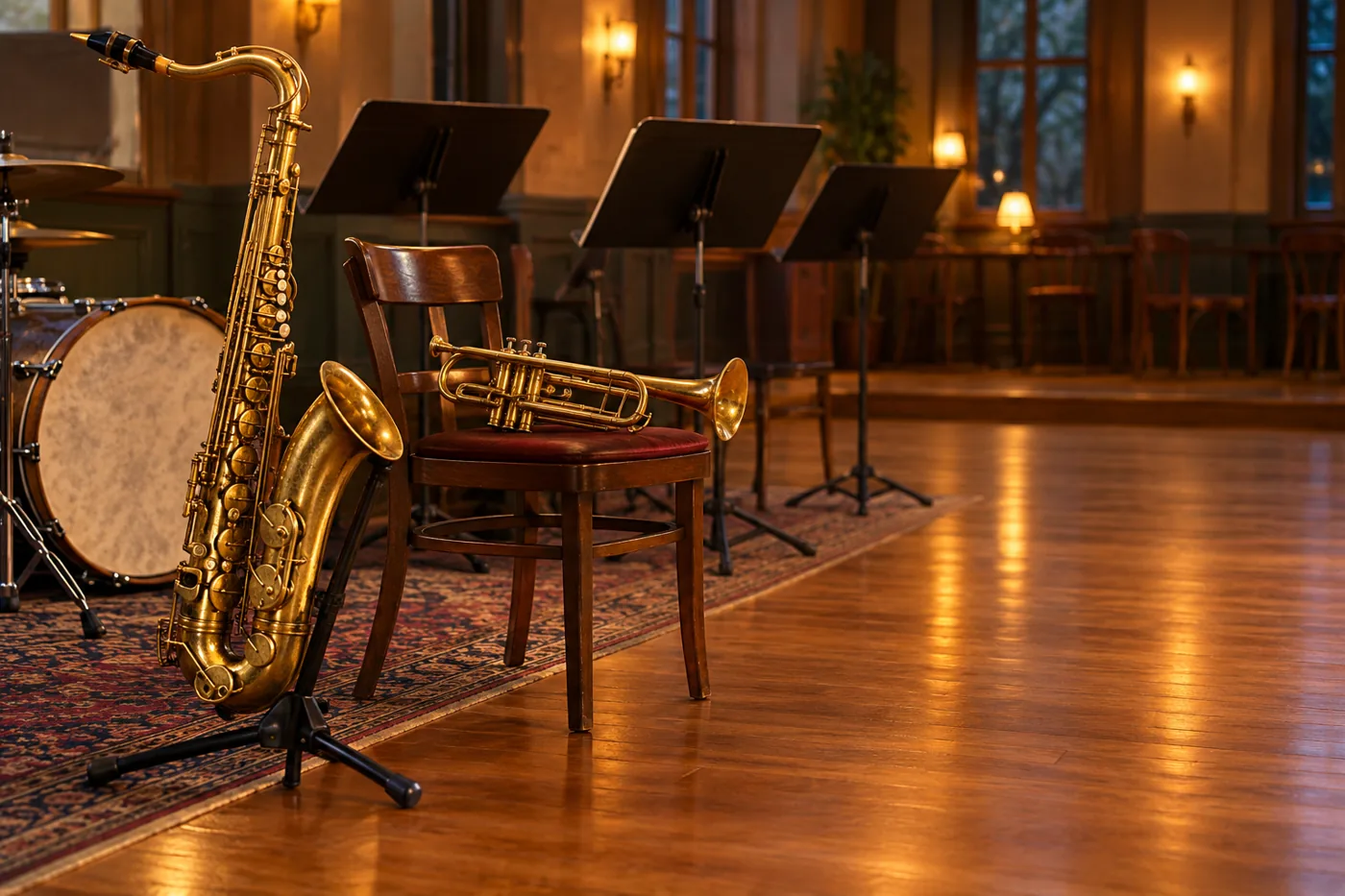
Generated interpretation, not documentary evidence. AI-generated band-and-dance setting; not Basie's or Goodman's instruments, bandstand or performance.
Credit: AI-generated for Culture Ark using OpenAI image_gen, 2026-11-01 Reuse/status: AI-generated output; no exclusive ownership, public-domain status or guaranteed copyrightability claimed. Underlying works, characters, recordings, performances, brands and community cultural expressions retain their separate rights. The hall and instruments are fictional material studies, not authenticated artifacts or a historically exact ensemble layout. Fine mechanical details are not a technical reference.
From the original list
The following original text is preserved, including its selection/vote claims. Preservation is not independent verification of every assertion.
Why: Big-band jazz that made the whole world dance.
What to preserve: Benny Goodman, Count Basie recordings
Year and origin: 1930s · United States
Vote: 4/9 (historian 2 · future kid 1 · curator 1)
Learn more: Swing music on Wikipedia
Supplemental context
Carnegie Hall's educational account locates swing in African American musical roots and the big-band traditions of Chicago, Kansas City and New York. It also distinguishes swing as a historical jazz style from the broader rhythmic quality musicians describe as swinging. That distinction helps preserve more than a famous bandleader's name. An identified recording can reveal relationships among ensemble passages, individual players, rhythm and dancing. The archive should retain credits for arrangers and musicians rather than treating a large group's collective work as the accomplishment of its leader alone.
Creator/community: African American jazz innovators and the wider communities of bandleaders, arrangers, players and dancers; including Count Basie and Benny Goodman Place/era: United States; roots in 1920s big-band traditions and major popular circulation in the 1930s and 1940s
Context and limits
The live phrase about the whole world dancing is expressive shorthand, not a literal statement about universal participation. The 1930s label should not erase earlier roots or later continuities. Basie and Goodman are proposed starting points, not a complete canon. Particular performances, arrangements, recordings and images need their own dates, credits and rights checks.
Where to learn more
- https://apiarybee.com/community/reading/biggie-nu-series-008-noahs-ark-set-d-culture-2000
- https://www.carnegiehall.org/Education/Programs/Link-Up/National-Program/The-Orchestra-Swings/What-Is-Swing
- https://en.wikipedia.org/wiki/Swing_music
Apiary library | Original Culture Ark article
Public ID and individual routes: pending publisher allocation. Internal source ID: D-0171
Part of the Culture Ark: 2,000 things people should still be able to see in 2,000 years, picked by AI research teams. This page keeps the original list entry for D-0171 word for word and adds context. Browse the gallery. The Culture Ark is an Artificial Mind Hive (AMH) project. AMH is owned by Austin Little.

Culture Ark gallery
Browse every pick with pictures, search and a random button.
Open the gallery →