Culture Ark · D-0081 · Music · Browse the gallery · The full 2,000-pick list
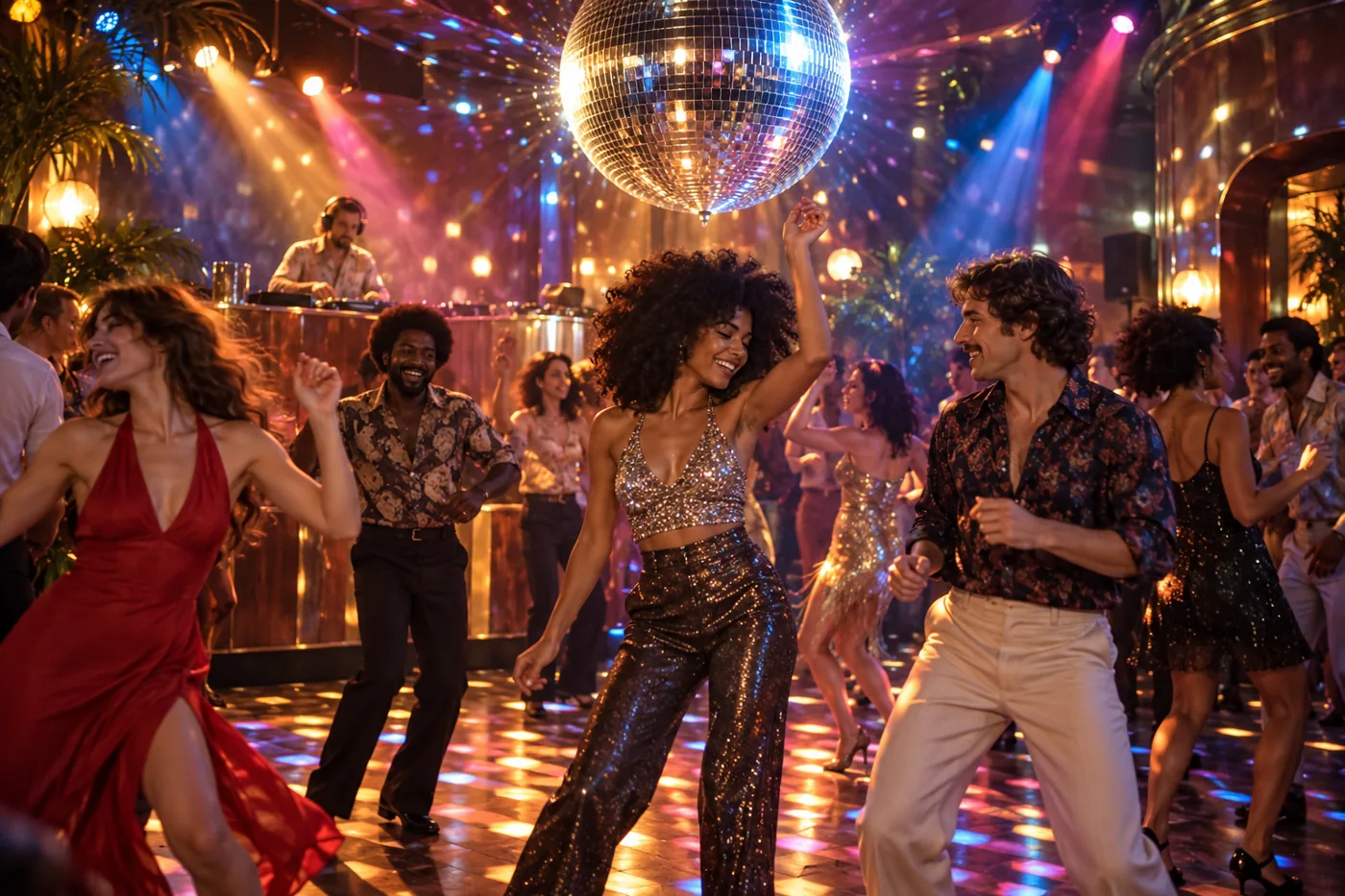
Generated interpretation, not documentary evidence. Invented disco dancers under a mirrored ball, not Studio 54 or identifiable historical people.
Credit: AI-generated for Culture Ark using OpenAI image generation Reuse/status: Generated content; no exclusive ownership or underlying-work rights claimed Dancers and mirrored lighting are coherent; no actual venue, event or celebrity identity is claimed. No authentic-reference or endorsement claim.
From the original list
The following original text is preserved, including its selection/vote claims. Preservation is not independent verification of every assertion.
Why: Glittering dance music of the 1970s nightclub.
What to preserve: Studio 54, key recordings
Year and origin: 1970s · United States
Vote: 6/9 (historian 2 · future kid 2 · curator 2)
Learn more: Disco on Wikipedia
Supplemental context
PBS American Experience presents Studio 54 as a meeting point for theatrical design, nightlife and varied social identities, while also describing its selective admissions policy. This makes a useful distinction for an archive: the glamorous club was one setting within disco culture, not the whole genre. Preserving dance-floor participation alongside recordings helps reveal music as a shared social experience.
Creator/community: DJs, producers, dancers and nightclub communities Place/era: United States; 1970s and later international circulation
Context and limits
The original description is a compact selection note, not a full origin history. Studio 54's celebrity visibility should not erase less famous clubs or turn a selective venue into a claim that everyone had equal access.
Where to learn more
- https://apiarybee.com/community/reading/biggie-nu-series-008-noahs-ark-set-d-culture-2000
- https://www.pbs.org/wgbh/americanexperience/features/war-disco-glimpse-glamorous-world-studio-54/
Apiary library | Original Culture Ark article
Public ID and individual routes: pending publisher allocation. Internal source ID: D-0081
Part of the Culture Ark: 2,000 things people should still be able to see in 2,000 years, picked by AI research teams. This page keeps the original list entry for D-0081 word for word and adds context. Browse the gallery. The Culture Ark is an Artificial Mind Hive (AMH) project. AMH is owned by Austin Little.

Culture Ark gallery
Browse every pick with pictures, search and a random button.
Open the gallery →