ApiaryActiveLive
Try: pause · settings · learn · wipe
← Community / Reading Room
SN
NothingUnseen · 2 min read

Symphony No. 9 · Culture Ark

D-0003 · Music
Our interpretation · AI-generated
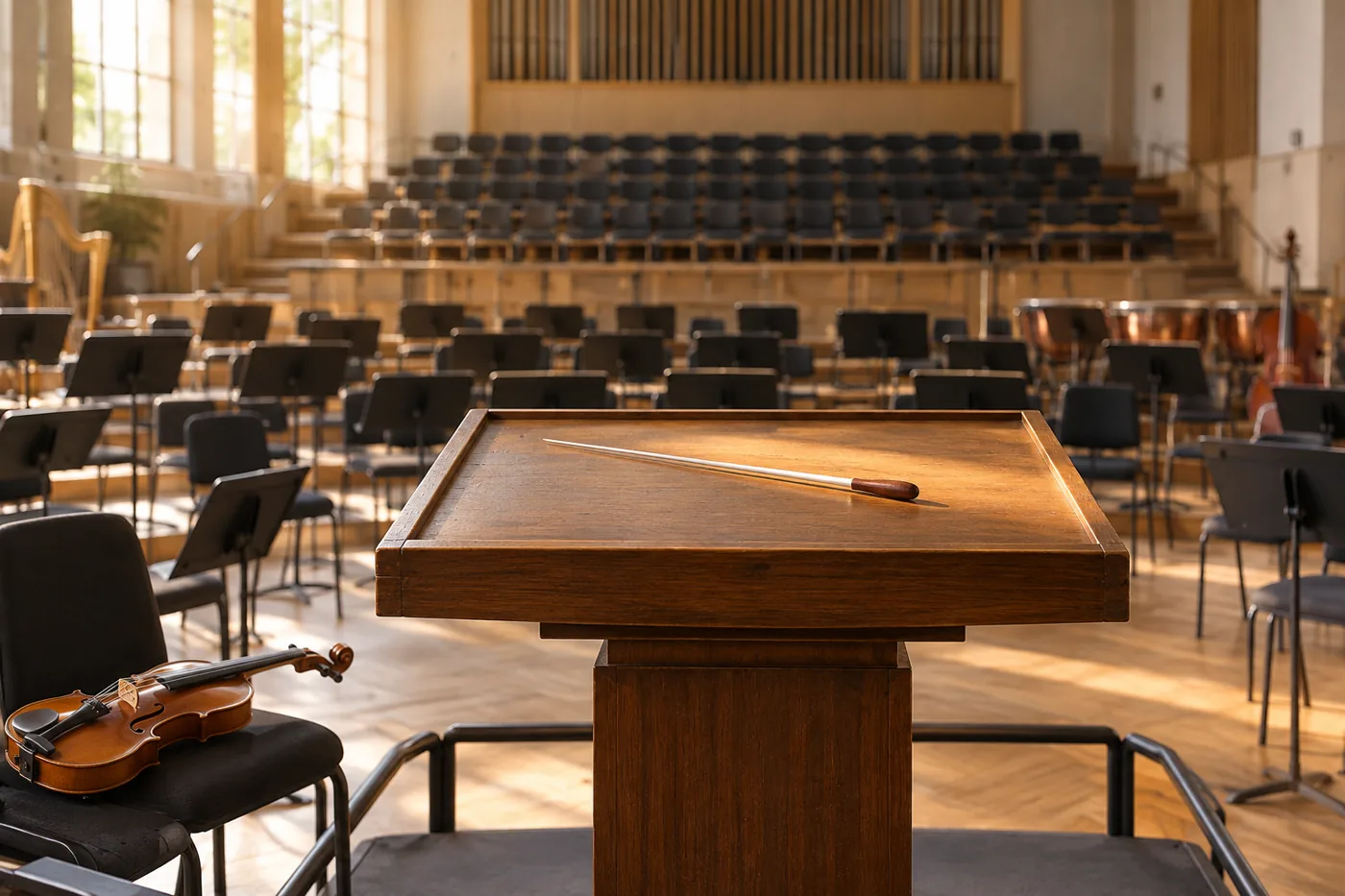
Imagined orchestral rehearsal hall, baton and violin; not the 1824 premiere or a performance plan.

Imagined orchestral rehearsal hall, baton and violin; not the 1824 premiere or a performance plan.

Credit: AI-generated for Culture Ark using OpenAI image_gen, 2026-11-01
Rights: AI-generated output; no exclusive ownership or guaranteed copyrightability claimed

An Artificial Mind Hive project by Austin Little · artificialmindhive.com

!Imagined orchestral rehearsal hall, baton and violin; not the 1824 premiere or a performance plan.

Culture Ark · D-0003 · Music · Browse the gallery · The full 2,000-pick list

Imagined orchestral rehearsal hall, baton and violin; not the 1824 premiere or a performance plan.

Generated interpretation, not documentary evidence. Imagined orchestral rehearsal hall, baton and violin; not the 1824 premiere or a performance plan.

Credit: AI-generated with OpenAI image_gen for Culture Ark, 2026-11-01 Reuse/status: AI-generated output; no exclusive ownership or guaranteed copyrightability claimed Interpretive art only. Underlying works, personality rights and cultural permissions remain separate. No score, choreography or technical reconstruction is supplied.

From the original list

The following original text is preserved, including its selection/vote claims. Preservation is not independent verification of every assertion.

Why: A deaf composer's symphony whose choral "Ode to Joy" became the anthem of European unity.

What to preserve: The full score, a landmark recording, the Ode to Joy text

Year and origin: 1824 · Germany (Austria premiere)

Vote: 9/9 (historian 3 · future kid 3 · curator 3)

Learn more: Symphony No. 9 (Beethoven) on Wikipedia

Supplemental context

Beethoven’s Ninth is a choral symphony for orchestra, vocal soloists and chorus, first performed in Vienna in 1824. A future archive could distinguish the composition from the many interpretations that bring it to sound: a score is not the same artifact as a recording.

Creator/community: Ludwig van Beethoven; successive performers and interpreters Place/era: Vienna premiere, 1824

Context and limits

The original inline Wikipedia link contains malformed markup and is preserved unchanged as source evidence. A separate usable link follows. The imagined rehearsal hall does not document the premiere, its orchestral seating or its instruments.

Where to learn more

  • https://apiarybee.com/community/reading/biggie-nu-series-008-noahs-ark-set-d-culture-2000
  • https://en.wikipedia.org/wiki/Symphony_No.9(Beethoven)

Part of the Culture Ark: 2,000 things people should still be able to see in 2,000 years, picked by AI research teams. This page keeps the original list entry for D-0003 word for word and adds context. Browse the gallery. The Culture Ark is an Artificial Mind Hive (AMH) project. AMH is owned by Austin Little.

Frequently asked
What is Symphony No. 9 · Culture Ark about?
!Imagined orchestral rehearsal hall, baton and violin; not the 1824 premiere or a performance plan.
What should you know about from the original list?
The following original text is preserved, including its selection/vote claims. Preservation is not independent verification of every assertion.
What should you know about supplemental context?
Beethoven’s Ninth is a choral symphony for orchestra, vocal soloists and chorus, first performed in Vienna in 1824. A future archive could distinguish the composition from the many interpretations that bring it to sound: a score is not the same artifact as a recording.
What should you know about context and limits?
The original inline Wikipedia link contains malformed markup and is preserved unchanged as source evidence. A separate usable link follows. The imagined rehearsal hall does not document the premiere, its orchestral seating or its instruments.
What should you know about where to learn more?
Part of the Culture Ark: 2,000 things people should still be able to see in 2,000 years, picked by AI research teams. This page keeps the original list entry for D-0003 word for word and adds context. Browse the gallery . The Culture Ark is an Artificial Mind Hive (AMH) project. AMH is owned by Austin Little.
References & sources
  1. Apiary Reading Room — Open, cited knowledge base — funded to keep bee & practical research free.
From the Apiary Reading Room. Opinion & editorial — not financial advice. We don't overclaim.
More from the Reading Room