Culture Ark · Browse the gallery · 60 illustrated picks on Apiary
CA0901 · ordinary life
Creator/community: Unidentified makers in Gujarat or Sind Place/era: India or Pakistan, Gujarat or Sind; late 16th–early 17th century
Generated interpretation
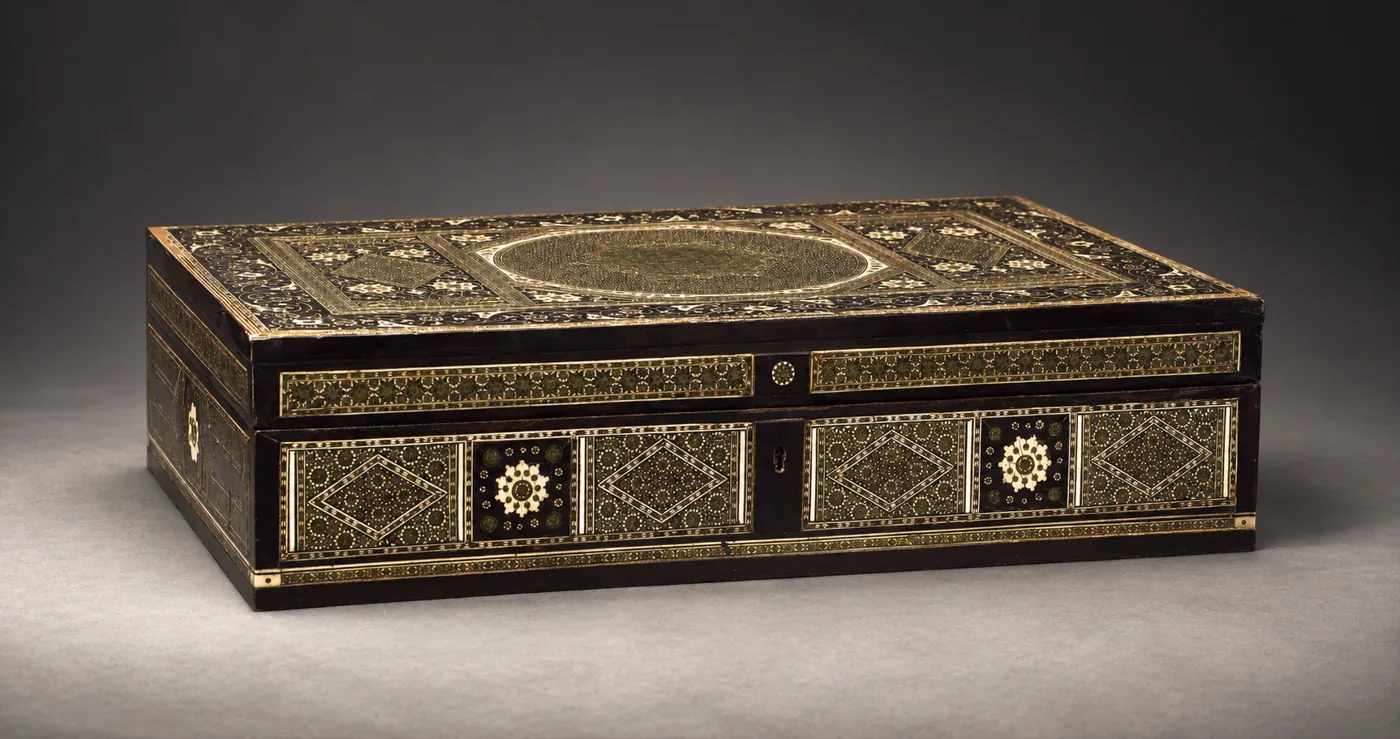
Mostly realistic generated object study for Sadeli-inlaid writing box. Credit: AI-generated presentation illustration using built-in image_gen; guided by the credited public-domain Met reference photograph.. Rights: Generated output; no exclusive-rights or public-domain claim. Reference image is public domain under Met Open Access.. Changes: Resized within1400px and converted to WebP; no crop or substantive alteration. Image source Image licence
Lighting, color and small details are interpretive. This illustration is not evidence of original condition, contents or use. No promise of exclusive ownership, enforceable copyright or museum endorsement.
Documented reference / existing artwork
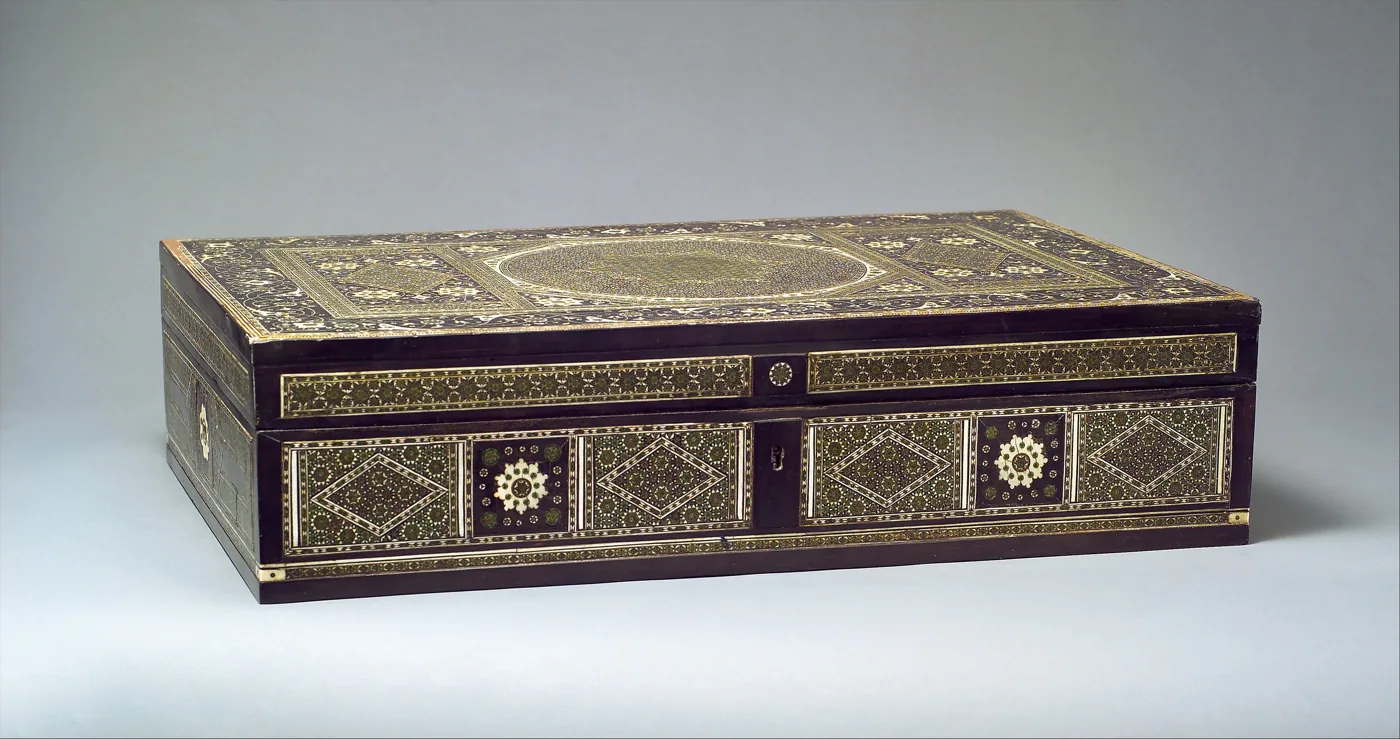
Writing Box. late 16th–early 17th century. The Metropolitan Museum of Art, 2004.439. Credit: Unidentified artist / The Metropolitan Museum of Art. Purchase, Pat and John Rosenwald Gift, 2004. Rights: Public domain; Met Open Access. Changes: Resized within1400px and converted to WebP; no crop or substantive alteration. Image source Image licence
Met API explicitly marks isPublicDomain=true. Image reuse permission does not transfer ownership of the object or resolve cultural permissions, sacred significance, provenance or restitution questions. Retain the catalog context.
History and context
This writing box combines a wooden structure, an ebony veneer and small inlaid pieces of ivory, bone and brass. The museum associates its manufacture with Gujarat or Sind, retaining alternatives rather than naming a certain workshop. Its repeating decoration uses sadeli, a micromosaic technique in which bundled materials are cut across to expose patterned sections. A container associated with writing therefore carries evidence of other skills: joining, cutting, surface design and the coordination of contrasting materials. In a future archive it can make the physical setting of correspondence visible, reminding readers that writing required a surrounding material culture as well as a script.
What future readers can learn
Curatorial interpretation: Communication involved crafted places to store and protect its equipment, not just the words that eventually survived.
Limits and cultural context
Geographic attribution is uncertain between Gujarat and Sind. This object alone does not establish the literacy, language or identity of its owner.
Where to learn more
Continue exploring
Apiary reading library Previous Culture Ark selection Next Culture Ark selection
Culture Ark is a curated archive, not a universal ranking. Interpretive images and source evidence serve different roles.
Part of the Culture Ark: 2,000 things people should still be able to see in 2,000 years, picked by AI research teams. Browse the gallery. The Culture Ark is an Artificial Mind Hive (AMH) project. AMH is owned by Austin Little.

Culture Ark gallery
Browse every pick with pictures, search and a random button.
Open the gallery →