Culture Ark · Browse the gallery · 60 illustrated picks on Apiary
CA0899 · ordinary life
Creator/community: Unidentified Chinese makers Place/era: China; ca. 1840
Generated interpretation
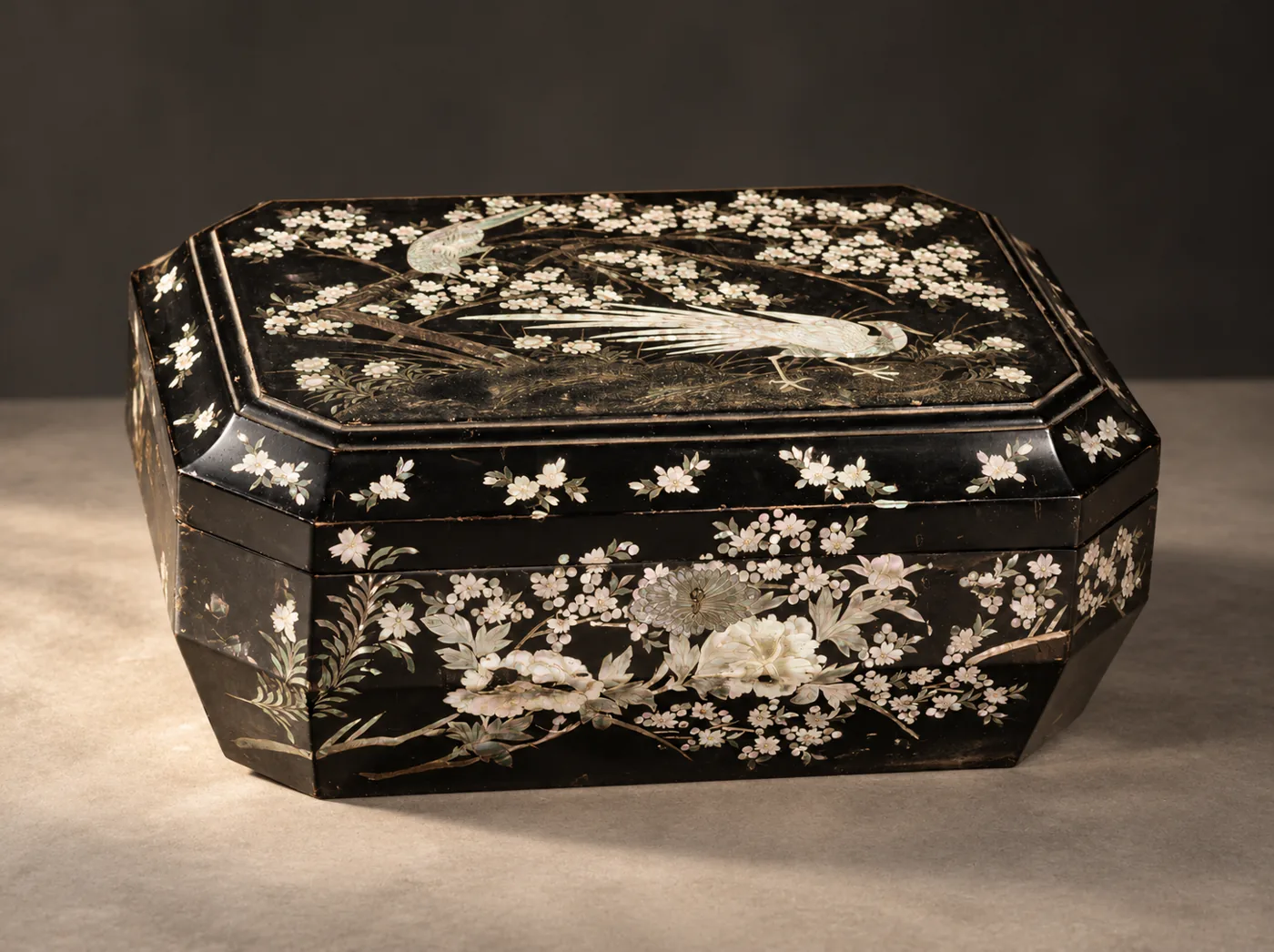
Mostly realistic generated object study for Chinese export sewing box. Credit: AI-generated presentation illustration using built-in image_gen; guided by the credited public-domain Met reference photograph.. Rights: Generated output; no exclusive-rights or public-domain claim. Reference image is public domain under Met Open Access.. Changes: Resized within1400px and converted to WebP; no crop or substantive alteration. Image source Image licence
Lighting, color and small details are interpretive. This illustration is not evidence of original condition, contents or use. No promise of exclusive ownership, enforceable copyright or museum endorsement.
Documented reference / existing artwork
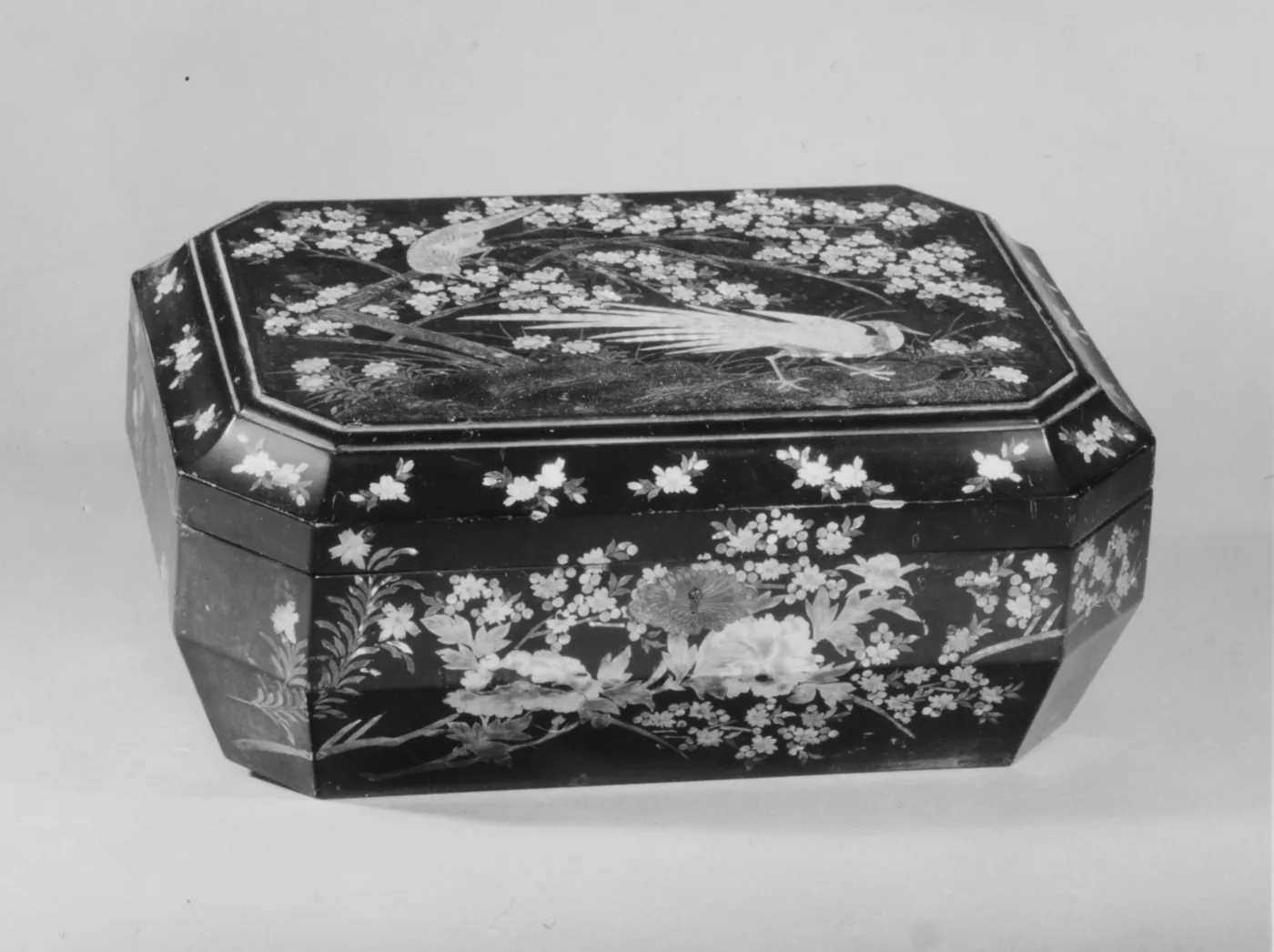
Sewing Box. ca. 1840. The Metropolitan Museum of Art, 68.119a–s. Closed exterior view; the interior fittings discussed in the entry are not visible. Credit: Unidentified artist / The Metropolitan Museum of Art. Gift of Margaret Bancroft and Ruth Farish Reynolds, 1968. Rights: Public domain; Met Open Access. Changes: Resized within1400px and converted to WebP; no crop or substantive alteration. Image source Image licence
Met API explicitly marks isPublicDomain=true. Image reuse permission does not transfer ownership of the object or resolve cultural permissions, sacred significance, provenance or restitution questions. Retain the catalog context.
History and context
This lacquered wooden sewing box was made in China for export. Mother-of-pearl flowers and foliage decorate its surfaces, while a fitted tray organizes cushions and compartments for small sewing implements. The surviving accessories include a needle book and decorated spools; lifting the tray reveals further storage. Its careful interior matters as much as its exterior: making and maintaining clothing involved keeping many small things available and in order. The box also connects domestic needlework to international trade, rather than presenting the household as a world isolated from commerce. This is an elaborate surviving example, not evidence that all needleworkers owned comparable equipment.
What future readers can learn
Curatorial interpretation: Household work leaves evidence in storage arrangements, worn tools and decorative choices, as well as finished clothing.
Limits and cultural context
The export destination and original individual user are not identified here. Ivory and other historic animal materials are described, not recommended for new manufacture.
Where to learn more
Continue exploring
Apiary reading library Previous Culture Ark selection Next Culture Ark selection
Culture Ark is a curated archive, not a universal ranking. Interpretive images and source evidence serve different roles.
Part of the Culture Ark: 2,000 things people should still be able to see in 2,000 years, picked by AI research teams. Browse the gallery. The Culture Ark is an Artificial Mind Hive (AMH) project. AMH is owned by Austin Little.

Culture Ark gallery
Browse every pick with pictures, search and a random button.
Open the gallery →