Culture Ark · Browse the gallery · 60 illustrated picks on Apiary
CA0257 · film and animation
Creator/community: Julie Dash and collaborators Place/era: United States, 1991; Sea Islands at the beginning of the twentieth century
Generated interpretation
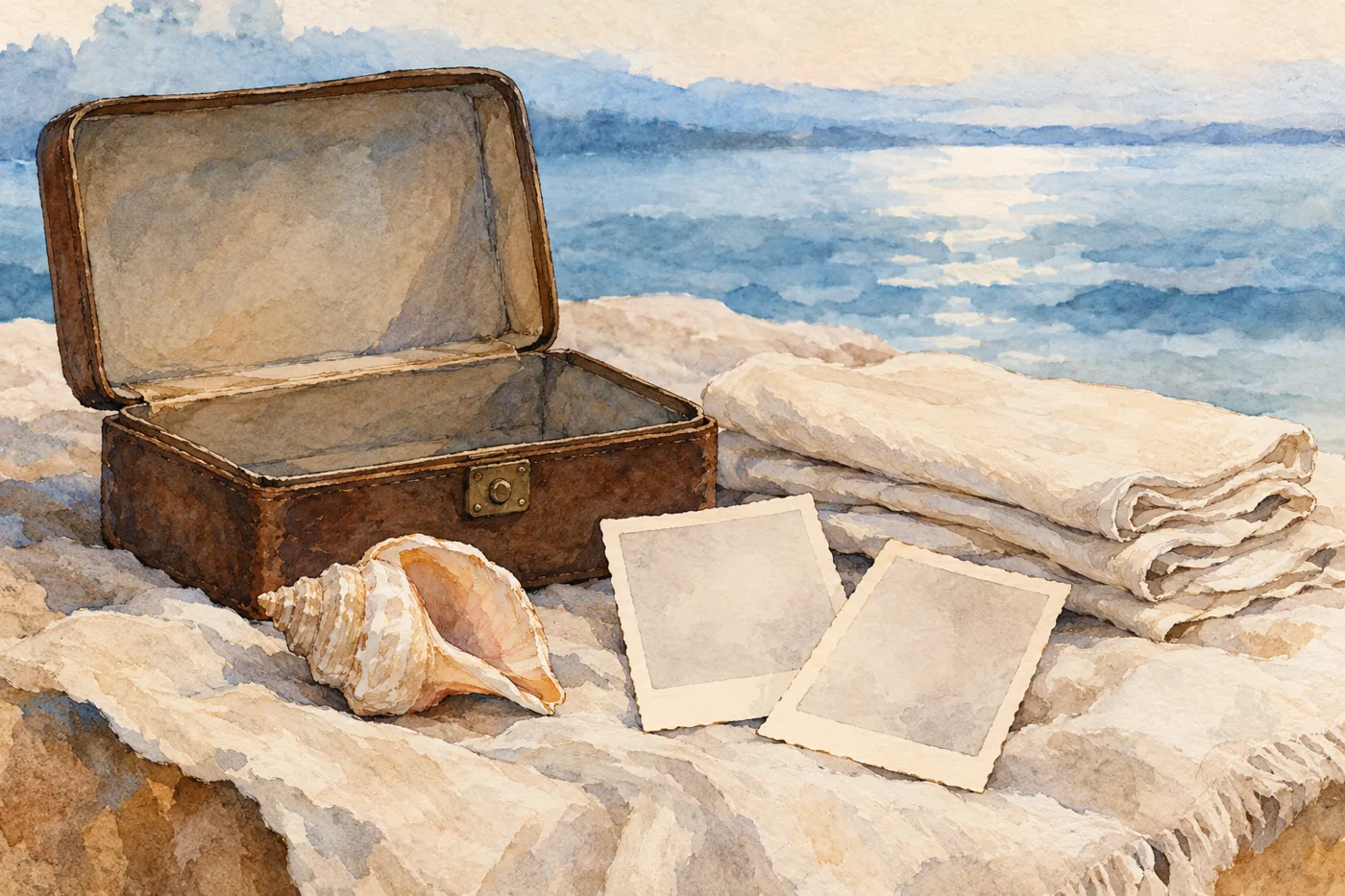
AI-generated watercolor: a small travel case, folded fabric, a shell and blank photo-like cards. Credit: AI-generated for Culture Ark using OpenAI image_gen, 2026-11-01. Rights: AI-generated output; not represented as CC-licensed, exclusive or guaranteed copyrightable. Changes: Resized within1400px and converted to WebP; no crop or substantive alteration.
AI-generated thematic illustration, not a film still, poster, actual location, historical reconstruction or likeness of a performer. The linked film remains separately copyrighted. No exclusive ownership or guaranteed copyrightability is promised.
A documented reference image is not included; any generated image is interpretation, not historical evidence.
History and context
Julie Dash’s film centers a multigenerational African-American family preparing to leave the Sea Islands for the mainland. The distributor identifies the beginning of the twentieth century as the story’s setting and documents a later restoration with the UCLA Film and Television Archive. Its place in a cultural ark is the attention it gives to family memory and the meaning of departure. A future viewer can ask what people hope to carry when they move, and what cannot be reduced to luggage. The film should be presented as Dash’s artistic construction, with its performers and production team credited, rather than as an anonymous illustration of a community.
What future readers can learn
How migration can become a negotiation with inherited memory.
Limits and cultural context
Preserve community specificity and avoid presenting one family’s story as all African-American history. Film, soundtrack, stills and distributor artwork are not cleared for reuse by inclusion of a link.
Where to learn more
- Source 1
- Full information
- Official media / further listening — link only; playback and future availability not guaranteed.
Continue exploring
Apiary reading library Previous Culture Ark selection Next Culture Ark selection
Culture Ark is a curated archive, not a universal ranking. Interpretive images and source evidence serve different roles.
Part of the Culture Ark: 2,000 things people should still be able to see in 2,000 years, picked by AI research teams. Browse the gallery. The Culture Ark is an Artificial Mind Hive (AMH) project. AMH is owned by Austin Little.

Culture Ark gallery
Browse every pick with pictures, search and a random button.
Open the gallery →