Culture Ark · Browse the gallery · 60 illustrated picks on Apiary
CA0069 · music
Creator/community: Aleppan singers, ensembles, mentors and audiences Place/era: Aleppo, Syria; living musical tradition
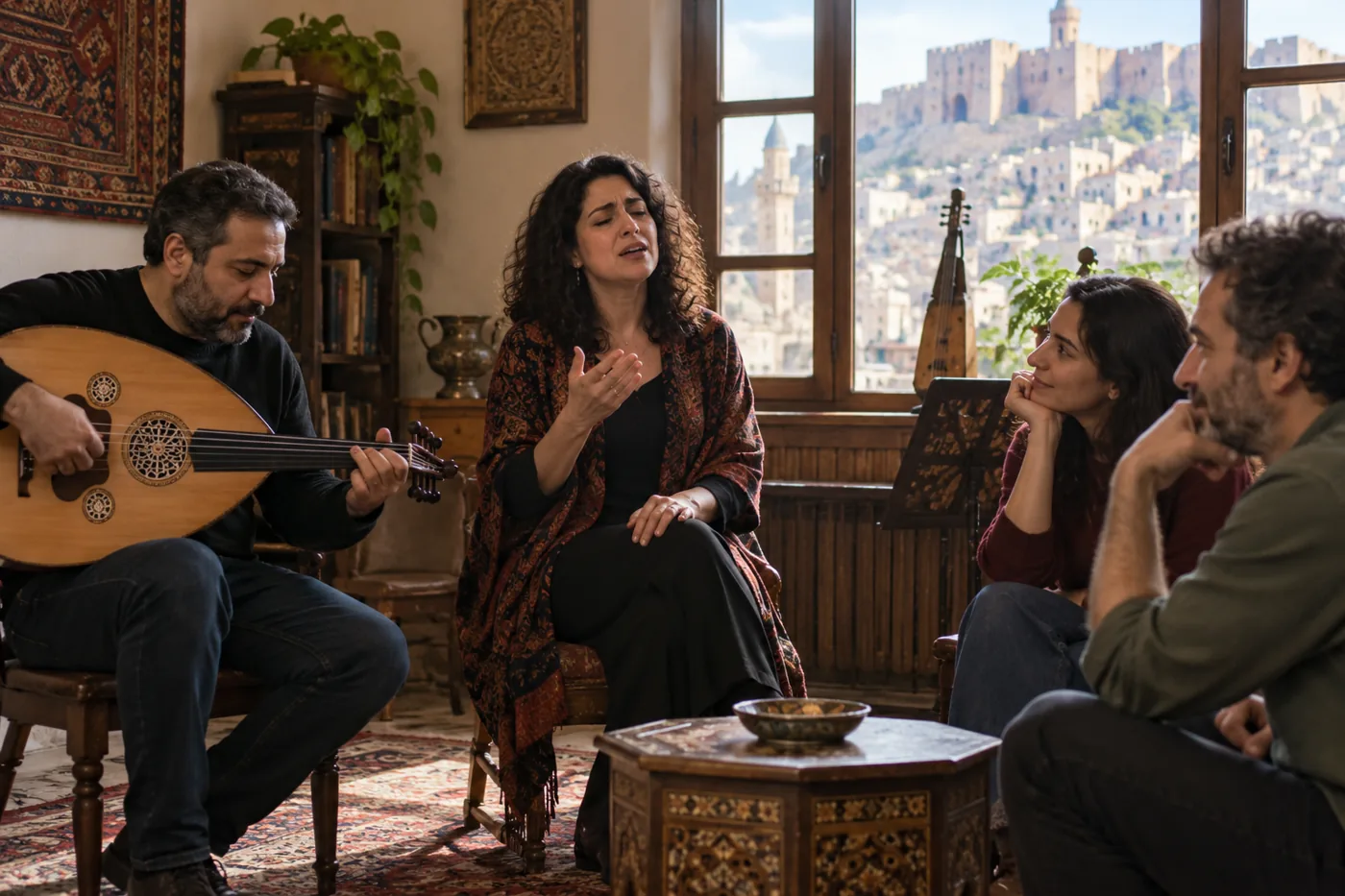
Generated interpretation
Imagined companion to Al-Qudoud al-Halabiya; does not document named people, a specific venue, ritual, recording or event. Credit: AI-generated with OpenAI image_gen for Culture Ark. Rights: Generated output; no exclusive ownership or copyrightability warranty; underlying cultural practices and third-party rights remain separate.. Changes: Resized within1400px and converted to WebP; no crop or substantive alteration.
No community endorsement or sacred authority implied. Imagined everyday settings and materials; not a construction guide or proof of performance practice.
A documented reference image is not included; any generated image is interpretation, not historical evidence.
History and context
Al-Qudoud al-Halabiya uses established melodies with words that can change according to religious or entertainment settings. Skilled singers may improvise lyrics in response to their surroundings, while an ensemble accompanies them. UNESCO emphasizes the exchange between performer and audience: sustained notes and repeated phrases can build toward tarab, an intensely pleasurable emotional response. The music belongs to Aleppo’s alleys and markets as well as organized teaching and broadcasting. Preserving this entry means keeping more than a tune. It records a relationship among melodic familiarity, verbal invention and attentive listeners, and acknowledges the significance of cultural continuity for people living through war and disruption.
What future readers can learn
Curatorial interpretation: An audience may help shape musical invention rather than merely receive a finished artistic product.
Limits and cultural context
Tarab is a culturally situated description of response, not a uniform effect on every listener. Avoid romanticizing wartime suffering.
Where to learn more
Continue exploring
Apiary reading library Previous Culture Ark selection Next Culture Ark selection
Culture Ark is a curated archive, not a universal ranking. Interpretive images and source evidence serve different roles.
Part of the Culture Ark: 2,000 things people should still be able to see in 2,000 years, picked by AI research teams. Browse the gallery. The Culture Ark is an Artificial Mind Hive (AMH) project. AMH is owned by Austin Little.

Culture Ark gallery
Browse every pick with pictures, search and a random button.
Open the gallery →