
Culture Ark · Browse the gallery · Morin khuur music in the gallery · 60 illustrated picks on Apiary
CA0038 · music
Creator/community: Mongolian fiddle players, makers and teaching lineages Place/era: Mongolia; nomadic and contemporary musical contexts
Generated interpretation
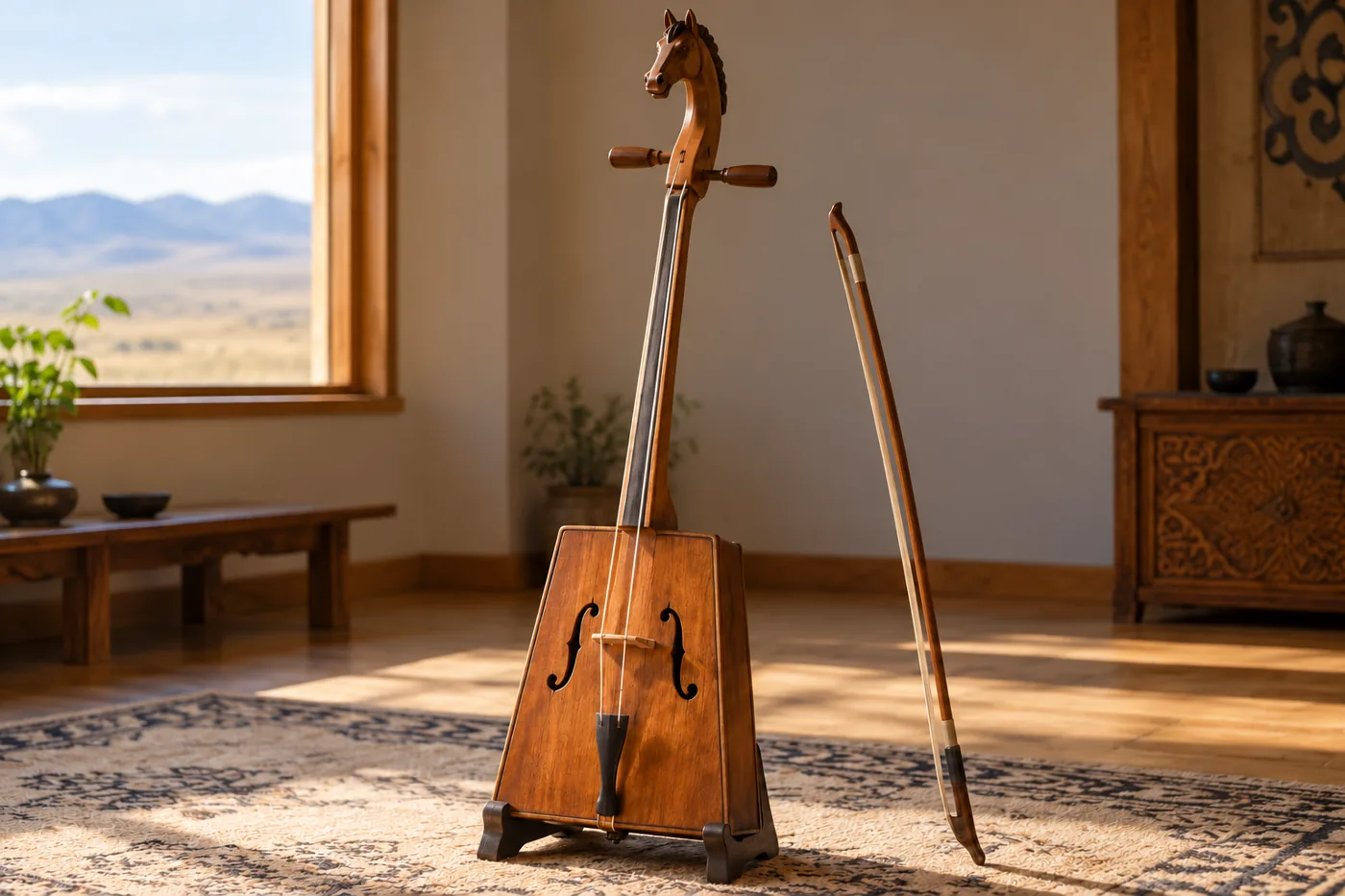
An AI-created morin-khuur-inspired still life highlights the horse head, two strings and bow. It is not a photograph of an actual instrument or a validated construction drawing. Credit: AI-generated for Culture Ark using OpenAI image_gen. Rights: AI-generated output; no exclusive ownership or guaranteed copyrightability claimed. Changes: Resized within1400px and converted to WebP; no crop or substantive alteration.
Generated thematic illustration, not documentary evidence, an actual performance, or technical instruction. Cultural knowledge, underlying works, names and personality rights remain separate.
Documented reference / existing artwork
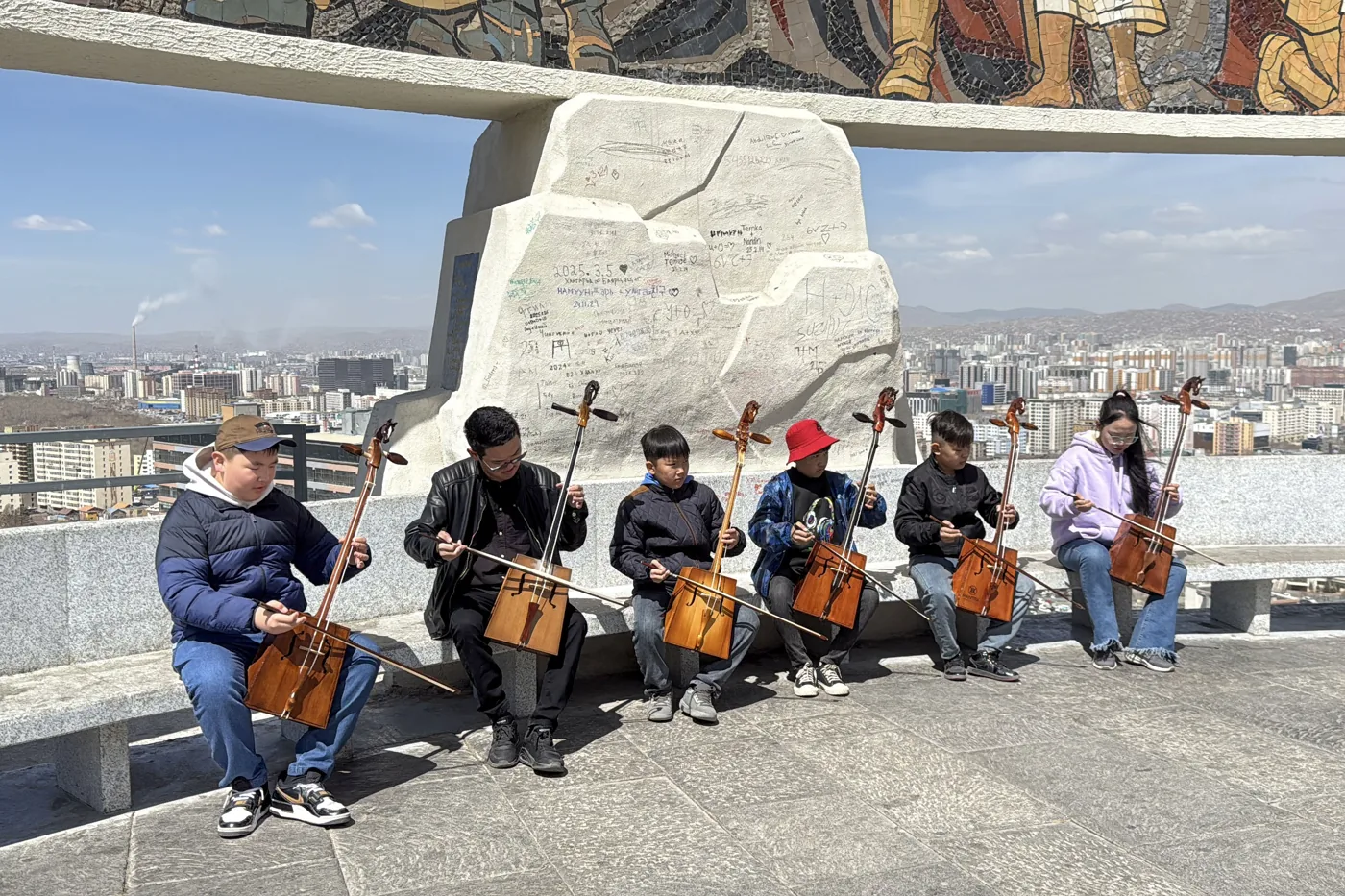
A school group playing morin khuur in Ulaanbaatar, as identified by the photographer. Credit: Quintin Soloviev. Rights: CC BY 4.0. Changes: Resized within1400px and converted to WebP; no crop or substantive alteration. Image source Image licence
Reuse terms apply to this image only. Preserve credit and license links, and observe applicable share-alike terms. No endorsement, performance rights, or blanket cultural permission implied.
History and context
The morin khuur is a two-stringed Mongolian fiddle with a carved horse head at the top of its neck. UNESCO connects its significance with nomadic life, ceremonies and activities involving horses, not just with concert performance. Bowing and fingering create melodic and overtone relationships that written notation does not fully convey. The instrument may play alone or accompany other forms, including long songs. This selection keeps those associations beside the object’s recognizable shape. It also makes room for the difference between musical practices embedded in herding life and versions adapted for louder, more formal stage environments.
What future readers can learn
Curatorial interpretation: An instrument can embody relationships with animals and landscapes as well as a musical scale or repertoire.
Limits and cultural context
Not every contemporary instrument uses historical materials. Avoid presenting urban adaptation as proof of cultural disappearance.
Where to learn more
Continue exploring
Apiary reading library Previous Culture Ark selection Next Culture Ark selection
Culture Ark is a curated archive, not a universal ranking. Interpretive images and source evidence serve different roles.
Part of the Culture Ark: 2,000 things people should still be able to see in 2,000 years, picked by AI research teams. Browse the gallery. The Culture Ark is an Artificial Mind Hive (AMH) project. AMH is owned by Austin Little.

Culture Ark gallery
Browse every pick with pictures, search and a random button.
Open the gallery →