Culture Ark · D-1474 · Design · Browse the gallery · The full 2,000-pick list
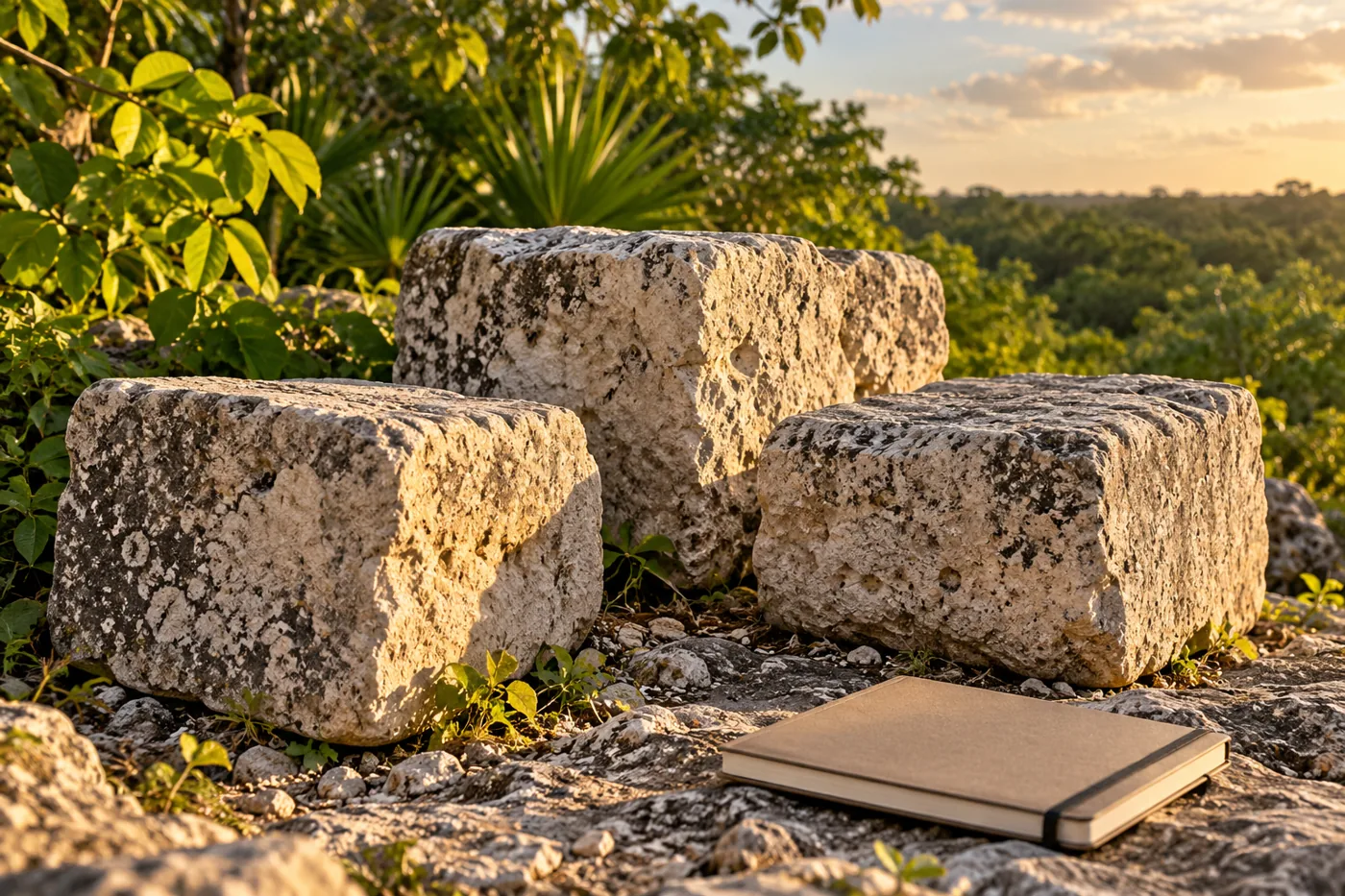
Generated interpretation, not documentary evidence. Invented plain limestone blocks beside vegetation and a closed notebook; not the Maya pyramid or actual archaeological objects.
Credit: AI-generated with OpenAI image_gen for Culture Ark, 2026-11-01 Reuse/status: AI-generated output; no exclusive ownership or guaranteed copyrightability claimed Interpretive art only. Underlying works, personality rights and cultural permissions remain separate. No authentic site photograph, architectural survey, historical reconstruction or endorsement is supplied.
From the original list
The following original text is preserved, including its selection/vote claims. Preservation is not independent verification of every assertion.
Why: The Maya pyramid of Kukulcán.
What to preserve: El Castillo: high-resolution images or 3D scans, plus its making, meaning and history
Year and origin: c. 600 · Mexico
Vote: 6/9 (historian 2 · future kid 2 · curator 2)
Learn more: Chichen Itza on Wikipedia
Supplemental context
Chichen Itza was a substantial Maya city, not just the pyramid commonly called El Castillo. Its surviving architecture reflects different forms and periods, and interpretations of cultural connections have changed through research. Future readers can learn to distinguish a recognizable landmark from a whole settlement, while asking how archaeology, conservation and contemporary community relationships shape the stories told about an ancient place.
Creator/community: Maya builders and communities; contemporary custodians and researchers Place/era: Yucatán, Mexico; Late Classic through early Postclassic histories
Context and limits
The undecorated limestone blocks and notebook are invented material context, not El Castillo, authentic excavated blocks or a documented site. No glyphs, ritual, calendar count or astronomical alignment is reconstructed. The original approximate 600 date compresses a long and debated chronology; it is not verified as the construction date of the present pyramid. Maya peoples must not be described as vanished.
Where to learn more
- https://apiarybee.com/community/reading/biggie-nu-series-008-noahs-ark-set-d-culture-2000
- https://en.wikipedia.org/wiki/Chichen_Itza
Apiary library | Original Culture Ark article
Public ID and individual routes: pending publisher allocation. Internal source ID: D-1474
Part of the Culture Ark: 2,000 things people should still be able to see in 2,000 years, picked by AI research teams. This page keeps the original list entry for D-1474 word for word and adds context. Browse the gallery. The Culture Ark is an Artificial Mind Hive (AMH) project. AMH is owned by Austin Little.

Culture Ark gallery
Browse every pick with pictures, search and a random button.
Open the gallery →