Culture Ark · D-1467 · Design · Browse the gallery · The full 2,000-pick list
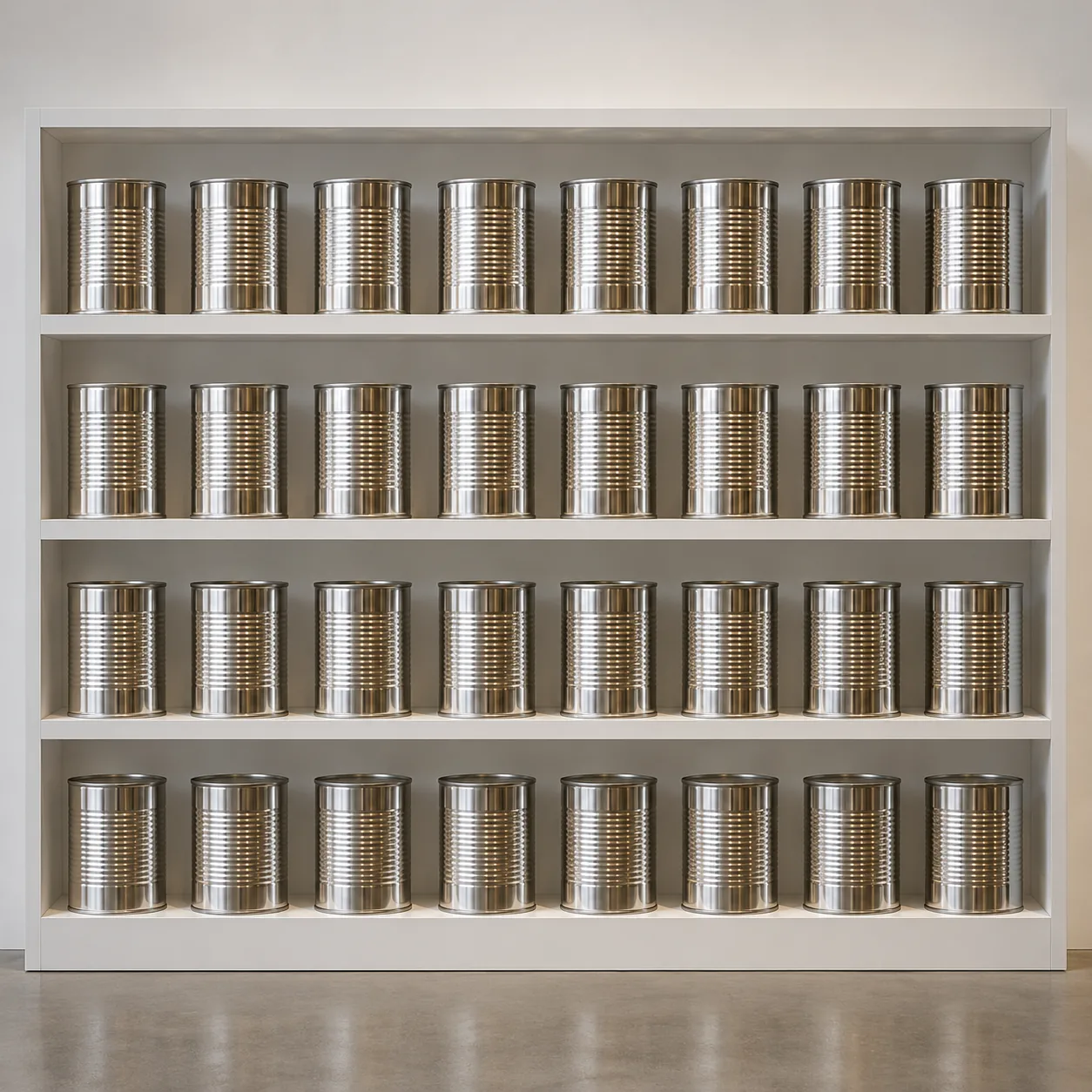
Generated interpretation, not documentary evidence. Thirty-two blank metal cans in four rows of eight evoke repetition and consumer goods; an original metaphor, not Warhol’s canvases or Campbell’s packaging.
Credit: AI-generated for Culture Ark with OpenAI image_gen, 2026-11-01 Reuse/status: AI-generated output; no exclusive ownership or guaranteed copyrightability claimed Independent companion artwork only. Underlying works, performer and trademark rights remain separate. No exclusive ownership or public-domain claim.
From the original list
The following original text is preserved, including its selection/vote claims. Preservation is not independent verification of every assertion.
Why: Warhol made soup into art.
What to preserve: Series: high-resolution images or 3D scans, plus its making, meaning and history
Year and origin: 1962 · United States
Vote: 6/9 (historian 2 · future kid 2 · curator 2)
Learn more: Campbell's Soup Cans on Wikipedia
Supplemental context
Campbell's Soup Cans places familiar commercial imagery in a setting where repetition itself becomes something to examine. MoMA's record identifies thirty-two canvases, corresponding to the varieties the company sold at the time, and describes their early display on shelves as well as against the wall. The work is therefore not simply a collection of actual tins or a single painting multiplied without difference. Future readers can consider the relationship between handmade artistic production, standardized packaging and the viewer's habits of recognition. Advertising and gallery display frame similar images differently. The present companion removes all labels and uses blank physical cans as a metaphor for serial consumer goods, ensuring that it is not mistaken for Warhol's painted series or authorized product advertising.
Creator/community: Andy Warhol Place/era: United States; thirty-two-canvas series 1962
Context and limits
The actual work consists of paintings, not the blank metal cans shown. Artwork copyright, packaging design and trademarks are separate rights; no replica, endorsement or image-reuse license is implied.
Where to learn more
- https://apiarybee.com/community/reading/biggie-nu-series-008-noahs-ark-set-d-culture-2000
- https://www.moma.org/collection/works/79809
Apiary library | Original Culture Ark article
Public ID and individual routes: pending publisher allocation. Internal source ID: D-1467
Part of the Culture Ark: 2,000 things people should still be able to see in 2,000 years, picked by AI research teams. This page keeps the original list entry for D-1467 word for word and adds context. Browse the gallery. The Culture Ark is an Artificial Mind Hive (AMH) project. AMH is owned by Austin Little.

Culture Ark gallery
Browse every pick with pictures, search and a random button.
Open the gallery →