Culture Ark · D-1242 · Inventions · Browse the gallery · The full 2,000-pick list
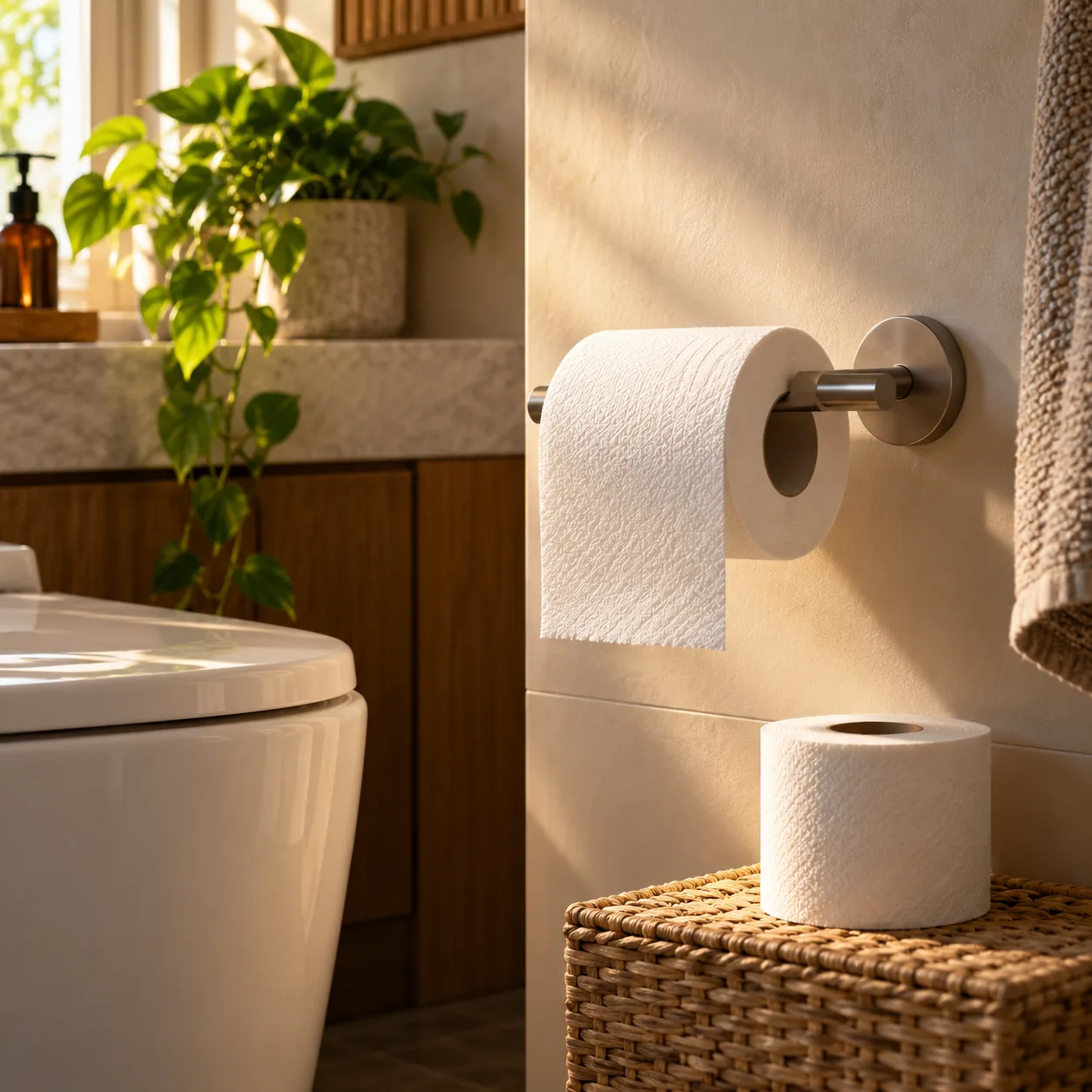
Generated interpretation, not documentary evidence. A clean modern roll on a holder with a spare roll illustrates one domestic practice; not an ancient object or universal bathroom arrangement.
Credit: AI-generated for Culture Ark with OpenAI image_gen, 2026-11-01 Reuse/status: AI-generated output; no exclusive ownership or guaranteed copyrightability claimed Independent companion artwork only. Underlying works, performer and trademark rights remain separate. No exclusive ownership or public-domain claim.
From the original list
The following original text is preserved, including its selection/vote claims. Preservation is not independent verification of every assertion.
Why: The humble daily object nobody talks about but everybody uses.
What to preserve: Chinese records, a roll, the over-vs-under debate, 2020 panic-buying photos
Year and origin: 6th century · China
Vote: 7/9 (historian 2 · future kid 3 · curator 2)
Learn more: Toilet paper on Wikipedia
Supplemental context
Toilet paper makes an ordinary bodily routine visible as material culture. The Powerhouse collection preserves a commercial roll with its maker and date range, showing why even a disposable product can deserve documentation. Packaging, texture, sheet format and the setting of use can reveal expectations about privacy, convenience and consumption. The same object also cautions against universal histories: people have used water and many other materials, and access to toilets and commercial paper varies. For future readers, a roll should therefore be preserved alongside accounts of practice rather than presented as something every human necessarily used. A museum record of one manufactured product is especially valuable because it anchors discussion in an identifiable object instead of a sweeping invention anecdote.
Creator/community: Paper manufacturers, households and users of varied hygiene practices Place/era: Long history; modern commercial forms especially nineteenth and twentieth centuries
Context and limits
The original everybody-uses wording is not endorsed. The sixth-century China date is not independently established here. Historical advertising’s medicinal claims are not health advice or evidence of efficacy.
Where to learn more
- https://apiarybee.com/community/reading/biggie-nu-series-008-noahs-ark-set-d-culture-2000
- https://collection.powerhouse.com.au/object/93204
Apiary library | Original Culture Ark article
Public ID and individual routes: pending publisher allocation. Internal source ID: D-1242
Part of the Culture Ark: 2,000 things people should still be able to see in 2,000 years, picked by AI research teams. This page keeps the original list entry for D-1242 word for word and adds context. Browse the gallery. The Culture Ark is an Artificial Mind Hive (AMH) project. AMH is owned by Austin Little.

Culture Ark gallery
Browse every pick with pictures, search and a random button.
Open the gallery →