Culture Ark · D-1207 · Language and humor · Browse the gallery · The full 2,000-pick list
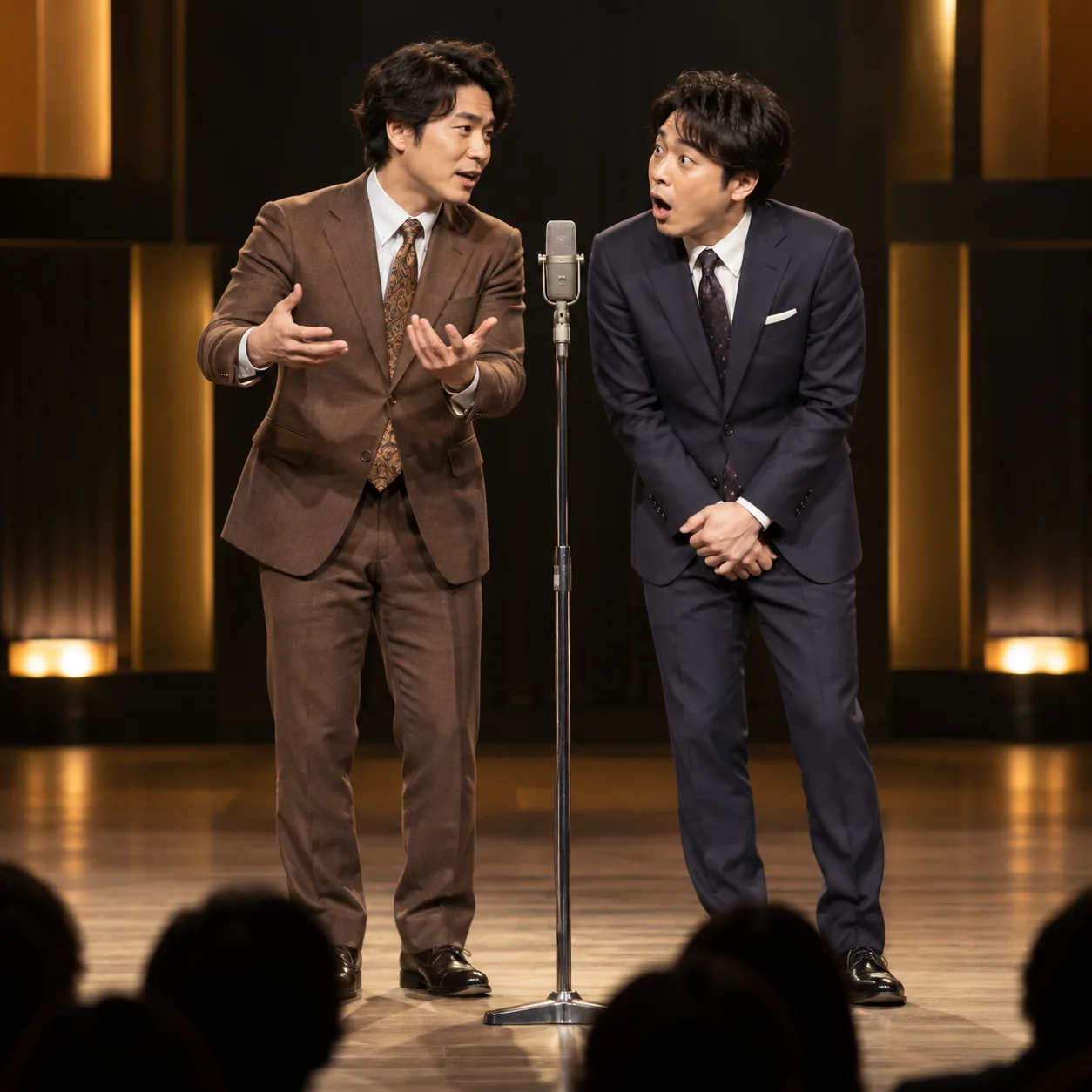
Generated interpretation, not documentary evidence. Fictional manzai-style duo exchanging contrasting reactions around one microphone.
Credit: AI-generated for Culture Ark using OpenAI image generation Reuse/status: Generated content; no exclusive ownership or underlying-work rights claimed Two performers and one microphone inspected; hands and faces coherent, no named duo, competition branding or staged hitting. No authentic-reference or endorsement claim.
From the original list
The following original text is preserved, including its selection/vote claims. Preservation is not independent verification of every assertion.
Why: Japanese two-person comedy with a straight man and a fool.
What to preserve: boke and tsukkomi, the M-1 Grand Prix
Year and origin: 1930 · Japan
Vote: 3/9 (historian 1 · future kid 1 · curator 1)
Learn more: Manzai on Wikipedia
Supplemental context
Manzai often centers on a pair of performers whose contrasting responses sustain a comic conversation. Web Japan’s profile of Patrick Harlan and Yoshida Makoto describes the boke and tsukkomi roles and includes Harlan’s account of learning their timing and conventions. This is evidence of a living, adaptable practice, not a fixed national personality. For future audiences, preserving the exchanges, delivery and audience response would communicate much more than a written list of punchlines: timing and partnership help make the joke intelligible.
Creator/community: Manzai performers and audiences in Japan Place/era: Japanese comic performance; modern forms developed over time
Context and limits
The archived 1930 date is not a securely established single beginning for all manzai. Historical accounts distinguish earlier traditions from modern stage comedy. The roles are performance conventions, not descriptions of a performer’s intelligence. The supplement does not verify a particular M-1 edition or winner; the image shows invented performers, not contestants.
Where to learn more
- https://apiarybee.com/community/reading/biggie-nu-series-008-noahs-ark-set-d-culture-2000
- https://web-japan.org/nipponia/nipponia24/en/living/index.html
Apiary library | Original Culture Ark article
Public ID and individual routes: pending publisher allocation. Internal source ID: D-1207
Part of the Culture Ark: 2,000 things people should still be able to see in 2,000 years, picked by AI research teams. This page keeps the original list entry for D-1207 word for word and adds context. Browse the gallery. The Culture Ark is an Artificial Mind Hive (AMH) project. AMH is owned by Austin Little.

Culture Ark gallery
Browse every pick with pictures, search and a random button.
Open the gallery →