Culture Ark · D-1203 · Language and humor · Browse the gallery · The full 2,000-pick list
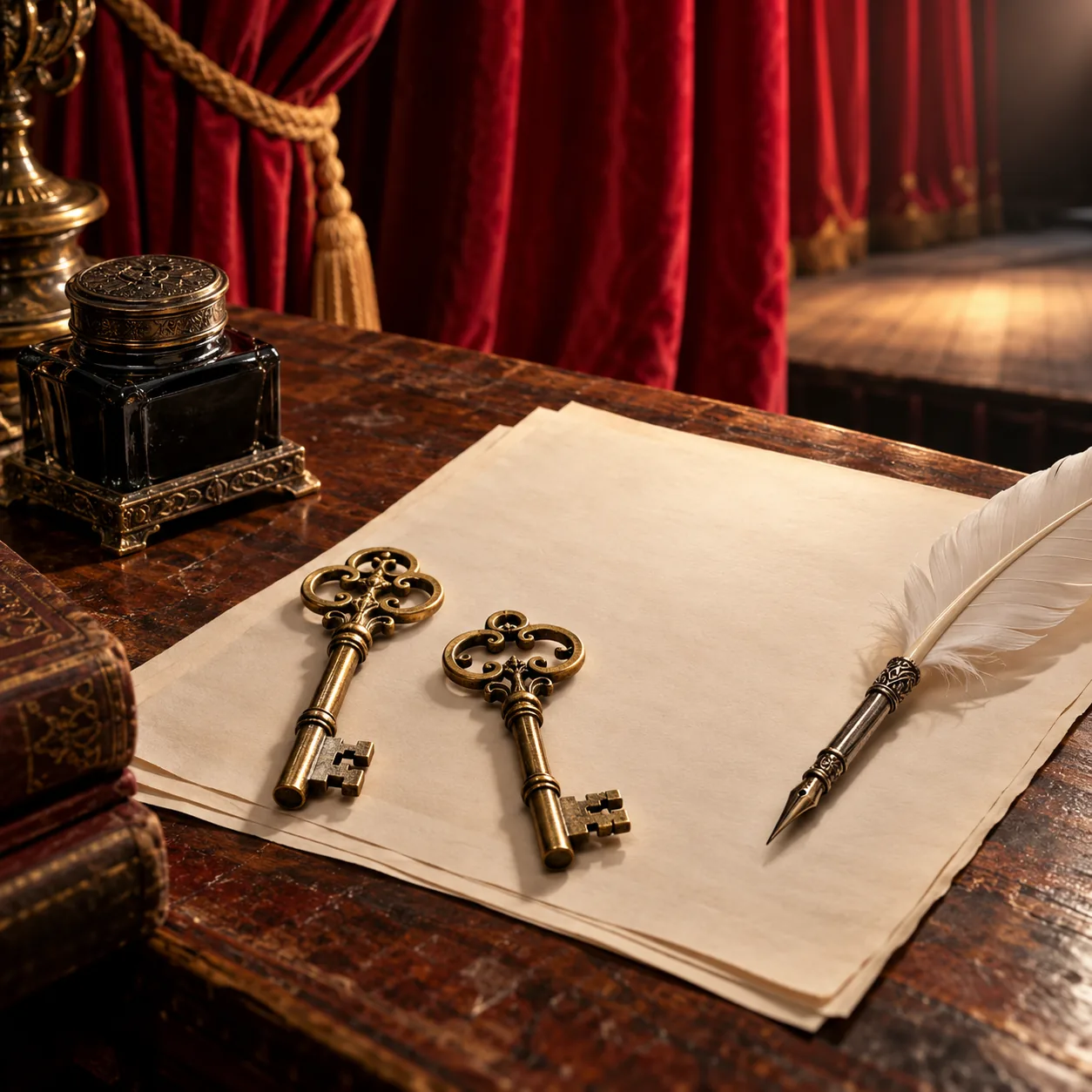
Generated interpretation, not documentary evidence. Two similar but different keys on a theatrical writing table, a metaphor for near-matching words.
Credit: AI-generated for Culture Ark using OpenAI image generation Reuse/status: Generated content; no exclusive ownership or underlying-work rights claimed Two distinct key bits and blank paper inspected; no fabricated Sheridan quotation or manuscript. No authentic-reference or endorsement claim.
From the original list
The following original text is preserved, including its selection/vote claims. Preservation is not independent verification of every assertion.
Why: Using a wrong word that sounds similar, named after a stage character.
What to preserve: Mrs. Malaprop's lines, modern examples
Year and origin: 1775 · United Kingdom
Vote: 3/9 (historian 1 · future kid 1 · curator 1)
Learn more: Malapropism on Wikipedia
Supplemental context
A malapropism replaces an intended word with another that sounds similar but produces an incongruous meaning. Merriam-Webster connects the term with Mrs. Malaprop, the character in Sheridan’s The Rivals whose verbal mistakes became memorable theatrical comedy. The selection therefore spans a dramatic character and a later descriptive label rather than one isolated joke. It offers future readers a compact lesson in how language depends simultaneously on sound, vocabulary and context: a nearly matching sound can open a surprisingly large gap in meaning.
Creator/community: Richard Brinsley Sheridan’s Mrs. Malaprop; subsequent English speakers and writers Place/era: The Rivals, 1775; later English linguistic terminology
Context and limits
The play’s 1775 date is not the invention date of all such mistakes or necessarily the first use of the noun malapropism. Not every accent, spelling difference or speech impairment is a malapropism; avoid using the category to demean speakers. Original play passages and modern examples have separate source and edition contexts.
Where to learn more
- https://apiarybee.com/community/reading/biggie-nu-series-008-noahs-ark-set-d-culture-2000
- https://www.merriam-webster.com/dictionary/malapropism
Apiary library | Original Culture Ark article
Public ID and individual routes: pending publisher allocation. Internal source ID: D-1203
Part of the Culture Ark: 2,000 things people should still be able to see in 2,000 years, picked by AI research teams. This page keeps the original list entry for D-1203 word for word and adds context. Browse the gallery. The Culture Ark is an Artificial Mind Hive (AMH) project. AMH is owned by Austin Little.

Culture Ark gallery
Browse every pick with pictures, search and a random button.
Open the gallery →