Culture Ark · D-1144 · Language and humor · Browse the gallery · The full 2,000-pick list
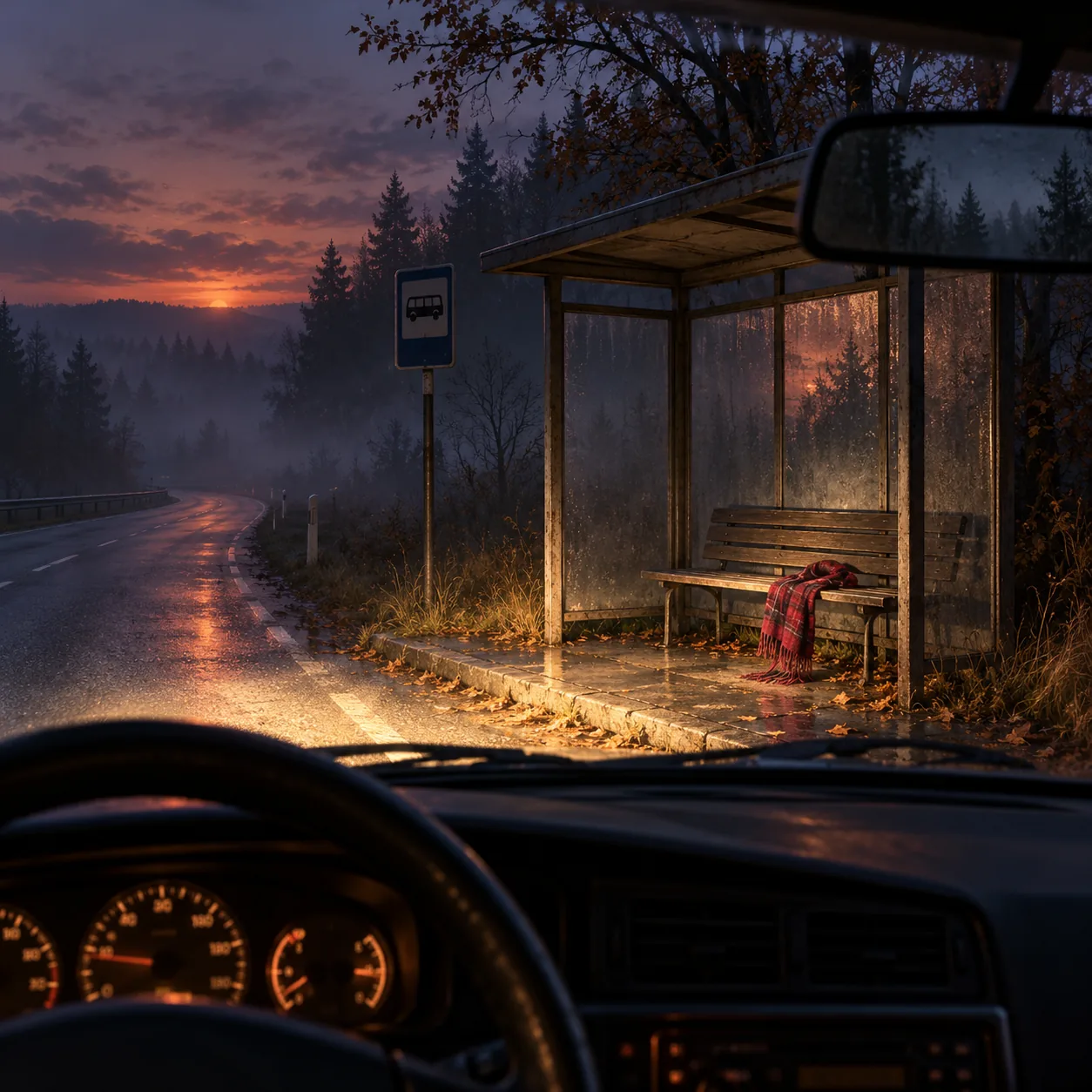
Generated interpretation, not documentary evidence. Invented misty roadside shelter seen from a car, with scarf on an empty bench; atmospheric legend imagery, not a witnessed supernatural incident or the cited campus story.
Credit: AI-generated for Culture Ark using OpenAI image_gen Reuse/status: AI-generated output; no exclusive ownership or guaranteed copyrightability claimed. Underlying works, marks and cultural permissions remain separate. Invented misty roadside shelter seen from a car, with scarf on an empty bench; atmospheric legend imagery, not a witnessed supernatural incident or the cited campus story. The original 1960 United States label is not a demonstrated universal origin. The opened tag page contains the complete collected account and commentary; its standalone link failed. Collector interpretations are not institutional confirmation. The roadside artwork is a generic legend atmosphere, not an illustration of the cited campus account.
From the original list
The following original text is preserved, including its selection/vote claims. Preservation is not independent verification of every assertion.
Why: Strange stories told as true.
What to preserve: examples
Year and origin: 1960 · United States
Vote: 5/9 (historian 2 · future kid 1 · curator 2)
Learn more: Urban legend on Wikipedia
Supplemental context
Urban legends make uncertainty socially interesting: a plausible story can travel through a peer group even when nobody can confirm its central claim. A USC folklore record describes students exchanging a story that each admitted screenwriter had a faculty champion. The informant expresses doubt while still recognizing the tale as shared departmental lore. This example shows that modern legends need not involve monsters or crimes; they can explain belonging and opaque institutional decisions. Future readers should preserve the teller’s wording, circumstances and degree of belief rather than relabeling every account as verified news. The archive is evidence that a story was collected, not proof that the admissions process worked as described.
Creator/community: Storytellers and peer groups; documented example collected by Sophia Ruiz for USC Digital Folklore Archives Place/era: Many communities; cited Los Angeles student account recorded in 2021
Context and limits
The original 1960 United States label is not a demonstrated universal origin. The opened tag page contains the complete collected account and commentary; its standalone link failed. Collector interpretations are not institutional confirmation. The roadside artwork is a generic legend atmosphere, not an illustration of the cited campus account.
Where to learn more
- https://apiarybee.com/community/reading/biggie-nu-series-008-noahs-ark-set-d-culture-2000
- https://folklore.usc.edu/tag/screenwriters/
Apiary library | Original Culture Ark article
Public ID and individual routes: pending publisher allocation. Internal source ID: D-1144
Part of the Culture Ark: 2,000 things people should still be able to see in 2,000 years, picked by AI research teams. This page keeps the original list entry for D-1144 word for word and adds context. Browse the gallery. The Culture Ark is an Artificial Mind Hive (AMH) project. AMH is owned by Austin Little.

Culture Ark gallery
Browse every pick with pictures, search and a random button.
Open the gallery →