Culture Ark · D-1083 · Language and humor · Browse the gallery · The full 2,000-pick list
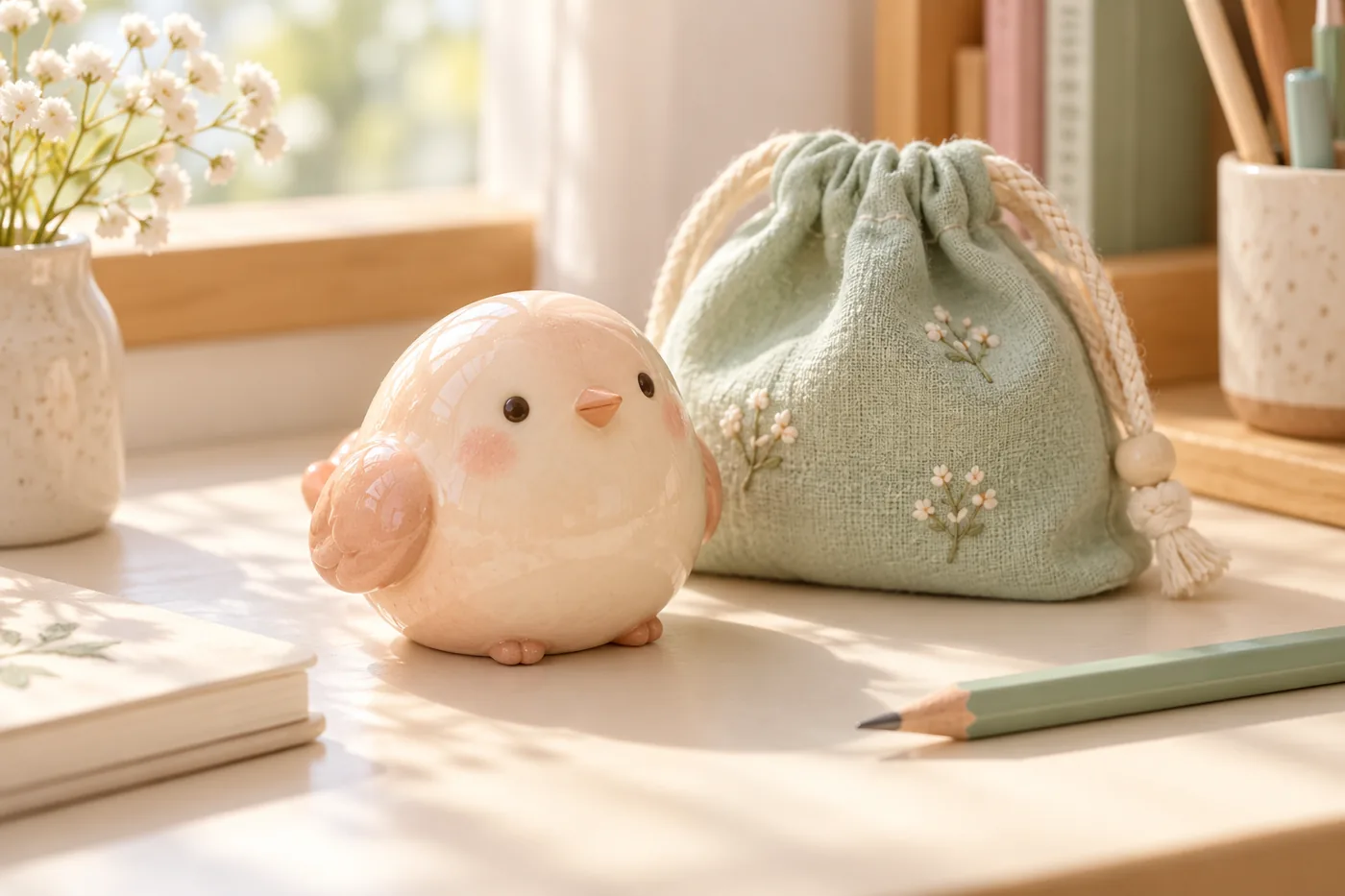
Generated interpretation, not documentary evidence. AI-generated interpretation of affectionate, cute object design; not Hello Kitty, a Sanrio product or an artwork by Sebastian Masuda.
Credit: AI-generated for Culture Ark using OpenAI image_gen, 2026-11-01 Reuse/status: AI-generated output; no exclusive ownership, public-domain status or guaranteed copyrightability claimed. Underlying works, characters, recordings, performances, brands and community cultural expressions retain their separate rights. The bird and accessories are newly imagined props, not cultural specimens or examples of a specific Japanese craft tradition. Their soft palette is one possible interpretation, not a definition of kawaii.
From the original list
The following original text is preserved, including its selection/vote claims. Preservation is not independent verification of every assertion.
Why: The culture of cuteness.
What to preserve: Hello Kitty, the word
Year and origin: 1970 · Japan
Vote: 6/9 (historian 2 · future kid 2 · curator 2)
Learn more: Kawaii on Wikipedia
Supplemental context
Kawaii can be translated as cute or adorable, but a collection of cute objects does not exhaust its cultural meanings. JAPAN HOUSE Los Angeles's exhibition with Sebastian Masuda presents it through fashion, art and self-expression, connecting a particular artist's account to postwar media, shōjo manga and Harajuku communities. Sanrio separately dates the design of Hello Kitty to 1974. These sources help keep a broad aesthetic and a specific commercial character distinct. Culture Ark could preserve how people selected, arranged and cared about beloved things, including the voices of participants, rather than implying that one mascot or a pastel palette represents everyone in Japan.
Creator/community: Japanese creators, consumers and self-expression communities; Sanrio and Sebastian Masuda are specific cited examples Place/era: Japan with later international participation; broader cultural history, Hello Kitty designed in 1974
Context and limits
The original 1970 label is not a precise founding date for the word or culture, and it is not Hello Kitty's design date. Masuda's exhibition offers an attributed perspective, not a universal definition. Character designs, photographs and merchandise retain separate rights; no authentic Hello Kitty image is supplied.
Where to learn more
- https://apiarybee.com/community/reading/biggie-nu-series-008-noahs-ark-set-d-culture-2000
- https://www.japanhousela.com/exhibitions/yes-kawaii-is-art-express-yourself-sebastian-masuda/
- https://corporate.sanrio.co.jp/en/business-info/brands/hello_kity/
- https://en.wikipedia.org/wiki/Kawaii
Apiary library | Original Culture Ark article
Public ID and individual routes: pending publisher allocation. Internal source ID: D-1083
Part of the Culture Ark: 2,000 things people should still be able to see in 2,000 years, picked by AI research teams. This page keeps the original list entry for D-1083 word for word and adds context. Browse the gallery. The Culture Ark is an Artificial Mind Hive (AMH) project. AMH is owned by Austin Little.

Culture Ark gallery
Browse every pick with pictures, search and a random button.
Open the gallery →