Culture Ark · D-1066 · Language and humor · Browse the gallery · The full 2,000-pick list
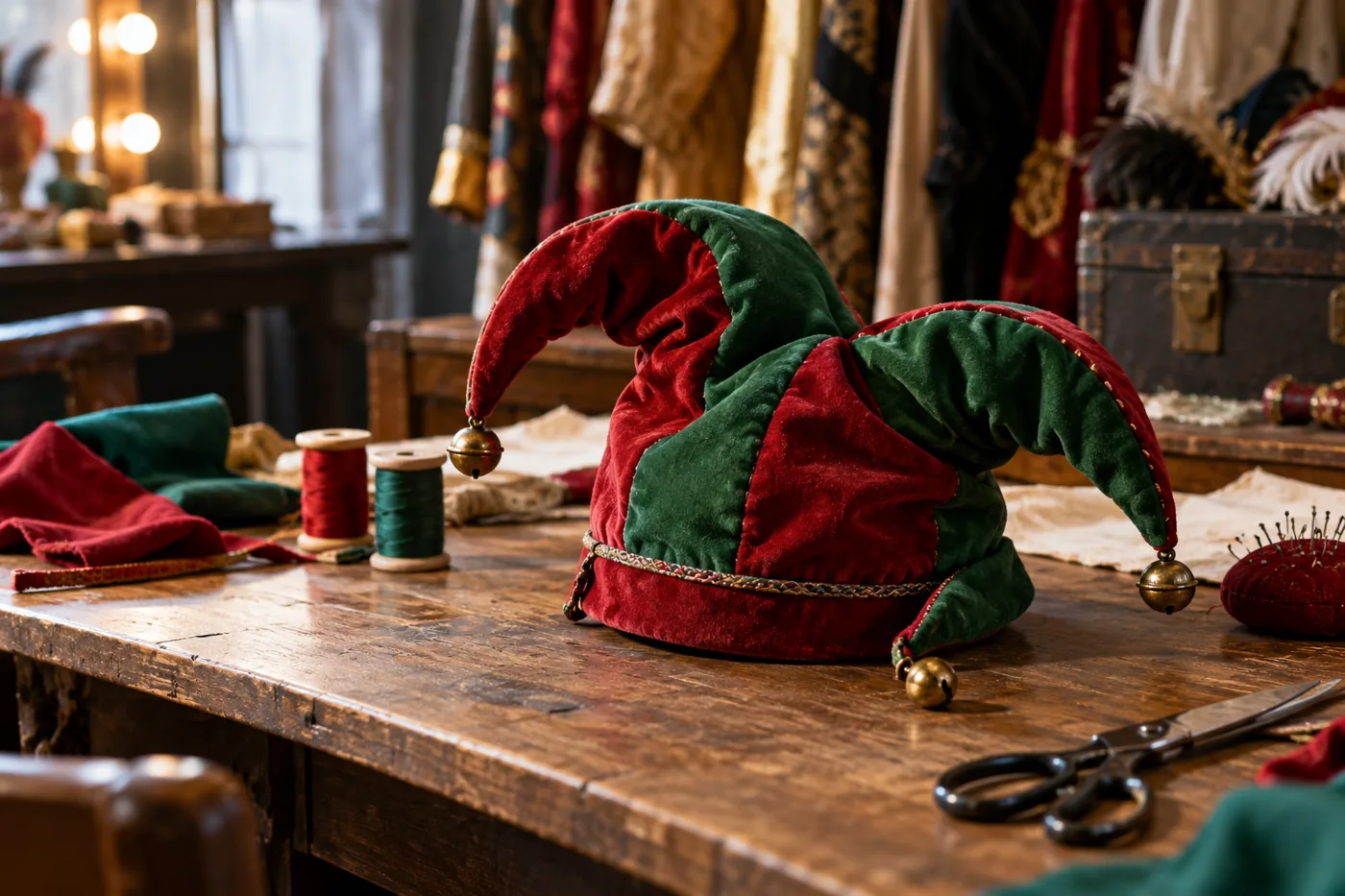
Generated interpretation, not documentary evidence. AI-generated modern theatrical bell cap on a costume workbench, a familiar symbol rather than a documented Tudor garment.
Credit: AI-generated for Culture Ark using OpenAI image generation Reuse/status: Generated content; no exclusive ownership or underlying-work rights claimed Three-point red-green fabric cap and bells coherent; modern theatrical convention explicitly distinguished from actual court dress. No authentic-reference or endorsement claim.
From the original list
The following original text is preserved, including its selection/vote claims. Preservation is not independent verification of every assertion.
Why: The court fool who could mock the king.
What to preserve: the costume, famous jesters
Year and origin: 1200 · Europe
Vote: 6/9 (historian 2 · future kid 2 · curator 2)
Learn more: Jester on Wikipedia
Supplemental context
The familiar image of a bell-capped jester can conceal very different historical lives. Historic England's disability history discusses Will Somer and Jane the Fool at the Tudor court, including records of clothing and support. It also notes that some people described with the period's terminology did not wear the motley costume now commonly imagined. For future readers, the selection should preserve both performance traditions and the unequal social relationships behind court entertainment. A person's ability to speak unusually frankly did not erase dependence on powerful patrons or mean every court entertainer occupied the same position.
Creator/community: Court entertainers and people assigned the historical role of fool Place/era: European courts among varied traditions; Tudor England as a specific documented example
Context and limits
Historical labels for disability are not neutral modern descriptions, and individual lives should not be reduced to caricature. The original's 1200 date and general freedom-to-mock claim are not universal facts established here. The generated bell cap is a modern theatrical convention, not Will Somer's clothing or a standard uniform for all fools.
Where to learn more
- https://apiarybee.com/community/reading/biggie-nu-series-008-noahs-ark-set-d-culture-2000
- https://historicengland.org.uk/content/docs/research/disability-in-time-and-place-pdf
Apiary library | Original Culture Ark article
Public ID and individual routes: pending publisher allocation. Internal source ID: D-1066
Part of the Culture Ark: 2,000 things people should still be able to see in 2,000 years, picked by AI research teams. This page keeps the original list entry for D-1066 word for word and adds context. Browse the gallery. The Culture Ark is an Artificial Mind Hive (AMH) project. AMH is owned by Austin Little.

Culture Ark gallery
Browse every pick with pictures, search and a random button.
Open the gallery →